

10+ Simple Low-Cost Kitchen Designs Inspired by 2026 Indian Home Trends
Table of Contents
Why Indian Kitchen Renovations Go Wrong, And How to Fix That
Most kitchen renovations fail not because the budget was small, but because decisions were made in the wrong order. Shutters were chosen before the layout was set. Accessories bought before storage was planned. Expensive finishes applied over carcass material that will not survive two monsoons.
A low-cost small kitchen design done right is not about settling. It is about spending where it matters: a moisture-resistant carcass, reliable hinges, factory-sealed edges, and a layout that fits how your household actually cooks, not how kitchens look in catalogues.
4 Layouts That Suit a Low-Budget Modular Kitchen
Layout is the single biggest cost lever in a kitchen project. The wrong one means plumbing relocations, electrical changes, and structural work, all of which eat budget that should go into materials and storage.
1. Straight Kitchen
Ideal for kitchens under 60 sq ft and rental apartments. All units run along one wall, plumbing stays concentrated, installation is faster, and material use is lowest. Extend cabinets to ceiling height to make up for the limited counter run. Vertical space is the kitchen’s biggest asset.
2. L-Shaped Kitchen
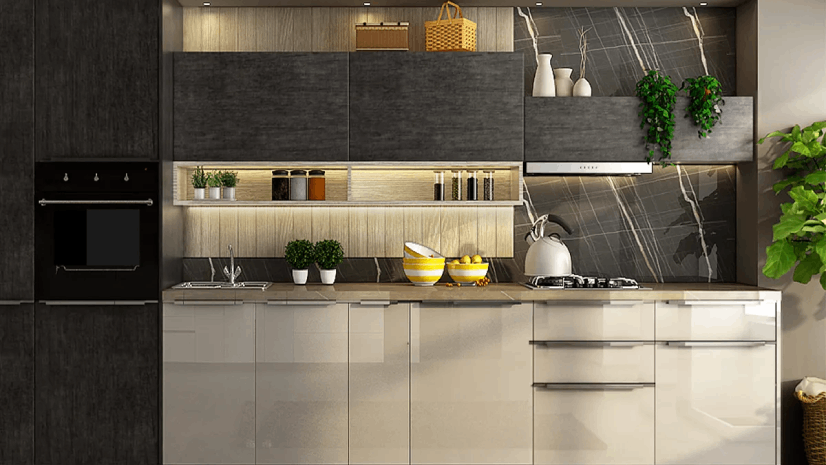
The most recommended layout in kitchen interior design ideas for Indian homes. Two adjacent walls create a natural work triangle between the sink, hob, and refrigerator, balancing storage and counter space without significantly raising cabinetry cost. Works well from 65 to 100 sq ft. Place the sink at the corner bend to keep the wet zone contained and leave the longer run free for prep.
3. Parallel Kitchen
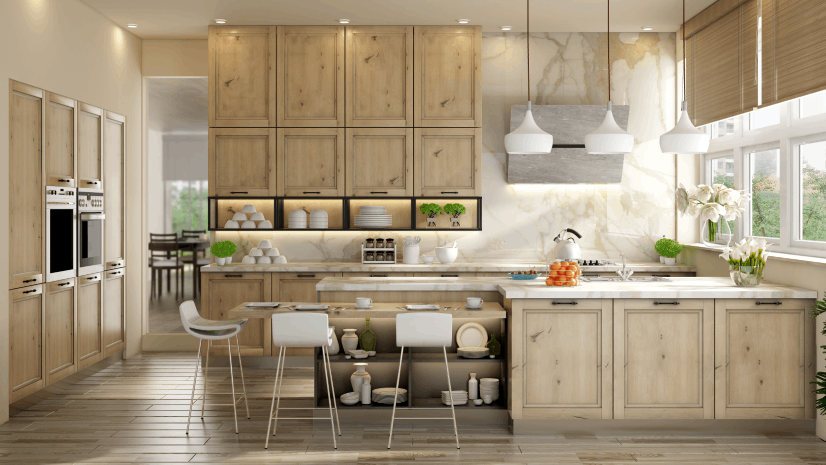
Two counters facing each other, one for cooking, one for prep and storage. Works well in long, narrow kitchens common in city apartments. Allows two people to cook simultaneously without stepping around each other. A minimum 4-foot gap between both counters is essential; anything less creates a permanent bottleneck.
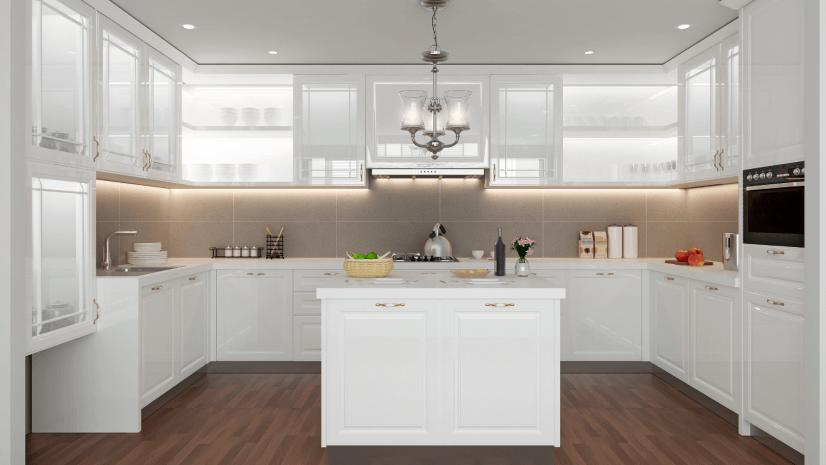
4. U-Shaped Kitchen
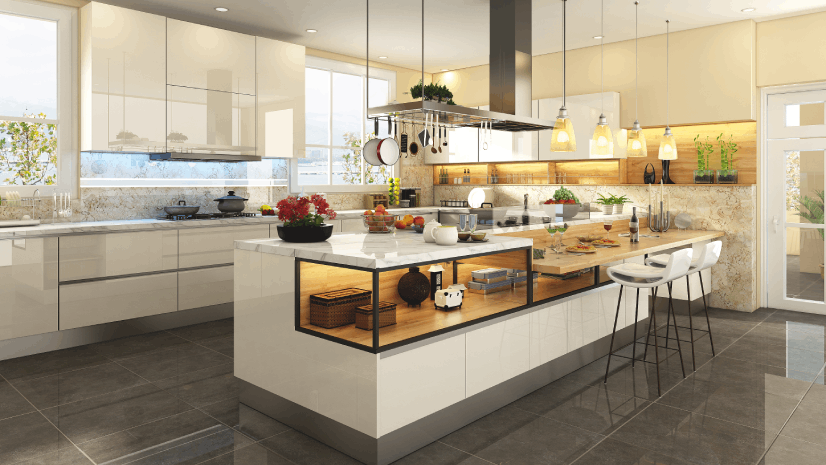
Three walls of cabinetry for maximum counter area and storage. Right for families that cook heavily and need everything within reach. Adds cost compared to straight or L-shaped, so it makes sense only at 80 sq ft and above.
Materials That Keep a Low-Cost Kitchen Durable
The choice is never between cheap and quality; it is choosing the right quality for each component.
Carcass: BWR-grade (Boiling Water Resistant) plywood is non-negotiable near wet zones. Particle board absorbs moisture and swells quickly near the sink; avoid it regardless of price savings.
Shutters: Factory-laminated matte laminates are the best-value finish for Indian cooking conditions. They hide fingerprints, oil marks, and minor scratches far better than gloss. Factory lamination also bonds more cleanly than site-applied finishes.
Countertops: Black Galaxy granite and Kota stone are the most economical and durable options. Quartz performs better for stain resistance but costs two to three times more; budget for it only when the rest of the kitchen is already sorted.
Edge banding: Open laminate edges absorb moisture and peel, often within the first or second monsoon. Factory-sealed PVC edge banding prevents this and adds nothing to the cost in a factory-made modular kitchen.
10+ Low-Cost Small Kitchen Design Ideas
- Straight kitchen with ceiling-height cabinets. Most kitchens waste 12–18 inches of wall above the top cabinet. Extend storage to the ceiling, large vessels, seasonal cookware, and bulk stock all fit there without adding a single square foot to the footprint.
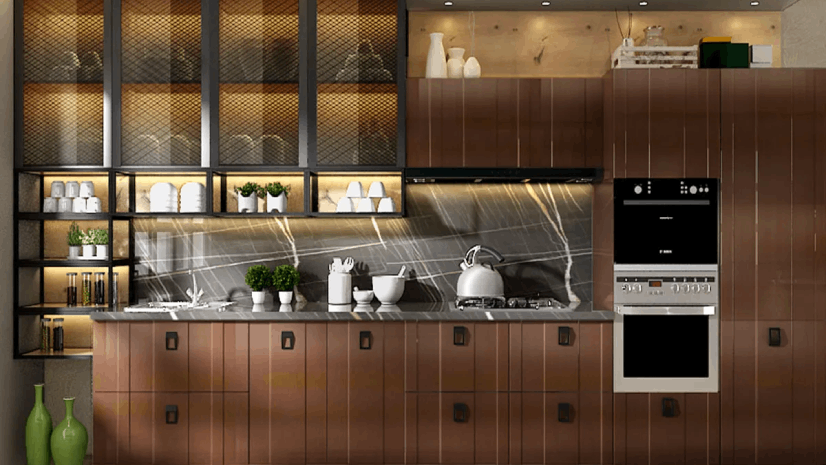
- L-shaped kitchen with open shelves for daily items. Replace one overhead cabinet with two or three open shelves near the sink. Keep daily-use items here: masala dabbas, plates, a small plant. Reduces visual heaviness without reducing useful storage.
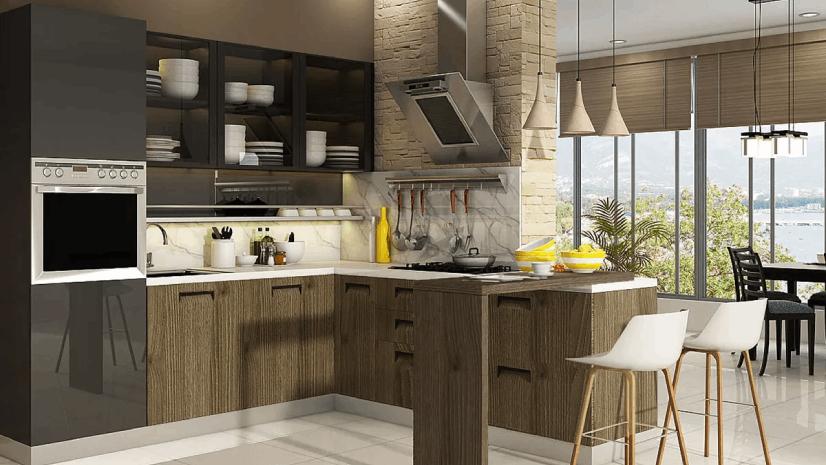
- White and wood two-tone finish. White upper cabinets reflect light and make compact kitchens feel larger. Wood-finish base cabinets add warmth and handle scuffs at counter height better than white. Both are achievable with standard laminate, no real wood required.
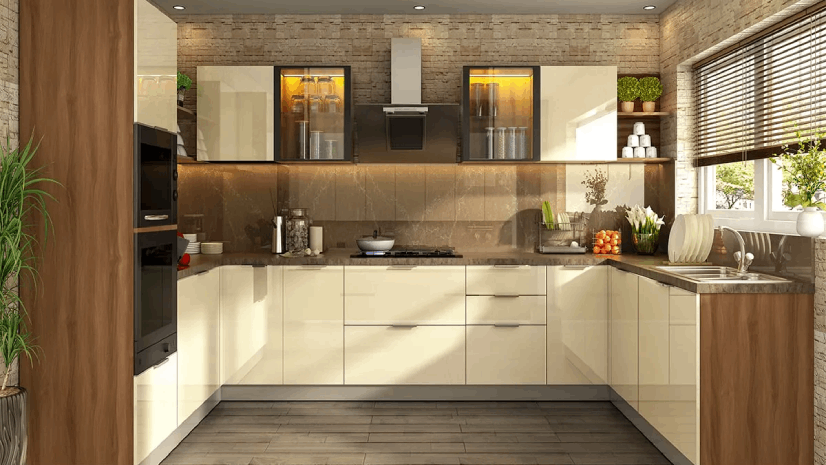
- Handle-less shutter design. Integrated J-pull or recessed groove profiles eliminate hardware cost across 15–20 cabinet doors. Easier to clean, nothing to snag on, and the dominant aesthetic in modular kitchen designs for 2026.

5. Wall-mounted microwave shelf. Removing the microwave from the counter recovers meaningful workspace in a small kitchen. A dedicated wall shelf or tall pull-out unit does the job without structural changes.
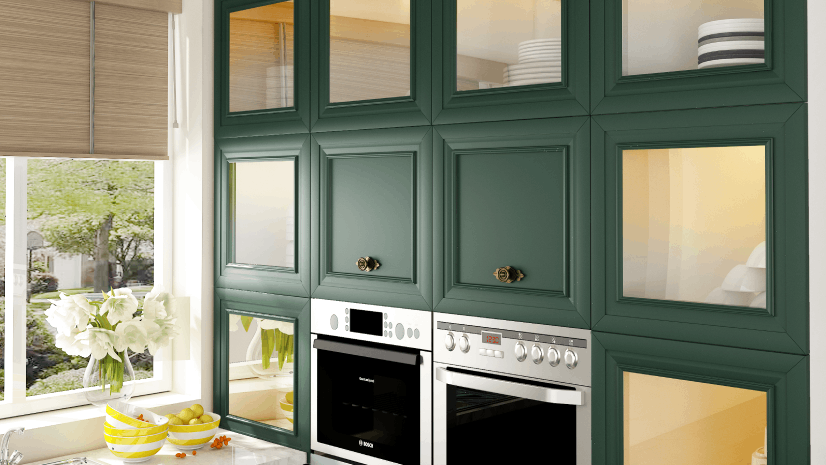
- Glass-front upper cabinets. Replace two or three solid upper shutters with glass-front ones. Transparency reflects light and prevents the upper zone from feeling heavy, useful in kitchens with limited windows or north-facing orientations.
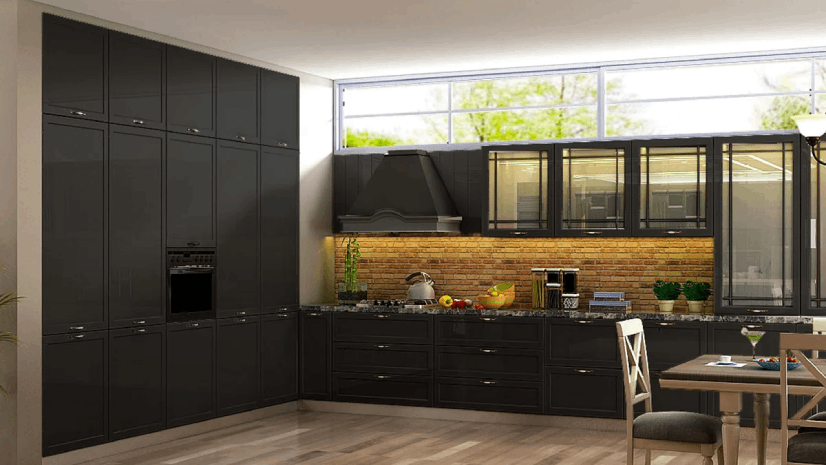
- Uniform matte shutters in a parallel kitchen. Consistent colour and finish across both counter runs make a galley kitchen feel calm and cohesive. Mixing tones in a parallel layout almost always makes the space read narrower than it is.
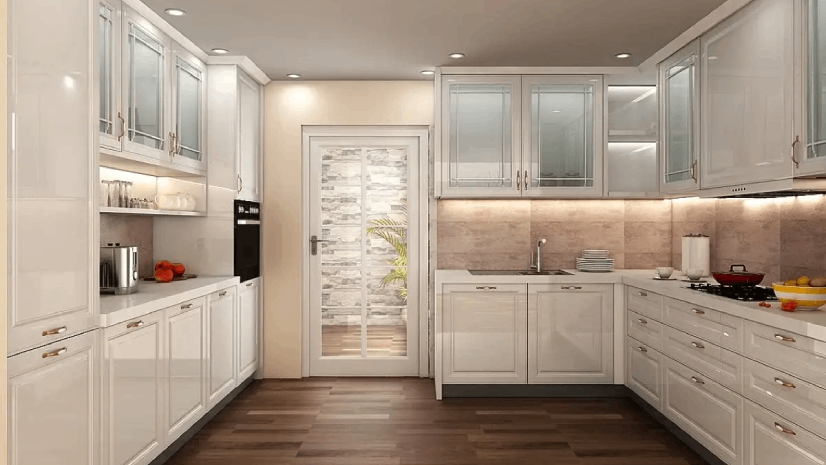
- Corner carousel or magic corner unit: The corner in L-shaped and U-shaped kitchens is the most wasted space in most Indian modular kitchens. A rotating carousel or pull-out unit makes every inch reachable, one of the few accessories that genuinely changes daily use.
- Built-in dustbin pull-out under the sink: Indian cooking produces significant daily waste. A pull-out bin below the sink keeps it contained, reduces odour spread, and frees floor space from standalone bins. A practical, modest-cost addition.
- Compact breakfast counter extension A slim laminate ledge (12–14 inches deep) on one wall with two stools eliminates the need for a separate dining table in 1 BHK apartments and studio homes.
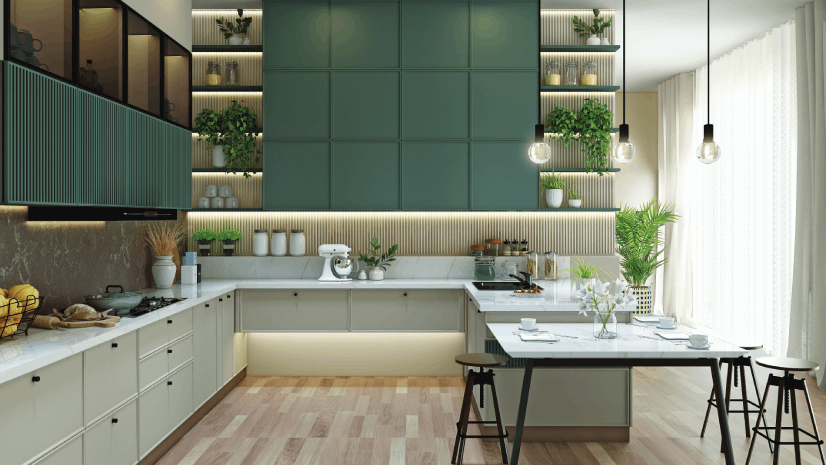
- Foldable wall-mounted dining ledge A wall-mounted foldable ledge collapses flat when not in use, right for kitchens where the cooking and dining zones share the same space.
Colour Combinations That Work in Indian Kitchens
Light shades reflect more of the available light, which matters in apartments where natural light is limited. Trending combinations for 2026: white uppers with warm teak base, soft grey with matte hardware, beige laminate with black granite, off-white with sage green accents.
Dark glossy surfaces look strong in photos but show oil marks and fingerprints within hours of cooking. If deeper tones appeal, always use matte finish.
Storage Tips That Make the Biggest Practical Difference
Extend cabinets to ceiling height; the gap above the top cabinet in most kitchens is wasted, dust-collecting space. Replace fixed shelves in base cabinets with deep drawers; everything becomes visible and reachable without bending. Add vertical dividers for baking trays, rail hooks below upper cabinets for ladles, and a corner carousel wherever the layout creates an awkward corner.
Contact us for more options & exact pricing information.
Frequently Asked Questions
What is a realistic budget for a low-cost modular kitchen in India?
A basic straight or L-shaped kitchen with matte laminate shutters, granite countertops, and essential accessories typically falls between ₹3- 4 lakh. A mid-range L-shaped kitchen with branded hardware generally ranges from ₹5-6 lakh. Spacewood’s Modular Kitchen design starts from ₹2.99 lakhs.
Is a low-budget modular kitchen durable?
Yes, when the right materials are used. BWR-grade plywood, factory edge banding, and reliable soft-close hinges determine longevity more than price category does.
Which layout works best for compact Indian kitchens?
Straight and L-shaped layouts are most practical under 80 sq ft. They reduce structural changes, lower material cost, and support an efficient work triangle.
Matte or glossy laminate, which suits Indian cooking better?
Matte, consistently. It handles fingerprints, oil splashes, and everyday scuffs considerably better than gloss in real cooking environments.
How do I maximise storage in a small kitchen?
Extend cabinets to ceiling height, swap fixed base shelves for deep drawers, add a corner carousel, and use rail hooks below upper cabinets to free up drawer space.
What is the average cost of a low-cost small kitchen design in India?
Costs vary by size and material, but basic modular setups using laminate shutters and granite counters remain affordable compared to premium acrylic or quartz options.
Is a low-budget modular kitchen durable?
Yes, if moisture-resistant plywood, proper edge sealing, and reliable hardware are used. Material selection determines lifespan more than price category.
Which layout works best for compact kitchens?
Straight and L-shaped layouts are practical for compact spaces. They reduce material use and simplify plumbing.
Are open shelves suitable in Indian kitchens?
Open shelves work for frequently used items but require regular cleaning due to dust and oil exposure.
How can storage be maximised in small kitchens?
Use ceiling-height cabinets, deep drawers, and vertical dividers. Avoid unused gaps above cabinets.
Does factory manufacturing improve quality?
Yes. Factory production with European machinery ensures precise cutting, consistent finishes, and better durability compared to on-site carpentry.