

L-Shaped Wardrobe Design Ideas for Bedroom Corners
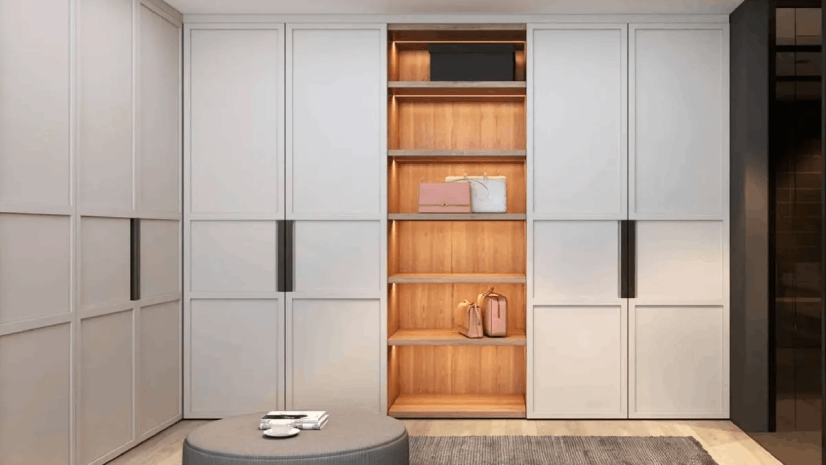
Table of Contents
Introduction
If your bedroom has a corner that feels wasted, an l shaped wardrobe design is usually the cleanest fix. It uses two adjacent walls, creates more usable storage, and makes the room feel organised without adding visual clutter. Done right, an l shaped wardrobe design for bedroom corners can look premium and still feel easy to use every day.
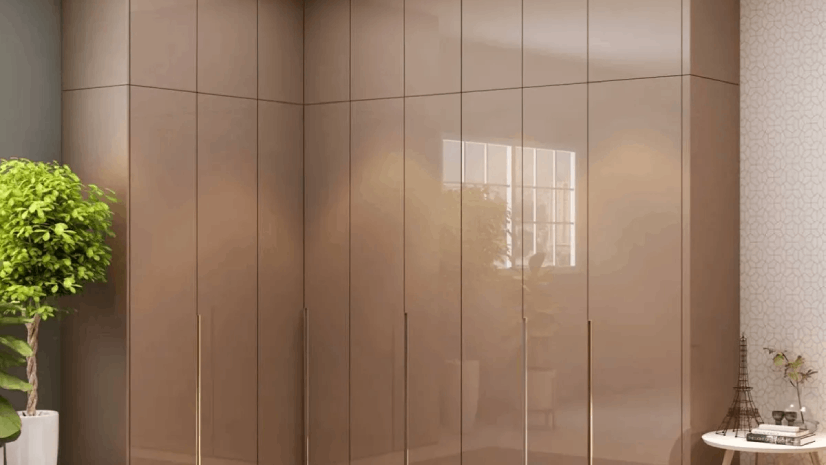
An l shaped wardrobe design is a wardrobe layout that runs along two connected walls and forms an L shape. It is also commonly referred to as an l shaped closet design, an l shape cupboard, or an l shape almirah design in everyday conversations.
It is ideal when:
- You want to use bedroom corners without awkward gaps
- You need more storage but do not want the wardrobe to dominate one wall
- You want clear zones for clothing, accessories, and seasonal items
Advantages of L-Shaped Wardrobes
An L-shaped wardrobe is popular because it turns a corner into useful storage and improves how the bedroom feels.
Why an l shaped wardrobe design works well
- Uses corner space that usually goes unused
- Creates more storage without increasing the “wardrobe footprint” too much
- Helps you split storage into practical zones across two walls
- Keeps the bedroom layout smoother, especially around the bed and walking path
- Works in both compact and spacious bedrooms
Best use cases in Indian bedrooms
- Extra space for long ethnic wear and occasion outfits
- Better top storage for seasonal bedding and luggage
- Easy separation for couples or shared wardrobes
Disadvantages & Considerations
An l shaped closet design can become inconvenient if the corner is not planned properly. Before finalising your design, consider these points.
The corner can become a dead zone
If you place daily use sections inside the corner, you will struggle with access. The corner should support storage, not control it.
Shutter choice matters more than you think
- In smaller rooms, hinged doors can block movement near the bed.
- Sliding shutters can feel easier in tight spaces because they do not need swing clearance.
Two-wall wardrobes need smarter planning
Because you are using two walls, you need a clear internal zoning plan. Otherwise, the wardrobe becomes bigger but messier.
Lighting and finish choice impact the look
Corners can feel heavy or dark. Lighter finishes and better lighting help the wardrobe feel clean and premium.
L-Shaped Wardrobe Layout Strategies
This is the part that decides whether your l shaped wardrobe design for the bedroom feels effortless or annoying.
Strategy 1: Assign a primary wall and a secondary wall
This keeps your routine simple.
- Primary wall: daily wear, workwear, frequently used items
- Secondary wall: occasion wear, accessories, extra shelves, seasonal storage
Strategy 2: Keep the corner for supportive storage
Use the corner for:
- Bags
- Extra closed shelves
- Seasonal items you do not use daily
- Linen and bulk storage
Avoid using the corner for:
- Daily hanging
- Most-used drawers
- Frequently accessed shelves
Strategy 3: Plan height before you plan style
A floor-to-ceiling approach usually works best in Indian homes because it:
- Increases storage
- Reduces dust-prone gaps
- Gives you a cleaner wardrobe wall look
Strategy 4: Decide your use case early
Ask yourself:
- Do you need more hanging or more shelves?
- Do you own more ethnic wear that needs long hanging space?
- Do you need a dedicated accessory drawer zone?
Once this is clear, the design becomes easy.
L-Shaped Wardrobe Design Styles
These are style directions that look premium and stay practical long-term, especially for Indian bedrooms.
Modern minimal style
Best when you want the wardrobe to blend into the room.
- Flat shutters
- Clean lines
- Minimal handle design
- Light neutral tones for a calm look
Warm wood style
Best when you want a timeless bedroom feel.
- Wood textures that match the bed and side tables
- Matte finishes that are easy to maintain
- Subtle contrast panels for depth
Mirror-accent style
Best for smaller bedrooms that need more light and visual space.
- One mirrored panel is usually enough
- Keeps the room open and adds daily dressing function
Glass-accent style
Best when you want a premium look without making the wardrobe feel bulky.
- Works well as an accent panel on the secondary wall
- Looks sharp but still controlled
Open plus closed style
Best when you want quick access without visual clutter.
- Open shelves for curated items only
- Closed shutters for bulk storage and daily mess control
L-Shaped Wardrobe Storage Organization
If you want your l shape cupboard to stay organised, plan the inside like a system, not like a cupboard.
A practical interior layout that works for most homes
- Double hanging section: shirts, trousers, kurtas
- Long hanging section: dresses, sarees, ethnic wear
- Drawer zone: innerwear, accessories, valuables, documents
- Shelf zone: tees, jeans, folded wear
- Top storage: luggage, seasonal bedding
Simple rules that keep it organised
- Keep daily wear at eye level on the primary wall
- Give accessories one fixed drawer zone so they do not spread
- Store heavy bulk items on the secondary wall
- Treat the corner like support storage, not daily storage
This is how an l shaped wardrobe design stays clean even after months of use.
Common L-Shaped Wardrobe Mistakes
These are the most common mistakes people make with an l shape almirah design, especially in bedrooms.
- Making the corner the main daily use zone
- Planning too many hanging and not enough drawers
- Ignoring long-hanging needs for ethnic wear
- Choosing shutters without checking the bed clearance and walkway space
- Using too many finishes and colours makes the bedroom look busy
- Leaving no plan for top storage and seasonal items
L-Shaped vs Other Wardrobe Types
L-shaped vs straight wardrobe
- Straight wardrobes are simpler but may waste corner potential.
- L-shaped wardrobes create better zoning and increase storage naturally.
L-shaped vs sliding wardrobe
- Sliding refers to the shutter mechanism.
- L-shaped refers to the layout.
A smart combination is an L-shaped wardrobe with sliding shutters on the shorter wall if bedroom clearance is limited.
L-shaped vs walk-in wardrobe
- Walk-ins need more dedicated room space.
- An L-shaped wardrobe gives you walk-in-style zoning without needing a separate dressing room.
Why Spacewood for L-Shaped Wardrobes
- Designed for daily convenience : Spacewood wardrobes focus on practical usability, so the layout feels natural to use every day.
- Better use of bedroom space : An l shaped wardrobe design is all about using corners and improving space utilisation. Spacewood planning is built around making the most of available space without making the room feel crowded.
- Premium finish consistency : A wardrobe looks luxurious when it stays clean and consistent over time. Spacewood focuses on finishes that look premium and feel reliable in daily use.
- Long-term support : Spacewood offers long-term warranty and after-sales support, which matters for a wardrobe you open and close multiple times a day.
Conclusion: Corner Your Storage Elegantly
A well-planned l shaped wardrobe design can turn a bedroom corner into your most organised zone. Keep one wall as the daily-use wall, use the second wall for bulk and occasion storage, and treat the corner as supportive storage so the layout stays easy to live with. When you combine smart zoning with the right shutter style and calm finishes, your l shaped closet design will look premium and work smoothly every day.
Want an L-shaped wardrobe planned for your exact bedroom corner? Explore Spacewood wardrobes and book a design consultation to finalise the layout, shutter style, and internal storage zones based on your room measurements.
Frequently Asked Questions
What is the best size for an l shaped wardrobe design?
The best size depends on your room corner and bed clearance. A good L-shaped wardrobe should leave a comfortable walking path and enough door clearance if you choose hinged shutters.
Is an l-shaped cupboard good for small bedrooms?
Yes. In small rooms, it often works better than a large straight wardrobe because it uses the corner and frees up the main wall. Choose lighter finishes and consider sliding shutters if space is tight.
Which shutter type is better for an l shaped wardrobe design for bedroom corners?
Sliding shutters work well in tight bedrooms because they do not need swing space. Hinged shutters work well when you have enough clearance.
How do I design the corner section in an l shaped closet design?
Keep the corner for supportive storage like bags, seasonal items, and extra shelves. Avoid placing daily-use drawers or your primary hanging section in the corner.
What is the most practical internal layout for an l shape almirah design?
Use a mix of long hanging, double hanging, drawers, shelves, and top storage. Assign daily wear to the primary wall and occasion or bulk storage to the secondary wall.
Does an l shaped wardrobe design cost more than a straight wardrobe?
Often yes, because it uses two walls and needs more planning. The advantage is better zoning and higher usable storage, especially in corner-heavy bedrooms.