

Modern Straight Kitchen Design Ideas for Compact Homes
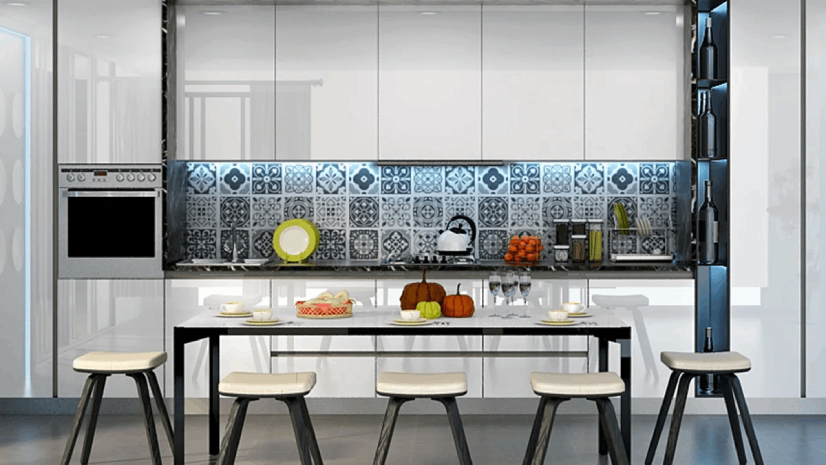
Table of Contents
Introduction
Let’s talk about that narrow kitchen space in your apartment. You know the one. The wall where you’ve been wondering how to fit a functional kitchen without it feeling like you’re cooking in a corridor.
Most people think compact means compromise. They walk into their 1BHK or 2BHK and immediately start worrying about what they’ll have to give up. But we’ve been making modular kitchens for 29 years now, and we’ve learned something important. A well-designed straight kitchen can actually work better than a sprawling L-shaped setup that never quite fits right.
In Mumbai, Pune, or Bangalore, space is expensive. Really expensive. Every square foot you save in the kitchen is space you can use for your living room, your kid’s study area, or just to breathe. And that single wall? It’s not a limitation. It’s an opportunity.
A straight kitchen puts everything on one wall. Your cooking hob, sink, storage, and refrigerator line up like soldiers in a row.
Some people call it a one-wall kitchen. Others say straight line kitchen layout. We just call it practical.
The basic setup looks like this:
- All base cabinets run along a single wall
- Wall-mounted cabinets sit above the countertop
- Appliances fit into the same linear space
- Everything stays within arm’s reach
Now, you might wonder if this sounds too simple. And yes, it is simple. But that’s exactly why it works. No complicated corners to navigate. No wasted space between parallel counters. Just a straightforward design that makes sense.
Most straight modular kitchens we install measure between 8 and 14 feet in length. That’s enough room for a complete cooking setup without taking over your entire home.
Why Choose a Straight Kitchen for Your Home?
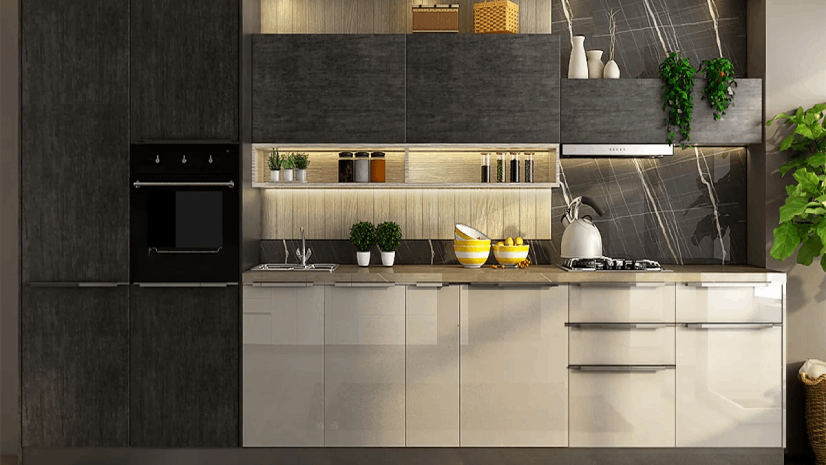
After installing thousands of these kitchens across India, we’ve noticed some patterns.
- Space efficiency that actually matters
When you’re paying ₹6,000 per square foot for your apartment, every inch counts. A straight kitchen typically needs just 60-80 square feet, including the walking space in front. Compare that to an L-shaped or U-shaped kitchen that demands 100+ square feet minimum.
- Cost considerations
Modular kitchens aren’t cheap. But a straight design uses less material, fewer corners, and simpler installation. We’ve seen clients save 30-40% compared to L-shaped alternatives with similar storage capacity.
- Easy movement during cooking
Everything’s in one line. Reach for the spice rack, turn to the stove, pivot to the sink. No walking back and forth between opposite counters. Your grandma knew this instinctively when she cooked in her traditional kitchen. We’re just applying the same logic with better materials.
- Perfect for open floor plans
In modern homes where the kitchen opens into the living area, a straight kitchen keeps things visually clean. It doesn’t divide the space or create awkward barriers. The family can sit on the sofa and chat while you cook. That matters more than people realize.
- Maintenance simplicity
One wall means one backsplash to clean. One counter to wipe. When you’re exhausted after work, that difference between 8 feet and 15 feet of counter cleaning actually matters.
What Are the Real Limitations?
We’re not going to pretend straight kitchens work for everyone. They don’t.
Counter space reality: You get about 8-12 feet of workspace. If you’re someone who spreads out ingredients across half the kitchen while cooking, this might feel tight. Though we’ve noticed most people adapt within a week or two.
Multiple cooks problem: Two people can work in a straight kitchen, but they’ll need to coordinate. There’s no “you take that side, I’ll take this side” option. For joint families where three generations cook together, this layout might frustrate everyone.
Limited work triangle: Kitchen designers talk about the “work triangle” between the stove, sink, and fridge. In a straight kitchen, it’s more of a work line. Slightly less efficient in theory. Barely noticeable in practice for most home cooks.
Height matters: If your wall is too short (under 8 feet), you might struggle to fit everything comfortably. If it’s too long (over 15 feet), you’ll be doing a lot of walking during meal prep.
How Length Changes Your Design Options
8-9 feet kitchens: This is tight, but doable. You’ll fit two burners, a small sink, and a compact refrigerator in this spot. Storage comes from going vertical with tall cabinets. We’ve installed these in studio apartments across Nagpur and Mumbai. They work fine for singles or couples who don’t cook elaborate meals daily.
10-12 feet kitchens: The sweet spot. Enough room for a four-burner hob, proper sink with drainboard, dishwasher slot, and decent counter space for prep work. Most 2BHK apartments in India fall into this range. This length gives you flexibility without wasting space.
13-15 feet kitchens: Luxury territory for a straight kitchen. You can add dedicated zones for different tasks. Space for a microwave tower, extra storage for appliances, and even a small breakfast counter extension. Some clients in larger homes choose this deliberately for the clean aesthetic, even when they could fit an L-shape.
What Kitchen Styles Work Best?
Over at our factory, we’ve been tracking which designs people actually choose (not what looks good on Pinterest).
Minimalist straight designs
Clean lines, handleless cabinets, matte finishes. Our acrylic finish range works beautifully here. White, light grey, or soft beige that makes small spaces feel bigger. This style dominates in new apartments where buyers want that “modern living furniture” look without overthinking it.
Contemporary with contrast
Dark lower cabinets (charcoal, walnut, or deep grey) with lighter uppers. Adds depth without making the space feel closed in. We pair this with quartz-pattern laminate countertops that look expensive but stay within budget.
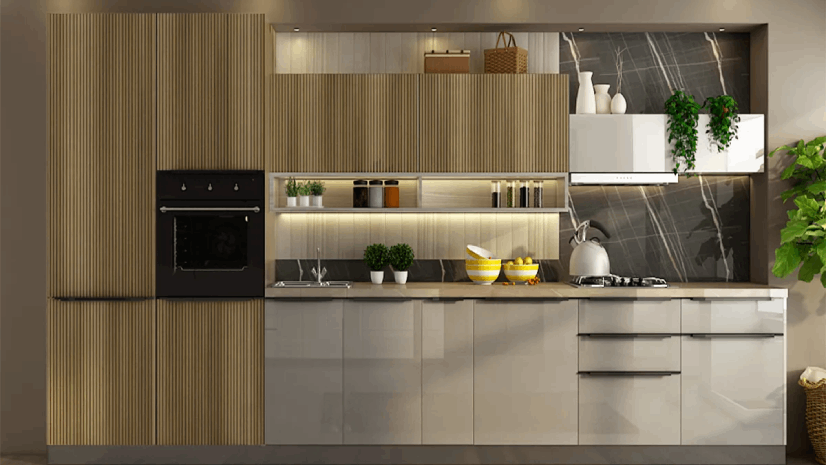
Natural wood warmth
Some clients want the modern straight kitchen design but with character. Oak-finish laminates or actual wood veneer on shutter panels. Combines efficiency with that warm, homey feeling. Particularly popular with clients over 40 who remember what real wood furniture felt like.
High-gloss contemporary
Glossy finishes reflect light and make kitchens feel more spacious. Our high-gloss laminate collection includes everything from pure white to navy blue. Maintenance is slightly higher, but the visual impact is undeniable.
Two-tone combinations
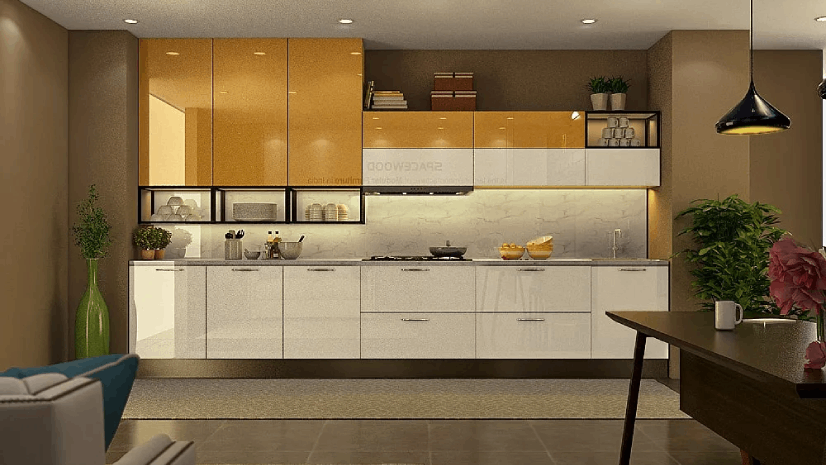
Base cabinets in one finish, wall units in another. Maybe add a contrasting back panel behind open shelves. This breaks the monotony without making things chaotic. Works especially well in longer straight kitchens (12+ feet) where too much of one color feels overwhelming.
Maximizing Storage Without Going Crazy
Storage in a small, straight kitchen design is like packing a suitcase. It’s not about having more space; it’s about using every bit intelligently.
Go tall with cabinets- Floor-to-ceiling cabinets aren’t just for show. That space between your current wall cabinets and the ceiling? It’s wasted. We design tall units that reach up to 7.5-8 feet, storing things you don’t use daily on top shelves. Ladder stools cost ₹1,500. Wasted space costs you daily frustration.
Pull out everything- Drawers beat cabinets every time for lower storage. You can see what’s inside without getting on your knees. Pull-out spice racks, cutlery organizers, and under-sink slide-outs. These aren’t luxuries in a compact kitchen. They’re necessities.
Corner solutions- Even straight kitchens have corners (at the ends). Use corner storage units instead of leaving that space empty. Carousel units for those end spaces work surprisingly well.
Vertical dividers- for storing baking trays, cutting boards, and flat items. Takes up 3-4 inches but saves 20 minutes of digging through stacked items.
Open shelving (carefully)- One or two open shelves for everyday items can work. But be honest with yourself. If you’re not naturally organized, open shelves just display your mess. We usually suggest one open section for frequently used items, rest stay hidden.
Straight Kitchens for Different Homes
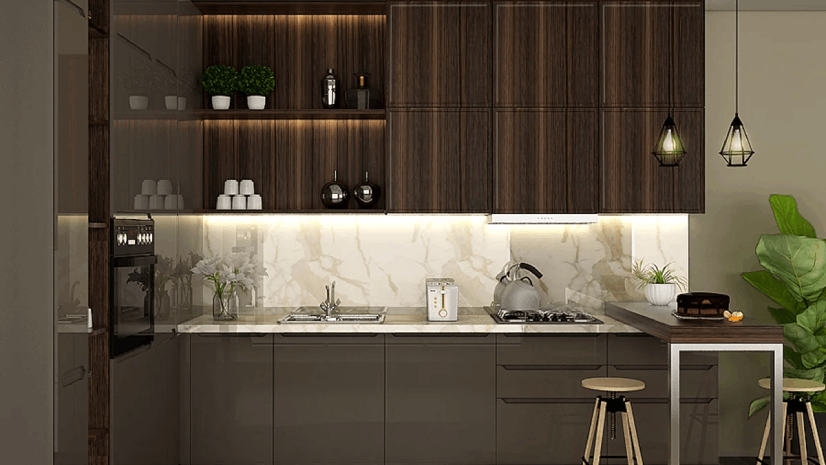
Studio apartments (300-400 sq ft total) A 7-8 feet straight kitchen leaves room for living. Two-burner cooktop instead of four. Compact sink. Under-counter fridge. Vertical storage maxed out. We’ve done hundreds in Pune’s new micro-apartments. They function better than you’d expect.
1BHK apartments (450-600 sq ft )- The standard 9-10 feet straight modular kitchen fits perfectly. Full-size appliances, reasonable storage, and enough counter space for actual cooking. This is where straight kitchens really shine.
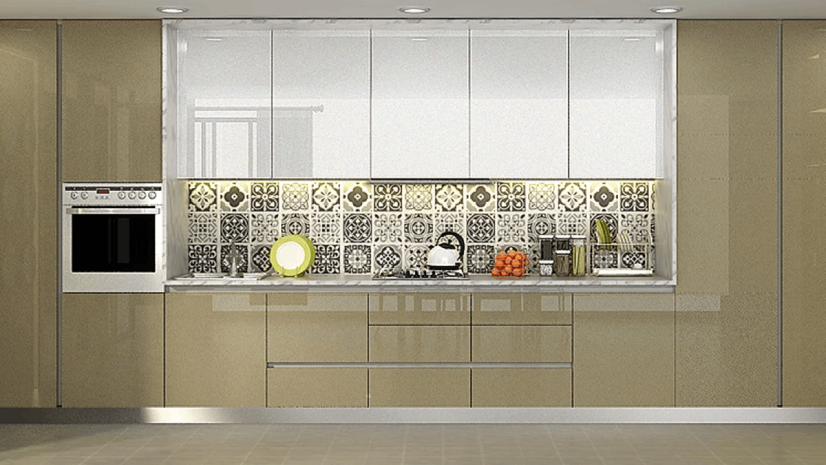
2BHK apartments (700-900 sq ft) – You have options here. A 10-12 feet straight kitchen frees up space for a bigger dining area. Or go with an L-shape if the kitchen is a separate room. We see both. The straight option tends to feel more modern.
Open-plan homes – When your kitchen faces the living room, a straight kitchen acts as a sleek divider without blocking sightlines. Add a small peninsula or counter with bar stools if you want a casual eating spot.
Mistakes People Make
After 29 years and over a million customers, we’ve seen every mistake possible.
Undersizing the sink– Small kitchen doesn’t mean tiny sink. You still need to wash large pots and pans. Minimum 24-inch sink. Don’t compromise here.
Skimping on lighting- One ceiling light doesn’t cut it. Under-cabinet LED strips are mandatory. They’re not expensive (₹2,000-3,000 for an entire kitchen), but they make the difference between cooking comfortably and squinting at your vegetables.
Ignoring the backsplash- Some clients skip the backsplash to save ₹15,000. Then they spend the next ten years scrubbing oil stains off painted walls. Ceramic tiles, acrylic panels, or even laminated back panels. Just install something.
Wrong counter height- Standard is 34-36 inches. But if you’re taller or shorter than average, adjust it. Your back will thank you after a few years of cooking.
Forgetting about ventilation- A chimney isn’t optional in Indian cooking. The question is just which one. Even in a small straight kitchen design, allocate space for a 60cm chimney minimum.
Overlooking electrical planning- Plan for enough sockets. Mixer, grinder, induction cooktop, microwave, water purifier. That’s already five points. Add two more for future appliances. Running extension boards later looks messy.
Why Spacewood for Your Straight Kitchen?
Plenty of modular kitchen manufacturers exist. But here’s what 29 years in this business taught us.
- Factory precision matters
Our 15-acre facility runs European and Japanese machinery. When we cut a cabinet panel, it’s accurate to within a millimeter. That precision means doors align properly, drawers slide smoothly, and everything just works. You don’t notice good manufacturing until you see the alternative at your neighbor’s house.
- Material quality in Indian conditions
We’ve learned which plywood grades actually resist Mumbai’s humidity. Which laminate finishes hold up in Nagpur’s heat? Which hardware doesn’t rust after a year near the sink? This knowledge comes from installing kitchens across climate zones, not from reading spec sheets.
- Realistic timelines
We offer realistic timelines of 3-4 weeks from order confirmation to installation for a straight kitchen. We stand by our commitment. The timelines may vary based on the complexity of projects.
- After-installation support
The soft-close hinge that suddenly starts closing hard after six months? We’ll fix it. The drawer runner that goes off track? We’ll be there. You get direct contact with the installation team plus our service network through 34 stores and 500+ dealers nationwide.
- Honest pricing
A basic straight modular kitchen design from Modular kitchen starting @ ₹2.99 Lakhs. Premium designs with special features go higher. We manufacture durable kitchens that work for years.
Conclusion
A modern straight kitchen design is not about compromising on space. It focuses on making thoughtful choices that align with your space, budget, and lifestyle. Since most cooking activities take place within a compact working area, a well-planned straight kitchen ensures efficiency without unnecessary expansion.
The families we serve in compact apartments aren’t looking for compromises. They want efficiency. They want quality. They want their kitchen to work as hard as they do, every single day, without demanding constant attention.
That’s what a well-designed straight-line kitchen layout delivers. Not a makeshift solution. A smart one.
Your cooking style, your space, your way. Just better organized and built to last. Because when materials come from factory-grade manufacturing, when design considers real Indian cooking patterns, and when installation is done by people who’ve done this a thousand times before, even that single wall becomes everything you need.
And sometimes, that’s exactly enough. Contact us today to get a personalized quote and start planning your kitchen.
Frequently Asked Questions
How much space do I need for a straight kitchen?
At a minimum, you need 8 feet of wall length. The ideal range is 10-12 feet, which comfortably fits all appliances and gives you decent counter space. You’ll also want 3-4 feet of clear floor space in front for walking around. Studio apartments sometimes make do with 7 feet, but that means going vertical with storage and being selective about what you include.
Can two people cook together in a straight kitchen?
Yes, though it takes coordination. One person works at one end, the other at the opposite end. For couples who occasionally cook together, it works fine. Joint families with multiple cooks might find it tight. We’ve seen people adapt by taking turns or doing prep work at the dining table.
What appliances can fit in a straight kitchen design?
All the essentials fit easily: 4-burner cooktop, chimney, sink, water purifier, fridge, and microwave. If you’ve got 12+ feet, add a dishwasher or built-in oven. The trick is prioritizing what you actually use. No point sacrificing storage for an OTG that sits unused for months.
How do I maximize storage in a limited straight kitchen space?
Go vertical. Cabinets should reach the ceiling, not stop at 7 feet. Use pull-out drawers below the sink. Add organizers like spice racks and cutlery dividers. Install tall pantry units at the ends. Corner carousels prevent wasted edge space. Every inch needs to earn its keep.
Is a straight kitchen suitable for Indian cooking?
Absolutely. Indian cooking needs good workflow and smart storage more than sprawling counter space. Make sure you have a proper chimney (60-90cm), heat-resistant materials near the cooktop, and organized spots for masala dabbas and pressure cookers. We’ve installed these for families cooking everything from daily meals to festival feasts.
What length works best for a family of four?
We’d say 10-12 feet. That gives you a 4-burner hob, proper sink, decent prep space, and storage for daily needs. You can manage with 8-9 feet if you stay organized, though you might need a pantry cupboard elsewhere. Beyond 12 feet, you’re probably better off considering an L-shape.
What's the ideal counter height for a straight kitchen?
Standard is 34-36 inches, which works for most people between 5’3 and 5’10. Taller or shorter than that? Adjust it. Your back will complain if you’re constantly bending or stretching. We always measure the primary cook’s height and customize accordingly.
How long does it take to install a straight kitchen?
About 3-4 weeks total. Two weeks for manufacturing at our factory, then 3-5 days for delivery and installation. That’s assuming your electrical and plumbing work is done. Add another week if civil work is pending.
Can I add an island to my straight kitchen later?
Sure, if you have the floor space. You need at least 3.5-4 feet of clear space in front. Some clients start basic and add a mobile island later when the budget allows. Just plan your flooring and electrical accordingly. We’ve seen islands with extra storage, bar seating, and even additional cooktops added after the fact.