

Contemporary Kitchen Interior Designs
Spacewood's contemporary modular kitchen range is built for homeowners who want a kitchen that looks elevated and intentional, without being cold or overdone.
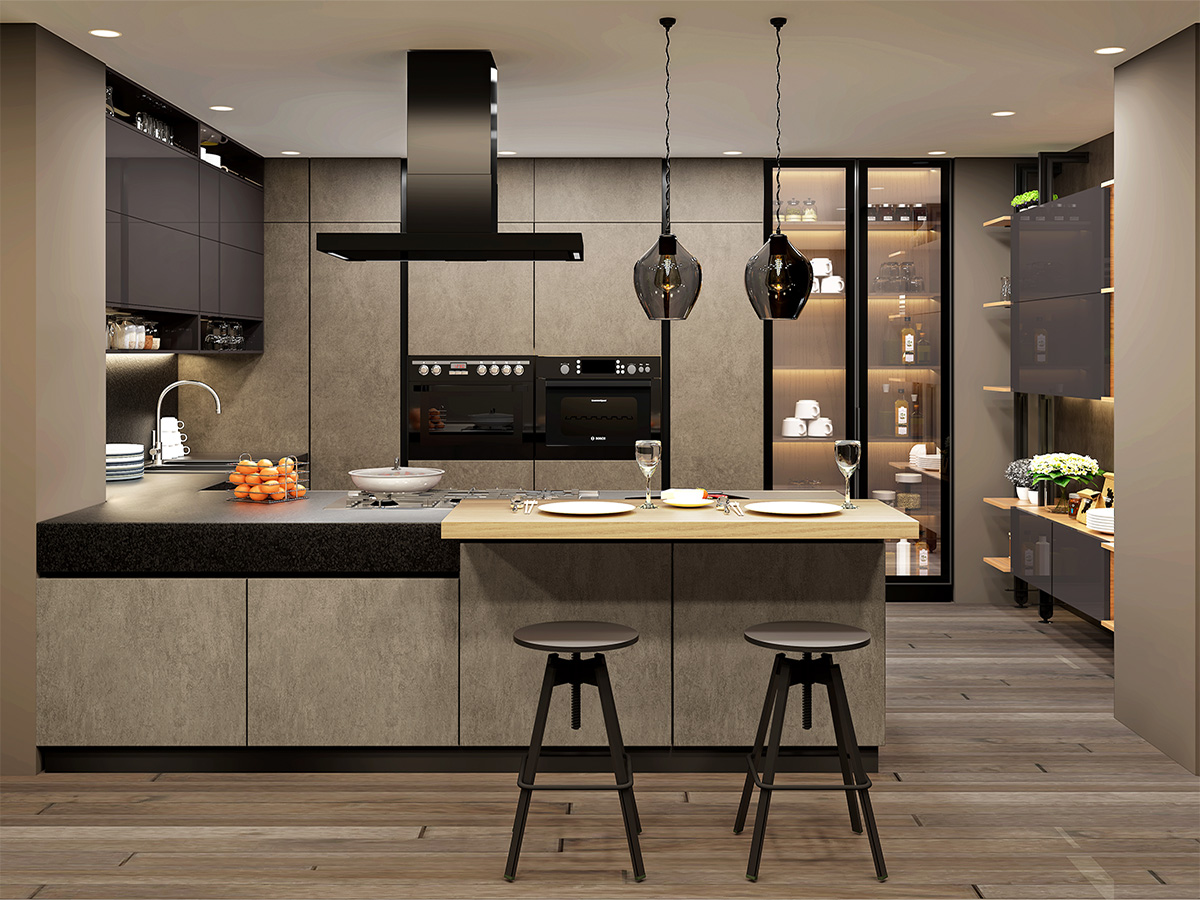
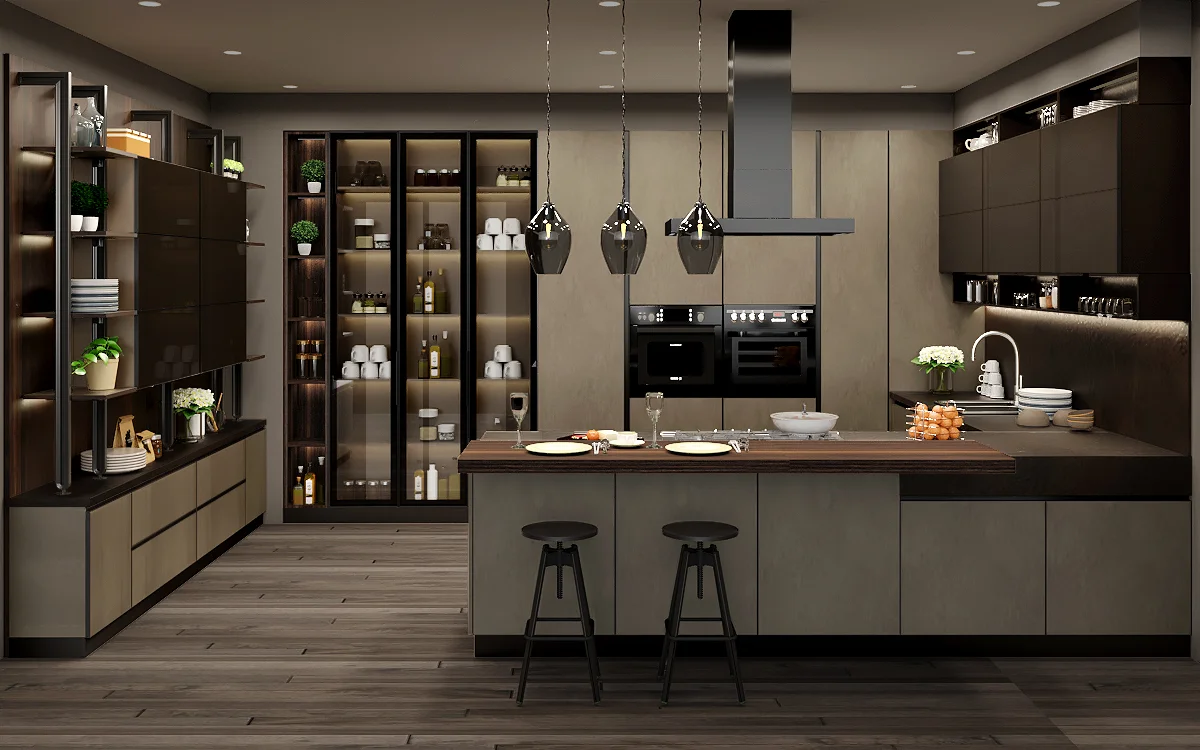
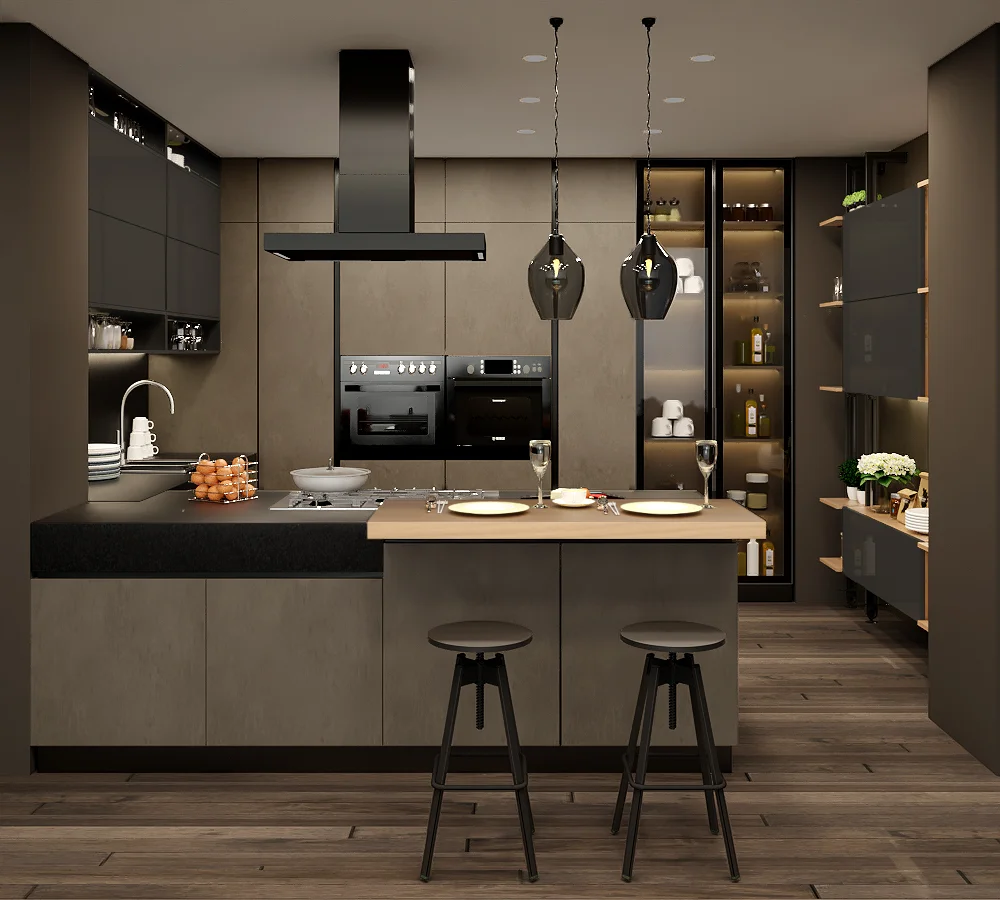
If you've been exploring contemporary kitchen interior design ideas, our collection is available across L-shaped, U-shaped, parallel, and many more kitchen layouts. Browse the range below and find what works for your space.
Key Information at a Glance
Frequently Asked Questions
What is the difference between contemporary and modern kitchen design?
Modern kitchen design refers to a specific aesthetic movement (mid-20th century modernism) with particular characteristics. Contemporary kitchen design means thinking of the present moment. In practice, both terms are used interchangeably to describe flat-panel, clean-line kitchens.
Are contemporary kitchens suitable for heavy Indian cooking?
Yes, when planned correctly for Indian use. The modifications needed are: more closed storage (open shelves do not suit high-oil Indian cooking well), a powerful chimney (essential in open-plan contemporary kitchens), moisture-resistant materials near the sink, and deep drawers for heavy vessels. The aesthetic remains clean and contemporary; the material and layout choices are adjusted for Indian cooking reality.
What storage approach keeps a contemporary kitchen looking uncluttered?
Everything must have a home in a cabinet. A pantry column for groceries, drawers for vessels and utensils, pull-out units for bottles and spices, and ceiling-height overhead cabinets to maximize capacity. Open shelves should be reserved for curated display items only. The counter must be kept clear as a functional commitment; contemporary kitchens only look contemporary when they are maintained that way.
Is a luxury contemporary kitchen design worth the cost?
Selectively. Hardware quality (hinges, drawer runners, soft-close mechanisms) is worth the premium because the difference is felt every day. A good chimney is essential in an open-plan contemporary kitchen. Premium visible finishes (acrylic, glass fronts) make an aesthetic difference but require higher maintenance. Complex motorized or smart storage systems add cost and complexity without proportional usability benefit for most households.
How do I maintain a contemporary kitchen's clean look over time?
Daily wiping of counters and matte surfaces prevents oil buildup. Chimney filters should be cleaned monthly in households with daily cooking. Hardware, hinges and drawer runners should be checked every six months and tightened if needed. The key is that a contemporary kitchen has nowhere to hide disorder: consistent organization habits are built into ownership of this style.
Contemporary Kitchen Interior Design That Works in Real Indian Homes
What defines contemporary kitchen interior design
Contemporary means current. Not a fixed style like art deco or farmhouse, but what reflects the present moment in kitchen design. In 2026, that means clean lines and flat panel shutters, neutral palettes with one or two material contrasts, smart integrated storage, handle-less or minimal hardware, and materials chosen for daily practicality rather than visual drama. The challenge with contemporary design is execution. Any misalignment becomes visible. Uneven gaps between shutters, inconsistent laminate batches, poorly fitted handles, all of it shows immediately on a flat, uncluttered surface. Classic or traditional styles have detailing that can conceal minor execution issues. Contemporary designs have nothing to hide behind. Factory manufacturing is not optional; it is what makes the difference.Contemporary Kitchen Design Ideas That Stay Practical
Storage That Keeps Counters Clear
The defining feature of a contemporary kitchen is the counter. Uncluttered, clean, with space to work. That requires all the items that typically crowd counters, toasters, spice boxes, oil bottles, and fruit to have a dedicated cabinet home. Deep base drawers, tall pantry units, pull-out bottle organizers: these make it possible to keep counters clear in a kitchen that is actually used. Open shelves are a contemporary design staple. In Indian kitchens, they work for display items and are occasionally used pieces. For daily-use vessels, spice boxes, and cooking equipment, closed storage is more practical. Dust, oil vapour, and frequency of access all make open shelf storage harder to maintain in an active Indian kitchen than in the design references it comes from.Drawers Over Deep Shelves
Deep base cabinet shelves require bending into the back of a dark space to reach items. Every time. Drawers open fully and make everything visible at once. For Indian kitchens where heavy pressure cookers, woks, and multiple cooking vessels are daily-use items, the practical difference is significant. A contemporary modular kitchen should specify drawers as the default for base cabinets, not as an upgrade.Ceiling-Height Cabinets
The gap above standard-height wall units collects dust and adds nothing. Ceiling-height cabinets eliminate that gap and add significant usable storage. In a contemporary kitchen where the design goal is clean, uninterrupted lines, ceiling-height cabinets also read better visually, no exposed top surface, no break in the vertical line.Contemporary Kitchen Layout Options
• L-Shaped and Parallel Layouts
Both work well with contemporary design. L-shaped layouts suit most Indian apartment kitchens, with an efficient, clear work triangle, open to the dining area when needed. Parallel layouts (two runs facing each other) are good for narrow rectangular kitchens where movement needs to be linear.• Island Layouts
Popular in contemporary kitchen design and often requested. But an island requires real floor space, a minimum of 4 feet of clear walkway on all sides to be functional rather than decorative. In most Indian apartments, a peninsula (one end attached to the main counter run) provides similar benefits with lower space requirements.• Open Kitchen Design
Connecting the kitchen to the living or dining space is strongly associated with contemporary kitchen interior design. It makes the home feel larger and the kitchen more social. The practical requirements: closed storage must be comprehensive, chimney performance must be strong (cooking odours and oil vapour spread into the living space without it), and the kitchen must be actively maintained.Explore all kitchen styles
luxury contemporary kitchen designs: What Is Worth the Investment
Luxury contemporary kitchen designs often include premium finishes (acrylic high-gloss, lacquered shutters, glass-front cabinets), integrated appliances (built-in oven, concealed refrigerator panels), and advanced storage accessories. These elements add significantly to the cost. Some are worth it. Others are not. Worth the investment: quality hinge and drawer hardware (the difference is felt every day), ceiling-height cabinet runs (adds real storage and visual impact), a good integrated chimney (essential in any contemporary open kitchen), and drawer organizers (cutlery, spice, knife block, these are used constantly). Not always worth the investment: motorized lifting wall units, very expensive countertop materials like rare marble, complex pull-out systems that add mechanism points that can fail. The simpler the mechanism, the more reliable it is over time.Contemporary Kitchen Colour Palettes for Indian Interiors
White remains the most-used base. But in Indian interiors with warm artificial lighting, pure cool white can feel sterile. Warm white and off-white work better; they read as clean without feeling clinical. Pairing with a wood-finish element (island face, lower cabinets, or a floating shelf) adds warmth that makes the kitchen feel lived-in. Greige (warm grey-beige) tones are popular in 2026 contemporary kitchen designs in India. They work across lighting conditions and complement both granite and quartz countertops. Two-tone kitchens, a contrasting colour on the island or peninsula versus the main run, add visual interest without complexity. One contrast element is enough; more than that becomes busy.Materials That Support Contemporary Kitchen Interior Design
Matte laminate for most surfaces. Practical, durable, easy to clean, shows fingerprints less than gloss, and is available in every contemporary palette. Acrylic or lacquered shutters for one or two featured elements, where the visual payoff justifies the maintenance. Granite or quartz countertops, granite for reliability and heat resistance, quartz for consistency and no-seal convenience. Moisture-resistant plywood for all cabinet structures. Even in kitchens far from coastal humidity, steam from cooking, moisture from the sink area, and the general moisture in Indian air all make this non-negotiable. Edge banding is sealed at the factory, not applied manually on site. Explore Material & Finish Options available at SpacewoodContemporary Kitchen Cost in India
- Clean contemporary kitchen in matte laminate: starting ₹3 lakhs.
- Acrylic or two-tone finish, better hardware, integrated accessories: ₹4–7 lakhs.
- Luxury contemporary kitchen with premium finishes, integrated appliances, island: ₹7+ lakhs.