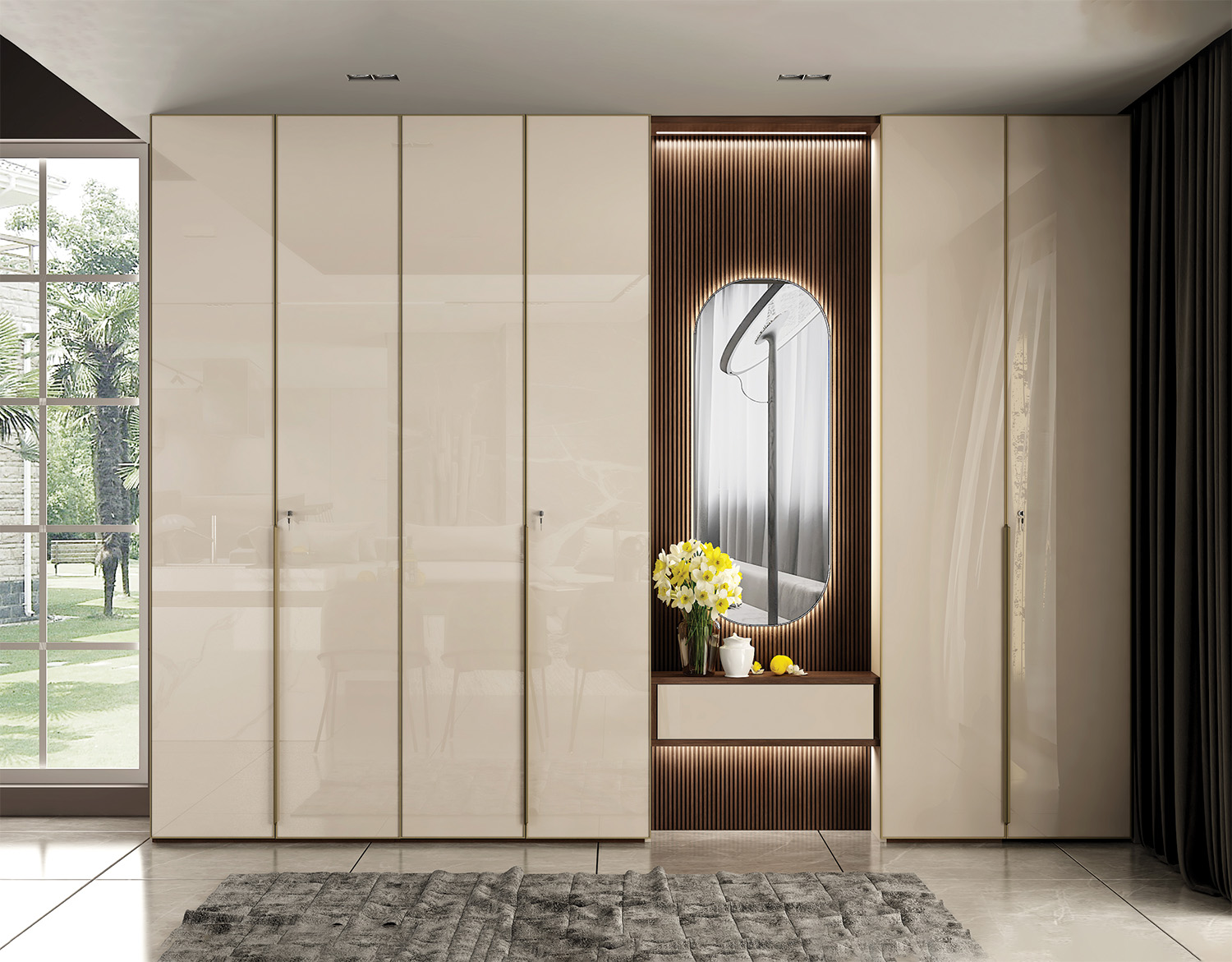
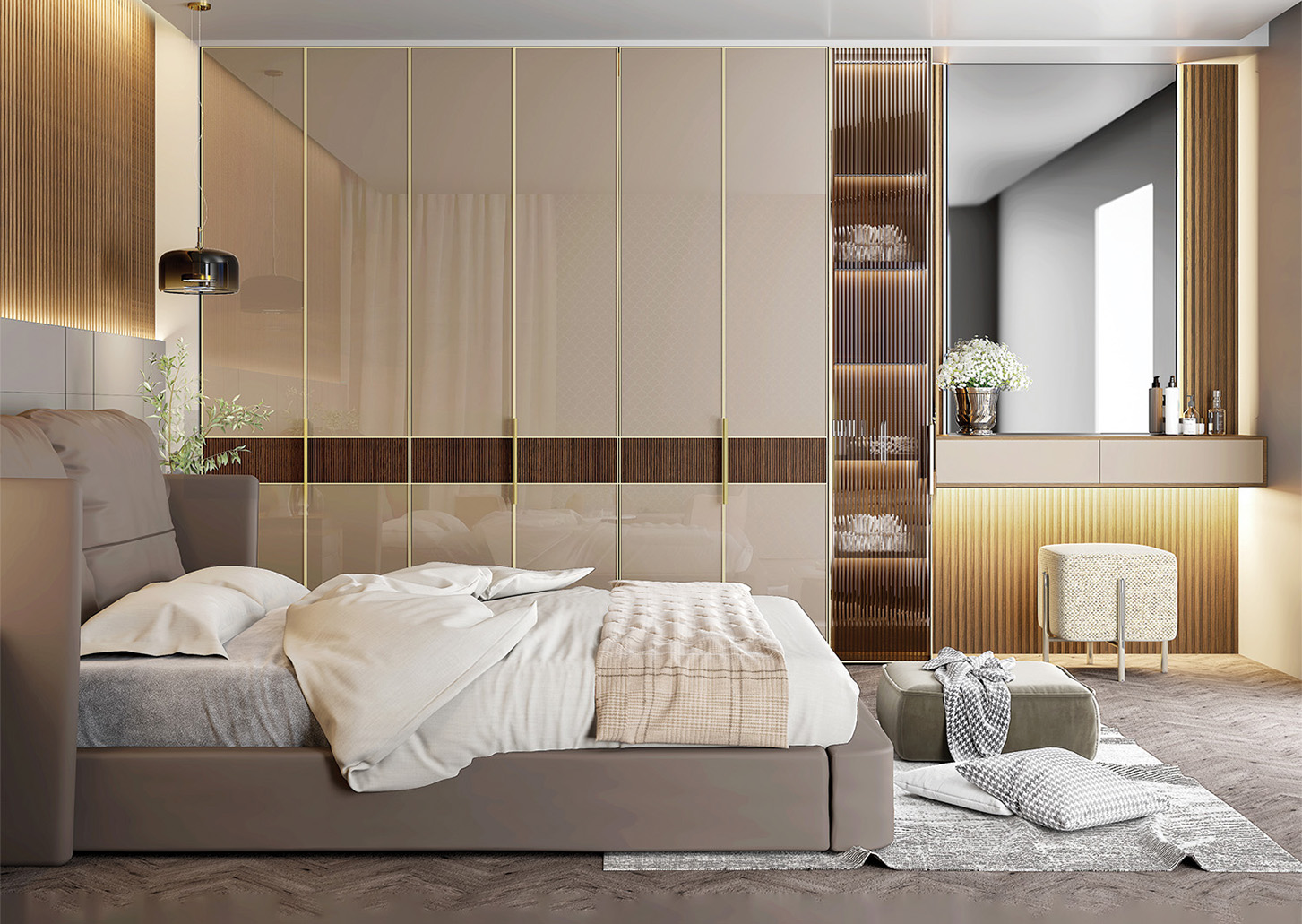
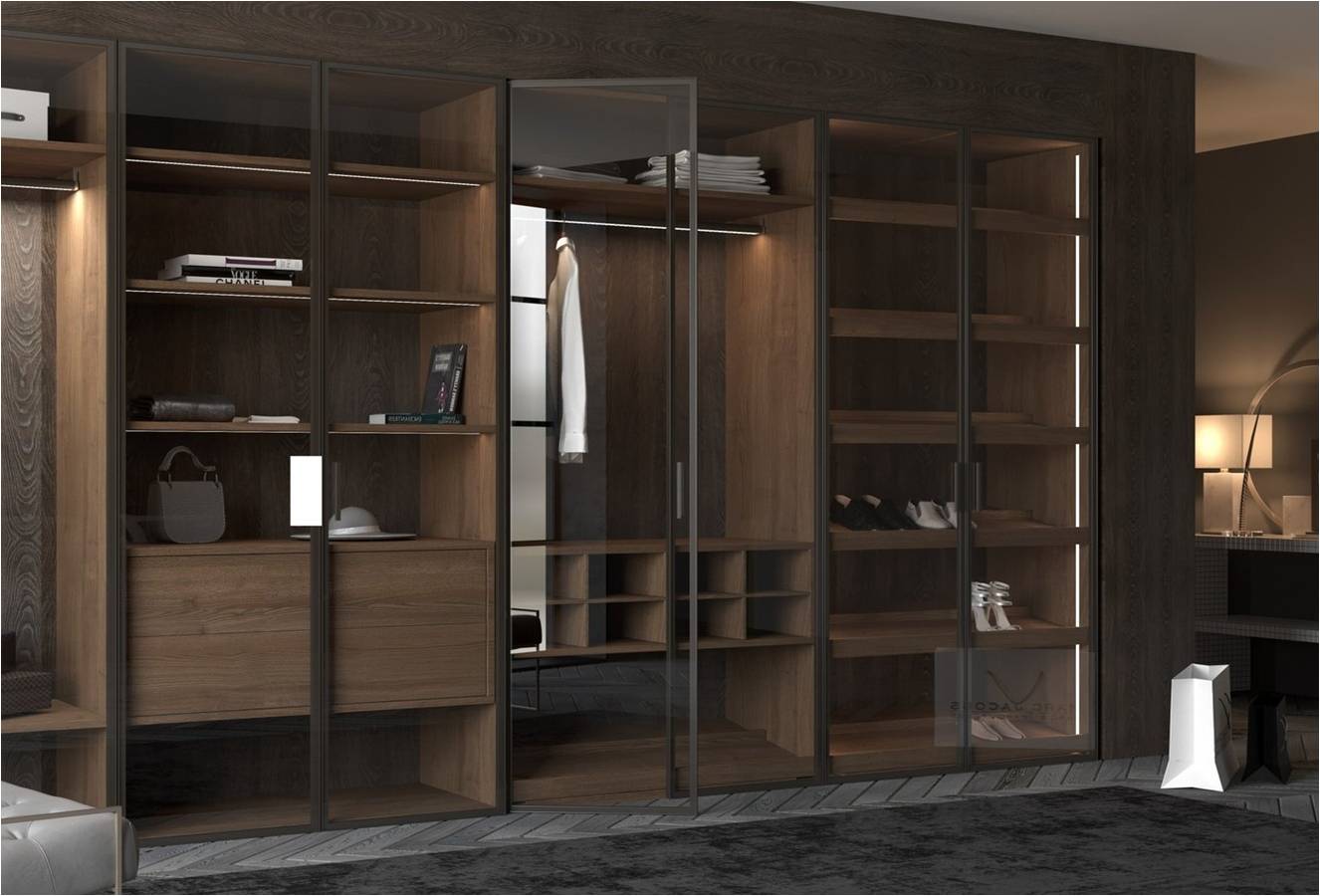
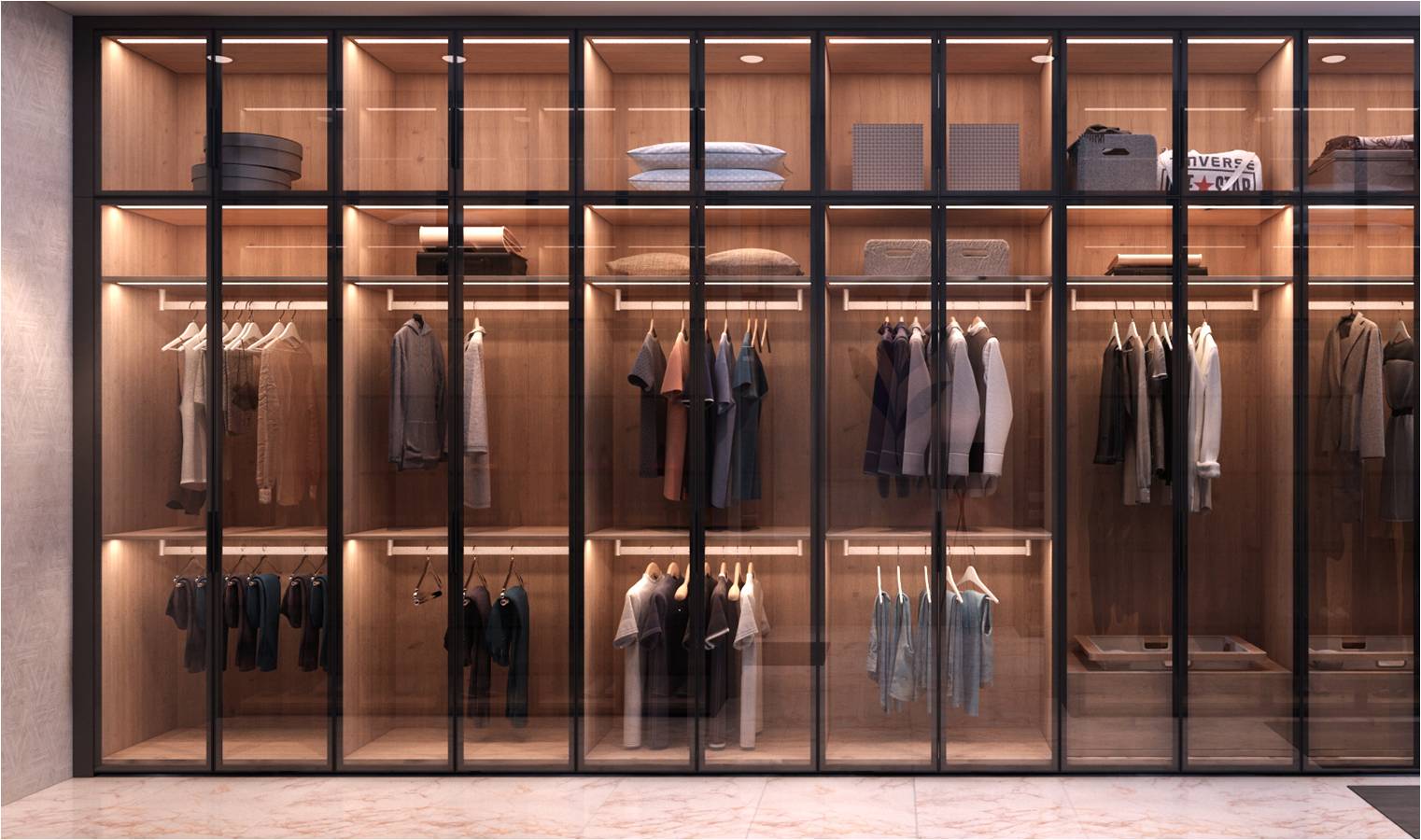
A walk-in wardrobe is the storage upgrade most people want. More space, full visibility, room to move around inside. But that advantage disappears faster than expected when the layout is not planned properly. Clothes pile in corners. Shelves get overloaded. The hanging section fills up. And a large room that was supposed to simplify mornings makes them slower.
Walk in wardrobes are not just about size. They are about how the space works when you are actually using it at 7 AM before work. Layout, lighting, and zoning determine that, not square footage.
Spacewood has built modular wardrobe systems for 29 years across more than a million homes. Manufacturing from a Nagpur MIDC facility using European machinery ensures consistent panel quality, edge sealing, and finish across large wardrobe installations where uniformity is visible across every wall.
What Makes Walk-In Wardrobes Different
A walk-in wardrobe is a separate room for storage; not a wardrobe you walk up to, but a space you walk into. That changes everything about how it should be designed.
In a standard wardrobe, you open a door and reach in. In walk-in wardrobes, you step inside, and everything is around you. That means organisation failures are amplified. There is no door to close over the clutter. The entire space is visible at once, which is both an advantage and an accountability mechanism.
Layout Options for Walk-In Wardrobes
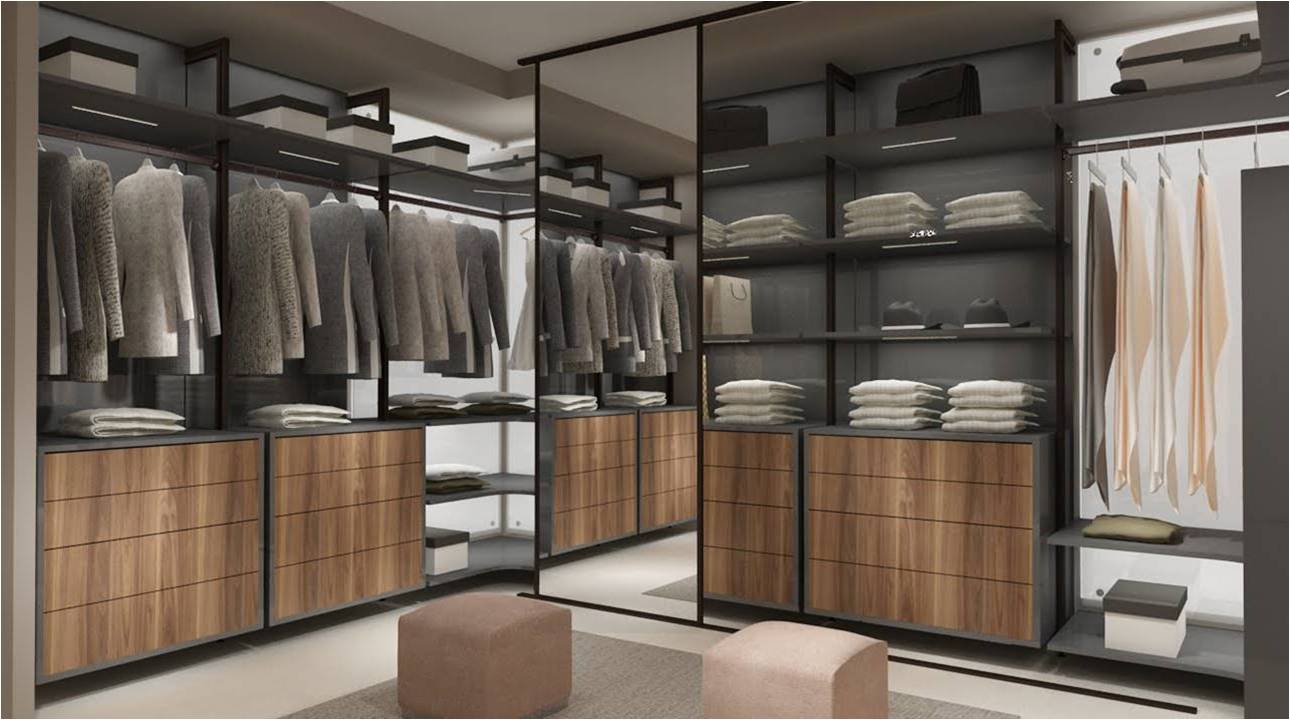
Parallel Layout
Storage on two facing walls with a central walkway. The most storage-efficient configuration for a given floor area. Walkway width should be at least 900mm, ideally 1,200mm, to allow comfortable movement, bending for drawers, and access to hanging sections without turning sideways.
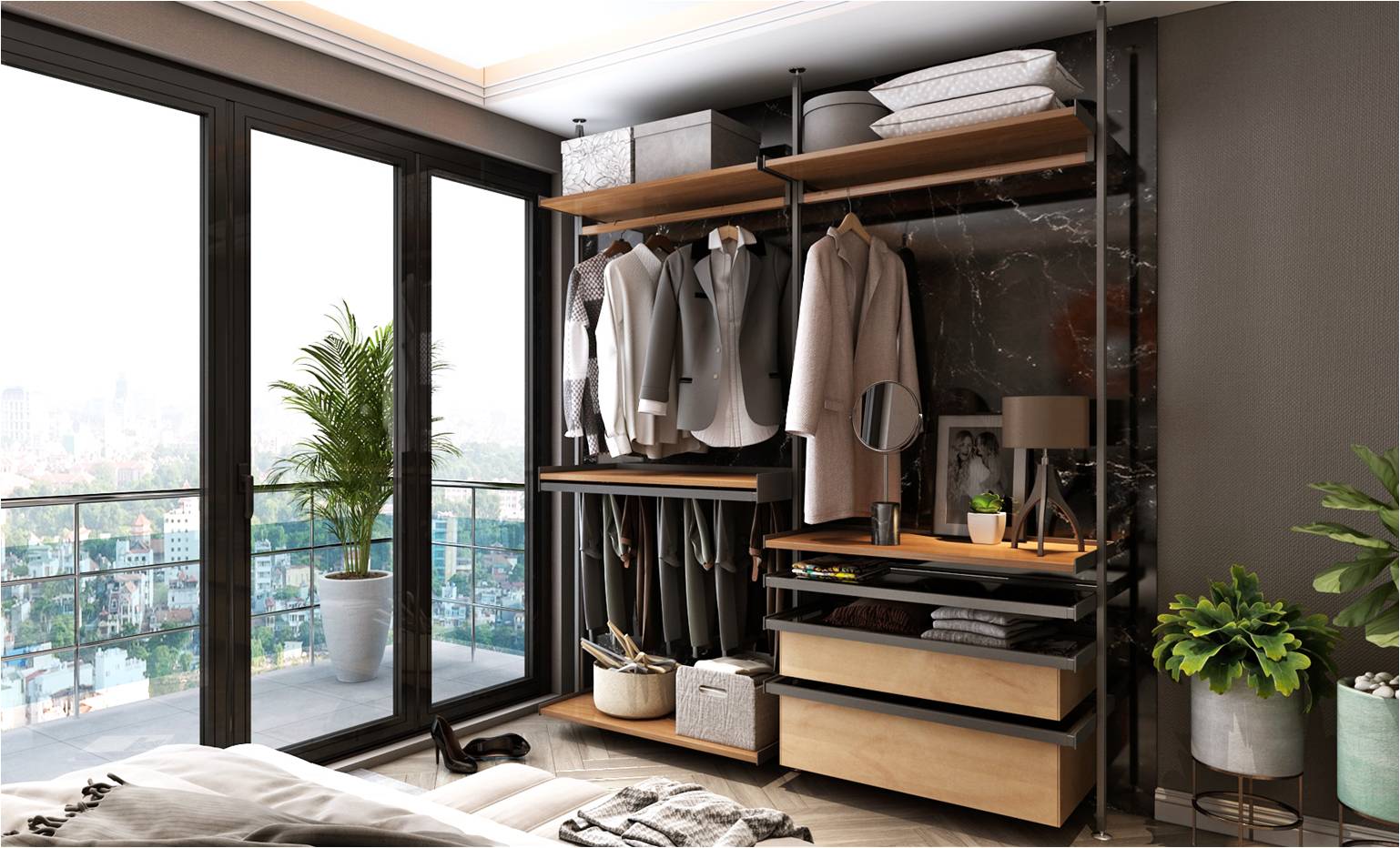
L-Shaped Layout
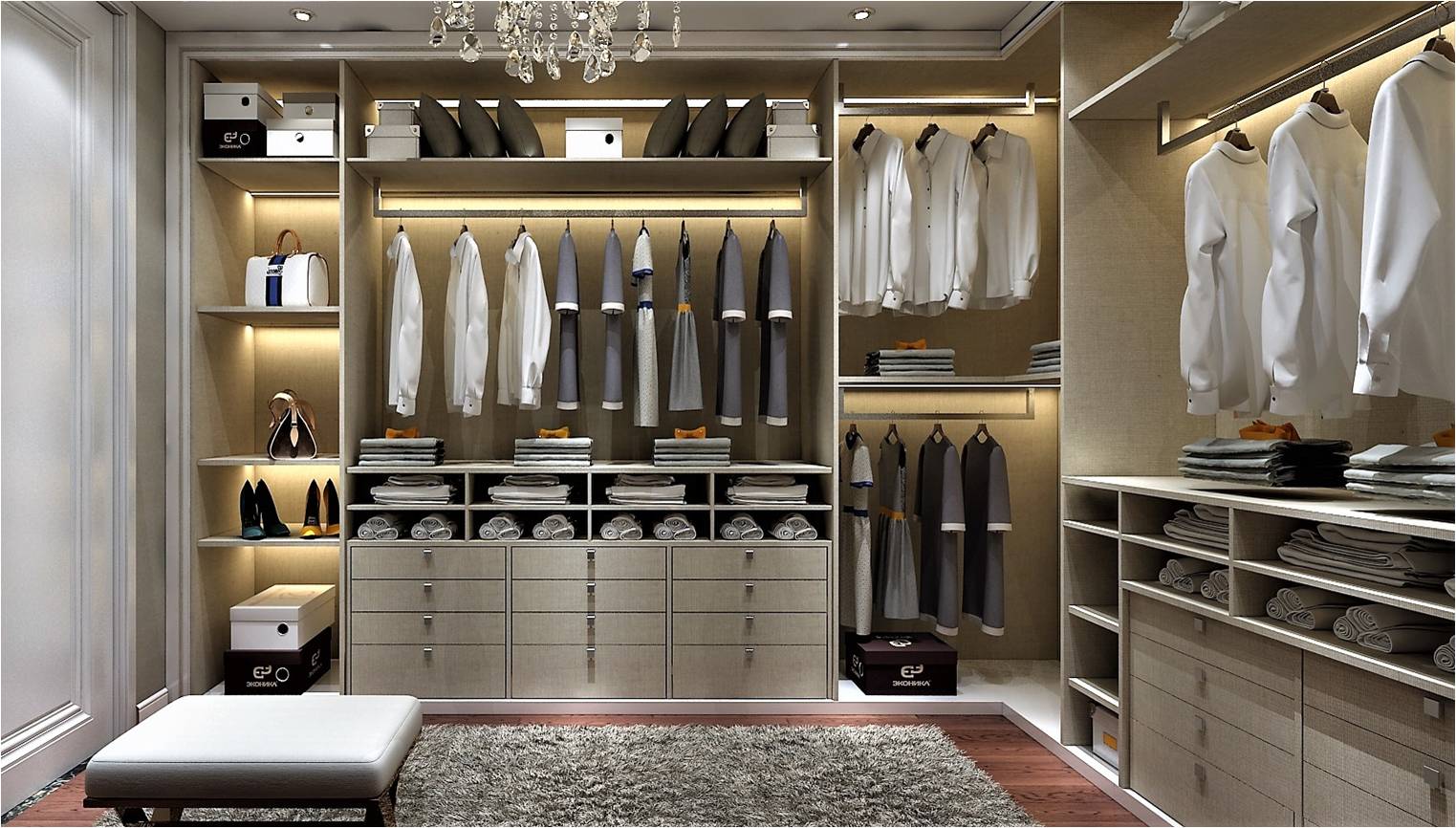
Storage on two adjacent walls. Works well in rooms with an irregular dimension. Leaves more open floor area than a parallel layout, which can be used for a dressing stool or a pull-out island.
U-Shaped Layout
Storage on three walls. Maximum storage volume in a given floor area. Works well in dedicated walk-in rooms of at least 8×8 feet. Smaller than that, and the U-shape creates congestion rather than efficiency.
Walk-In Wardrobe Ideas That Work: Zoning by Category
The single most important design decision in walk in wardrobes is how the space is divided into sections. This is more important than size, finish, or any accessory.
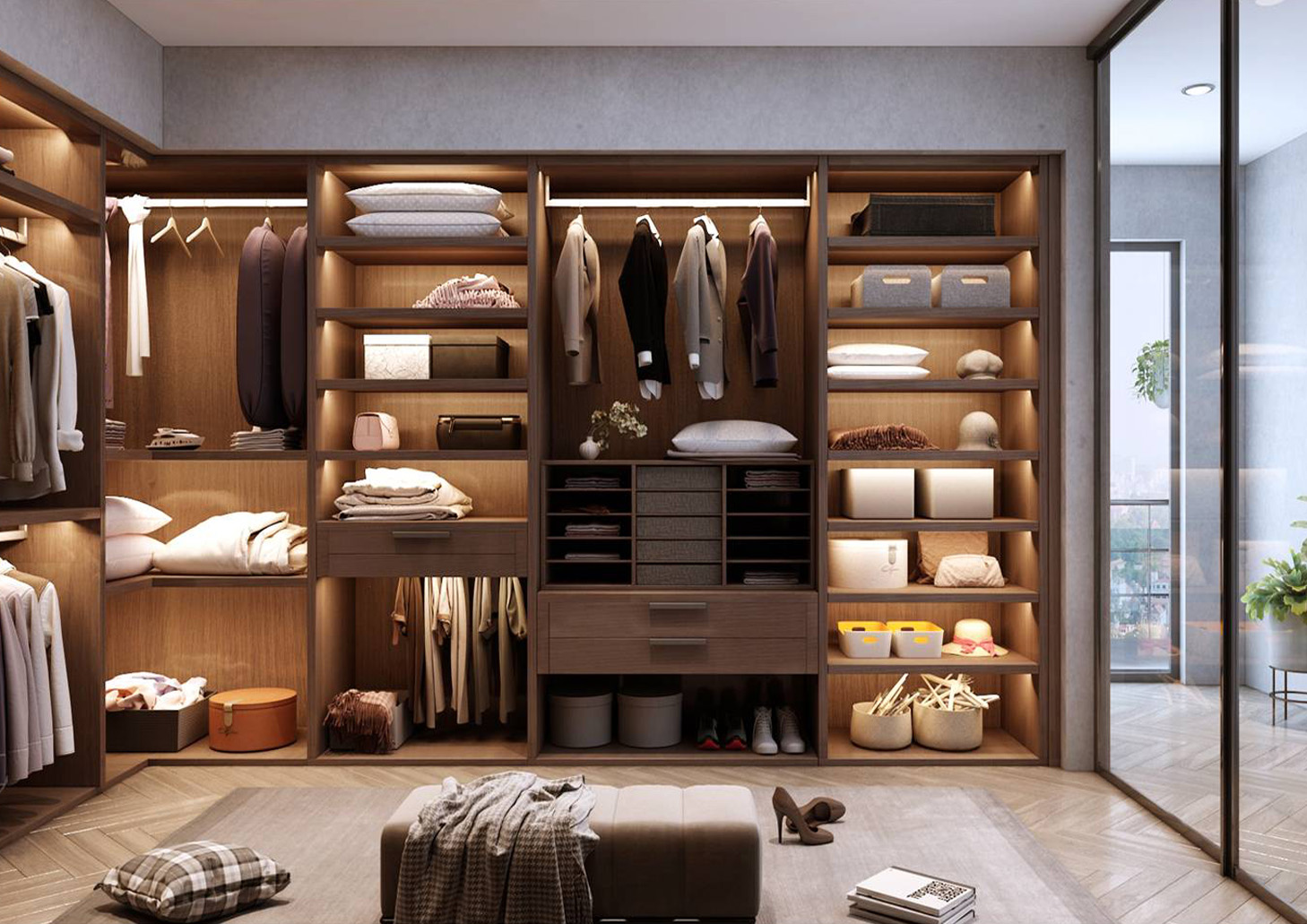
A practical zone structure: full-height hanging for sarees, dresses, suits, and long kurtas (this section needs at least 1,500mm from rod to floor); half-height hanging for shirts, folded trousers, and shorter kurtas with shelf storage in the lower half; dedicated shelf zone for folded sarees, sweaters, and knits; drawer units for innerwear, accessories, and smaller items; shoe storage positioned near the entry point; loft section for luggage, seasonal items, and spare bedding.
Walk-In Closet Designs and the Role of Visibility
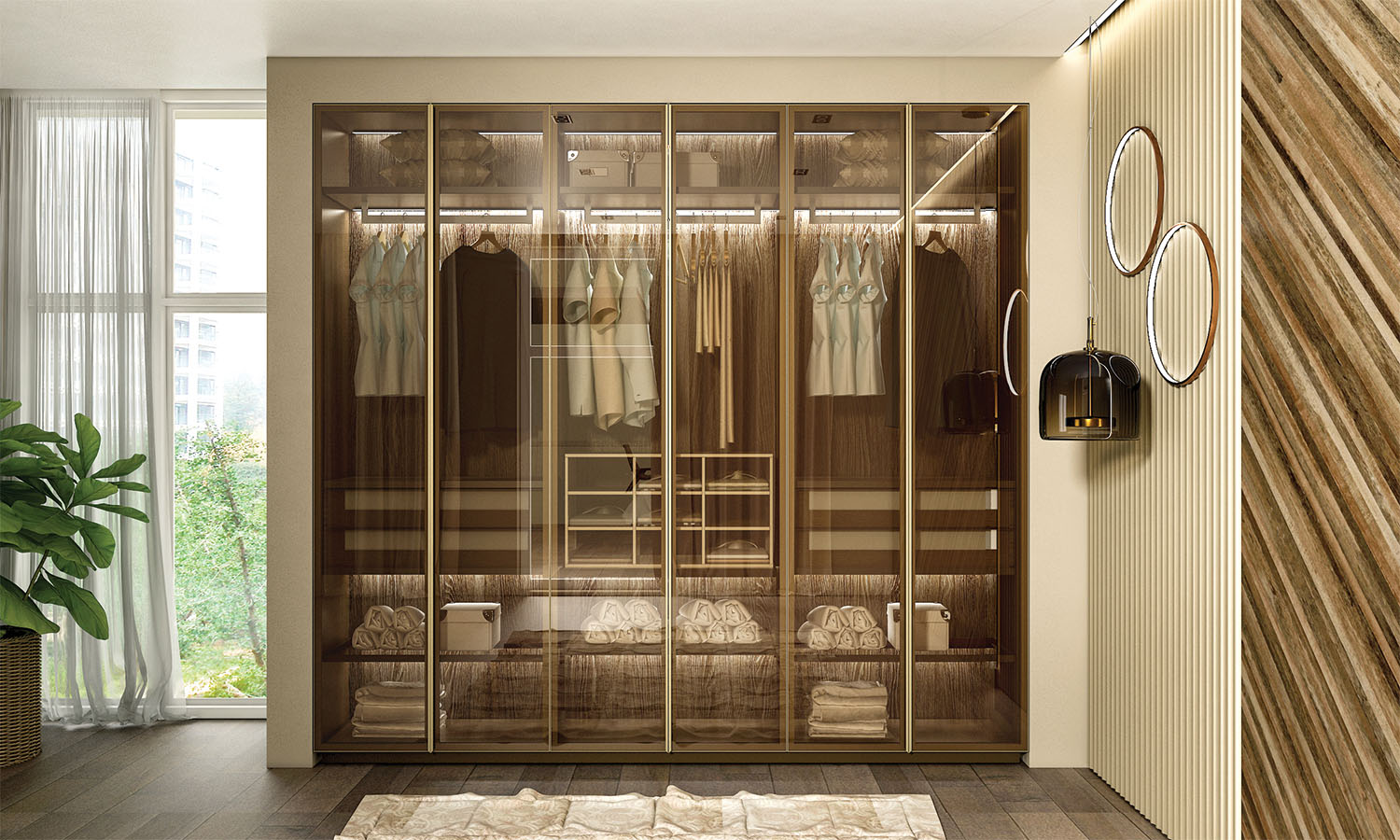
Walk in closet designs are built on the principle that seeing everything makes finding anything faster. But visibility only works when items are actually where they belong. An open-shelf walk-in closet with poor organisation looks worse than a closed wardrobe because there is nowhere to hide the disorder.
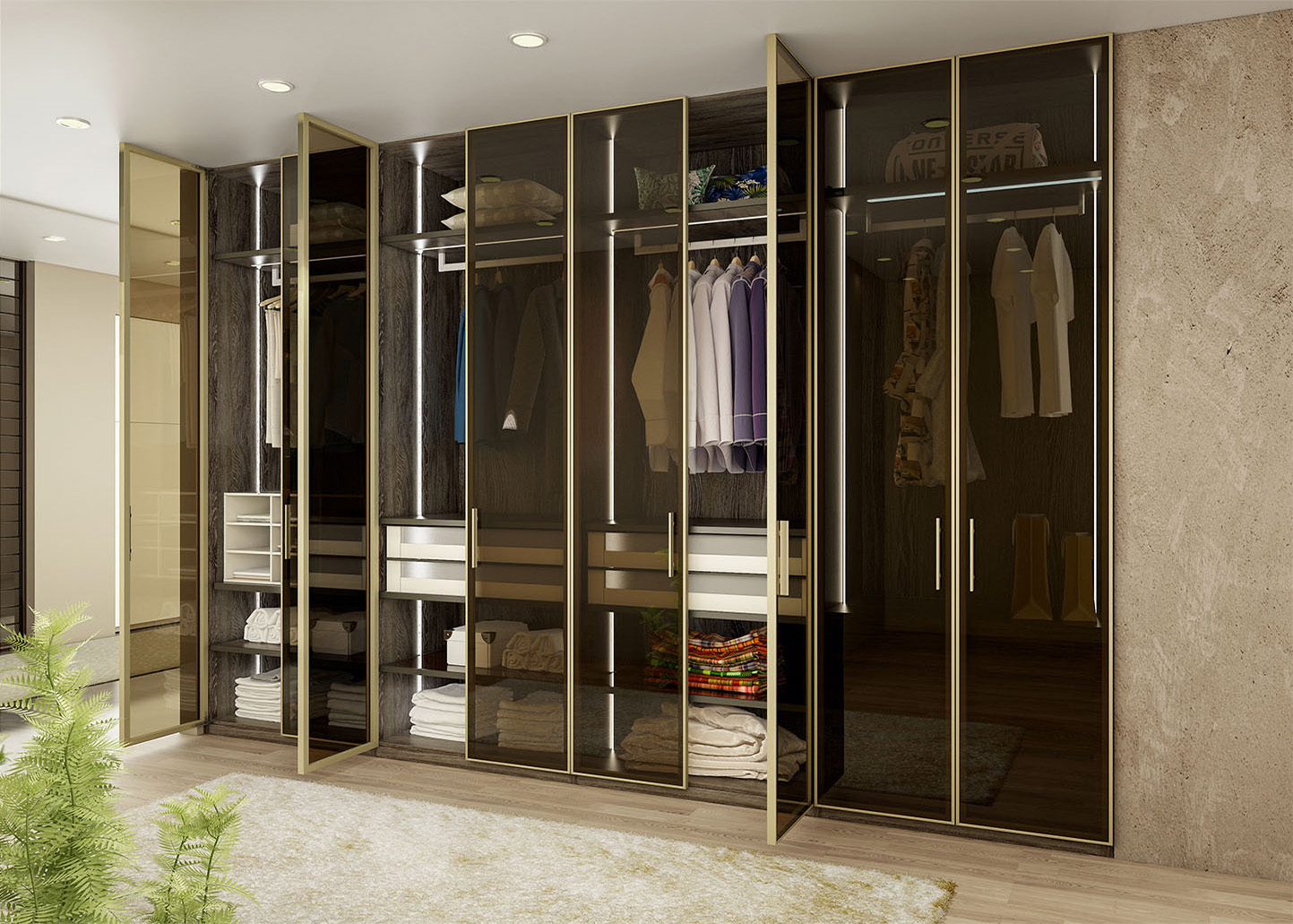
Internal lighting is not optional in walk in wardrobes. Sections deeper than 600mm without dedicated lighting become dim and difficult to navigate, especially in the early morning. LED strips along shelf undersides and within hanging sections make the entire wardrobe usable, not just the front portions.
Materials That Support Large-Scale Wardrobe Systems
Moisture-resistant plywood is essential. In a room-sized wardrobe, even small amounts of humidity affect panels near exterior walls over time. Edge banding on every exposed edge protects against moisture ingress. In walk in wardrobes, there are significantly more edges than in a standard unit, so proper sealing becomes proportionally more important.
Finish uniformity across all sections matters. Batch consistency in laminate or PU finishes ensures that panels installed simultaneously match each other. Factory manufacturing controls this; site-based finishing cannot guarantee it.
Walk-In Wardrobe Lighting: Plan It at the Design Stage
Lighting is the most commonly underplanned element in walk in wardrobes, and the one most homeowners wish they had done differently. Adding lighting after installation requires chasing wires through completed walls and panels. Planning it during design costs a fraction of retrofitting.
General lighting: a central ceiling light is sufficient for the room. Section lighting: LED strips under each shelf section positioned at the back of the shelf underside to throw light forward. Hanging section lighting: a strip along the hanging rod itself or a recessed LED in the shelf above the rod illuminates hanging clothing without creating shadow on the garments.
Walk-In Wardrobe Cost in India
- Entry-level walk-in wardrobe in laminate finish, standard internal layout, 50 to 70 sq ft: Rs. 1.5 to Rs. 2.5 lakhs.
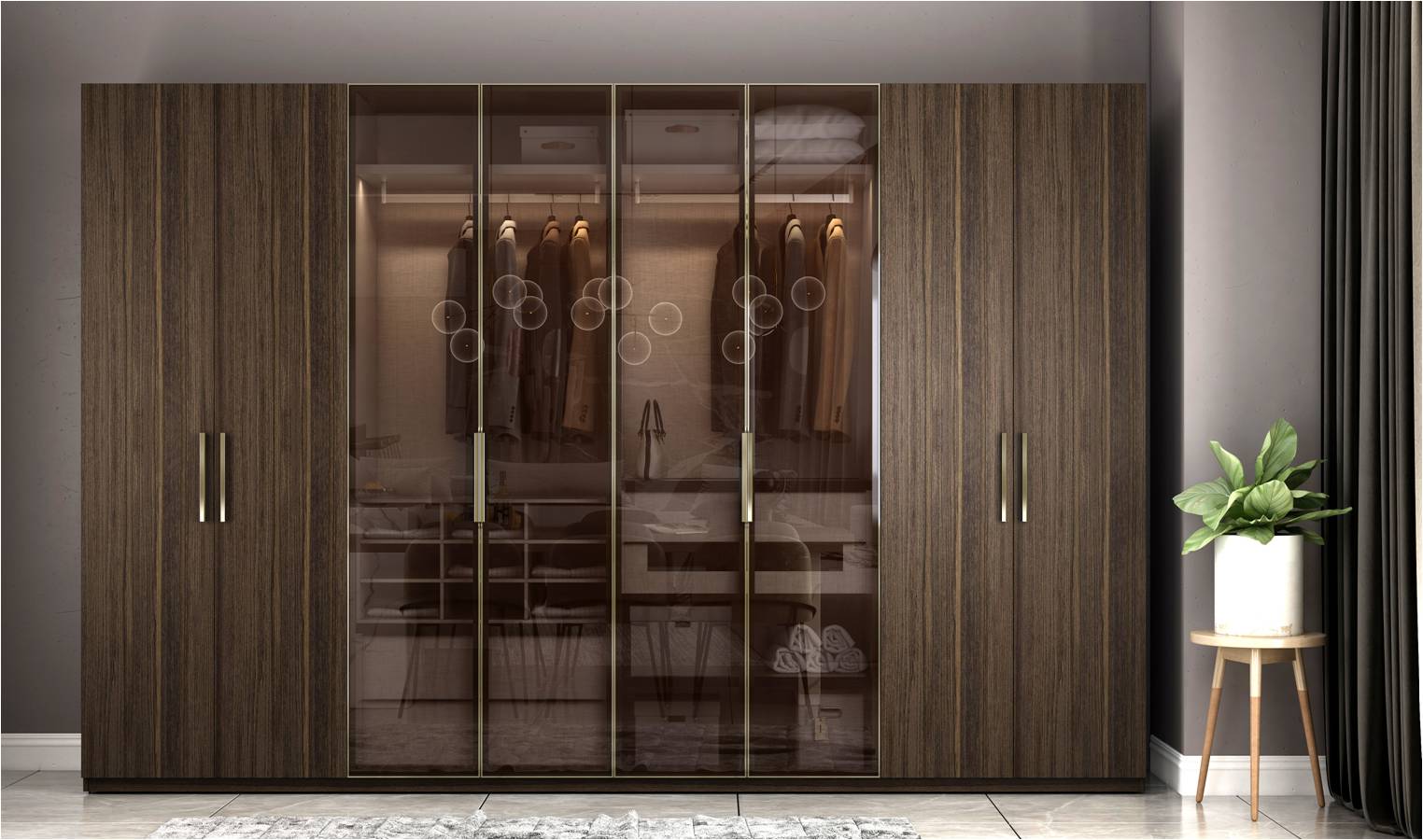
- Mid-range with mixed finishes, dedicated lighting, pull-out accessories, glass-front sections: Rs. 2.5 to Rs. 5 lakhs depending on floor area and fittings.
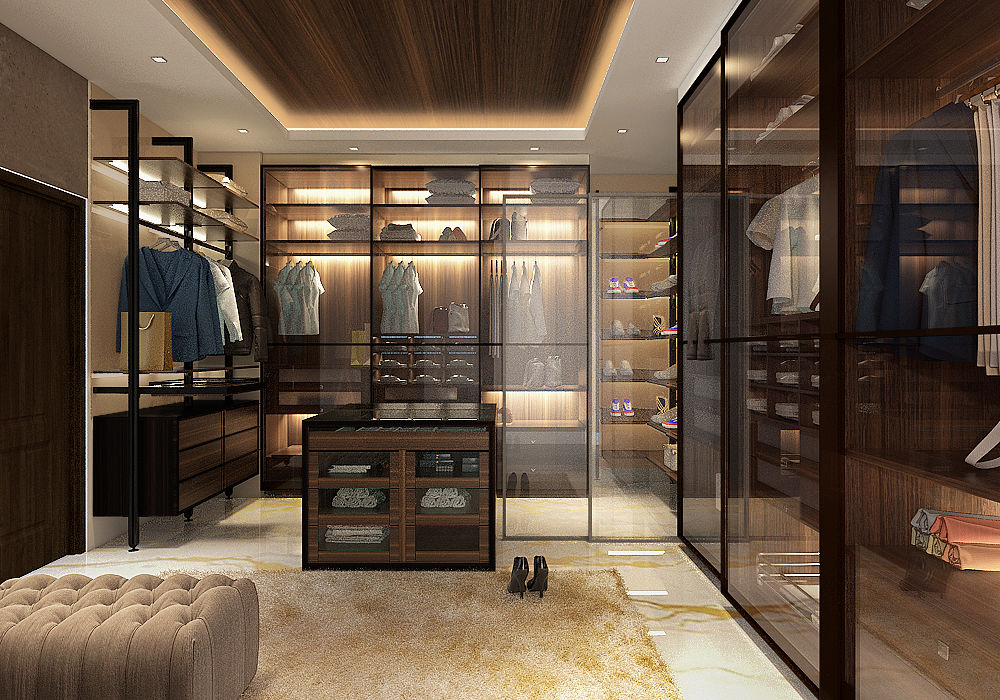
- Premium custom walk in closet designs with full integrated lighting, PU or acrylic finishes, island unit, imported hardware: Rs. 5 lakhs and above.
Get a free walk-in wardrobe consultation
Explore all Spacewood wardrobe types