

Kitchen Cabinet Design Ideas: Complete Guide
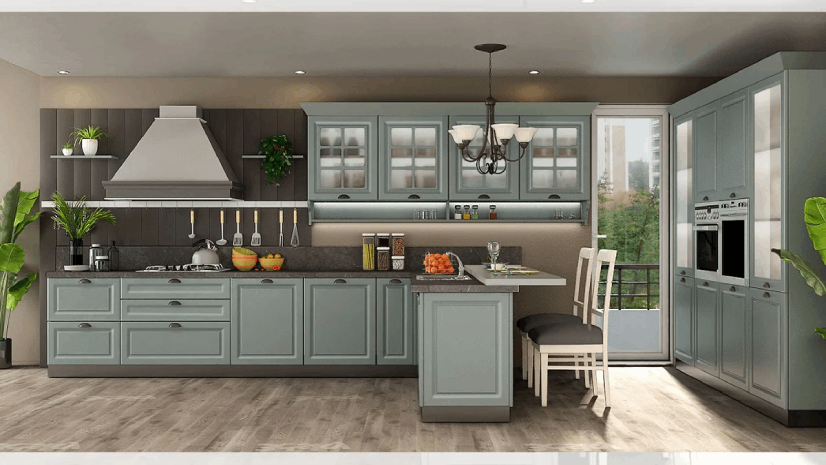
Table of Contents
Introduction
Ask anyone who has renovated their home what they wish they’d known before starting, and kitchen cabinets almost always come up. Mismatched shutter finishes, poor-quality hinges that stop soft-closing within a year, layouts that look good on paper but make cooking a frustration, the mistakes are predictable and entirely avoidable with the right information.
This guide covers the full spectrum of kitchen cabinet design ideas and materials, from layout planning and shutter types to the finishes that actually hold up in an Indian kitchen. Whether you’re building fresh or planning a renovation, this is the guide you need.
What Are the Most Popular Kitchen Cupboard Designs for Indian Homes?
Indian kitchens are unique. We cook with spices. We generate oil-laden steam. We often have multiple family members cooking simultaneously. The best kitchen cabinet design for Indian conditions has to look good and perform well.
L-Shaped Modular Kitchen
The most popular layout for Indian homes, especially in apartments. Two walls of cabinets meet at a corner, creating a working triangle between the sink, stove, and refrigerator. Maximizes storage and cooking space without making the kitchen feel enclosed.
Parallel or Galley Kitchen
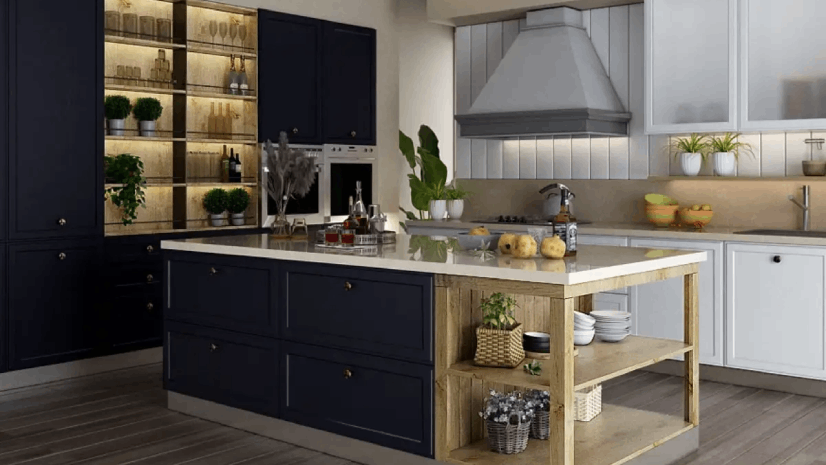
Two parallel rows of kitchen units are designed with a central walkway. Excellent for narrow kitchen spaces and highly efficient for serious cooks, everything is within reach without moving more than a step or two.
U-Shaped Kitchen
Three walls of cabinetry enclose three sides of the kitchen. Offers the maximum storage of any layout and works brilliantly in larger homes. The kitchen becomes a self-contained zone, which many Indian families prefer.
Island Kitchen
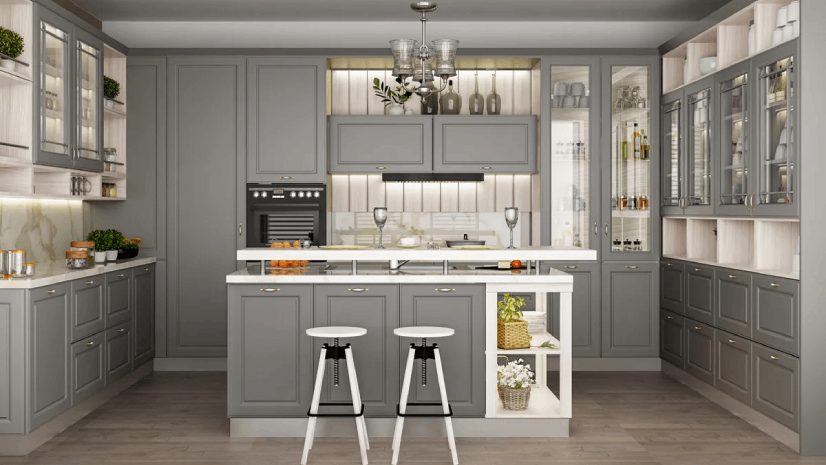
A central island unit adds counter space and creates a social kitchen, great for homes where the kitchen is part of an open-plan living area. Growing in popularity in larger urban apartments and independent homes.
Straight/Single Wall Kitchen
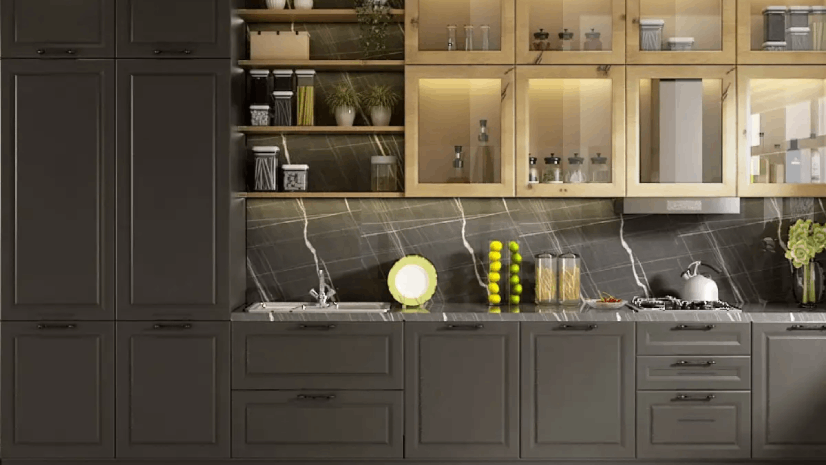
For very small apartments or studio kitchens. All kitchen cupboard designs are along one wall. Compact, clean, and perfect for homes where cooking is occasional rather than the centre of daily life.
What Are the Best Shutter Finishes for Modern Kitchen Cabinet Design?
The shutter is the most visible part of your kitchen. It’s what you see, touch, and clean every single day. Choosing the right finish is not just about looks; it’s about durability and maintenance. Check kitchen materials & finish options
Acrylic Finish
High gloss, jewel-like sheen, available in a wide range of colours. One of the most popular choices for modern kitchen cabinet design in India. Easy to wipe clean, scratch-resistant, and incredibly vibrant. Excellent for kitchens where you want a bold, contemporary look.
Membrane / PVC Finish
A wrapping finish is applied over an MDF shutter. Available in matte and gloss, with a softer look than acrylic. Extremely durable, moisture-resistant, and popular in Indian kitchens for good reason, it handles humidity and steam well.
Laminate (Pre-laminated Board)
The most cost-effective option with a wide range of colours and textures. Modern laminates have improved dramatically; textured finishes that mimic wood grain, marble, or concrete are available and look genuinely good. Best for kitchens where budget matters but style doesn’t have to suffer.
Lacquer Finish
A premium, paint-like finish applied directly onto the shutter. Ultra-smooth, ultra-glossy, and very high-end. Expensive, but the look is unparalleled. Best for premium kitchens where you want the cabinets to look like they came out of a European design magazine.
Veneer/Wood Finish
Natural wood veneers on kitchen shutters bring warmth and organic texture to a kitchen. Teak, walnut, and oak veneers are popular choices. Best used as an accent, warm wood uppers against a contrasting base, rather than throughout the entire kitchen.
What Materials Are Used Inside Kitchen Cabinets?
The shutter is what you see. The carcass, the box that forms the body of the cabinet, is what determines how long your kitchen actually lasts.
- Marine Plywood: The most durable option. Resistant to moisture, insects, and warping. The material of choice for the best kitchen cabinets in humid Indian conditions.
- BWP/BWR Plywood: Boiling Water Proof plywood. Offers excellent resistance to moisture and is the standard used by quality modular kitchen manufacturers.
- HDF (High Density Fibreboard): Dense, smooth, and consistent. Commonly used in branded modular kitchens for a predictable, stable build.
- Pre-laminated Particle Board: Budget-friendly but less moisture-resistant. Fine for dry areas of the kitchen; avoid using near sinks or in very humid climates.
What Hardware Makes a Kitchen Cabinet Design Work?
Hinges, drawer channels, and fittings are the difference between a kitchen that works brilliantly for 15 years and one that starts to feel tired in two. Don’t cut corners here.
- Soft-close hinges: every door and drawer should have them. The silent, controlled close reduces wear on shutters and eliminates slamming.
- Full-extension drawer channels: drawers that open the full depth give you complete access to the back of the cabinet without digging.
- Magic corners and Lemans units: for L-shaped kitchens, these accessories turn the deep, difficult corner cabinet into usable storage.
- Pull-out pantry units: make deep pantry cabinets completely accessible without having to peer into the back.
- Tandem boxes: integrated drawer-within-a-drawer for cutlery and small accessories.
How Do You Plan Your Kitchen Cabinet Layout for Maximum Efficiency?
The most important principle in kitchen design is the work triangle: the distance between your sink, stove, and refrigerator. An efficient work triangle means less unnecessary movement while cooking. Beyond the triangle:
- Keep everyday items, cooking spices, oil, and daily-use utensils at accessible heights. Heavy items at the bottom.
- Wall cabinets should start at a height that’s comfortable for the primary cook in your household.
- Always leave counter space on at least one side of the stove for hot dishes.
- Plan for waste bins inside a base cabinet , a pull-out bin unit keeps the kitchen clean and odour-free.
- Consider a kitchen wardrobe design for pantry needs , a tall floor-to-ceiling unit that stores everything from grains to appliances.
What Questions Should You Ask Before Getting a Modular Kitchen Installed?
- What is the thickness of the carcass board, and is it BWP-grade plywood?
- Which brand of hardware (hinges, drawer channels) is being used?
- What is the warranty on shutters and hardware separately?
- Does the price include installation and finishing work (such as tile grouting or countertop edge polish)?
- How long will the installation take, and how will cooking be managed during that period?
At Spacewood, every kitchen cabinet is built with ISI-certified BWP plywood carcasses and premium European hardware. Our kitchens come with a 10-year structural warranty, because we know that a kitchen is not something you redesign every few years. Visit any of our 34 exclusive stores for a personalized kitchen design consultation.