

15 Modern TV Unit Designs That Actually Work in Indian Homes
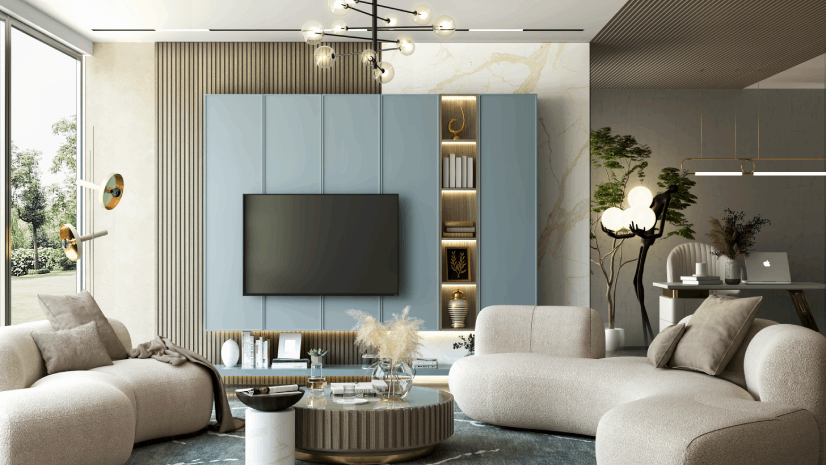
Table of Contents
Introduction
The living room has changed. A decade ago, the TV unit was just a stand, a place to set your television and call it done. Today, your main hall’s modern TV unit design is one of the most important elements of your living room, doing multiple jobs at once: housing your entertainment system, providing storage, anchoring the room’s aesthetic, and sometimes even dividing spaces.
Whether you’re furnishing a new home or giving your current living room a refresh, this guide covers everything you need to know about choosing the latest TV unit design for your living room, with ideas that are stylish, practical, and genuinely suited to how Indian families live.
Most homeowners see those gorgeous U Shaped modular kitchens in magazines and think, “I want that.” Fair enough. But before we talk design styles and storage hacks, let’s figure out if this layout makes practical sense for your home.
What Makes a Good TV Unit Design for a Living Room?
Before jumping to different tv unit design for living room styles, it’s worth understanding what separates a functional TV unit from one that just looks good in a catalogue but frustrates you daily. The best TV cabinet designs for living rooms balance three things:
Right size: Your TV unit should be wider than your television by at least 15–20cm on each side. A unit that’s too narrow makes the TV look awkward and unstable.
Enough storage: Think about what you actually need to store, DTH box, gaming console, media players, remotes, routers, and decorative items. A unit with no planning for cables and devices will look messy within days.
Right height: The centre of your TV screen should be at eye level when you’re seated. For most sofas at standard height, this means your TV unit shouldn’t be too tall.
What Are the Most Popular Latest TV Unit Designs in 2026?
1. Floating Wall-Mounted TV Unit
The most popular choice for modern Indian homes right now. A floating unit is fixed directly to the wall, sitting above the floor, giving the room a light, open feel. Paired with subtle LED backlighting, it becomes an instant focal point. Perfect for both small apartments and larger living rooms, this modern style TV unit design works in almost every aesthetic: contemporary, minimalist, or Scandinavian.
2. Full Entertainment Wall Unit
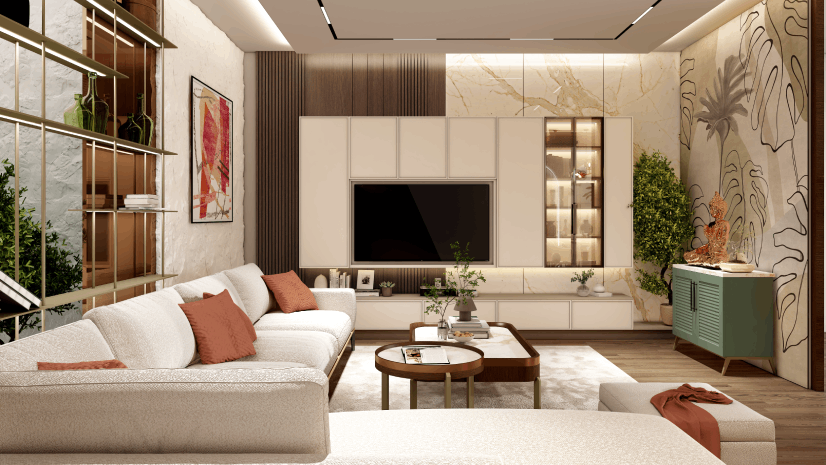
For larger living rooms, an entertainment wall unit runs floor to ceiling and spans the width of the wall. It integrates your TV, display shelving, closed cabinets, and sometimes even a bar unit or study space. This is the option that transforms a living room from functional to exceptional.
3. Modular TV Unit with Open and Closed Storage
A practical favourite for Indian families. The combination of open shelves (for display items, books, decorative pieces) and closed cabinets (for the things you don’t want to see) gives you flexibility without visual clutter. A modular design also allows you to add or rearrange components as your needs change.
4. TV Unit with Partition
In open-plan layouts where the living room connects to the dining area, a TV unit that doubles as a partition wall is a brilliant solution. It defines both spaces without closing them off, and gives you storage on both sides.
5. Corner TV Unit
An often-overlooked solution for smaller rooms or apartments where the living area doesn’t have a clear feature wall. A corner TV unit makes efficient use of dead space and can look quite dramatic when well-designed.
6. TV Unit with Sliding Shutters
When you want the clean look of a TV-free room (for dinner parties or when guests are over), a unit with sliding shutters lets you conceal the screen entirely. Contemporary shutters in acrylic, frosted glass, or textured laminate look stunning when closed.
7. Rustic and Natural Wood TV Cabinet
The warmth of natural wood never goes out of style. A solid-wood or teak-veneer TV cabinet with clean lines and simple hardware adds richness to any living room. This is the design choice if you want your living room to feel warm and grounded rather than clinical.
8. Marble or Stone-Effect TV Wall
One of the most striking design choices available today. A TV wall unit with a marble-effect laminate or porcelain panel backdrop creates an instant luxury feel. Pair with a floating unit beneath in a contrasting dark finish for a dramatic, high-end look.
9. Minimalist TV Console
If you prefer a lighter, more open look, a low-profile TV console, simple, uncluttered, with just enough shelf space, lets the rest of the room breathe. This works especially well in minimalist homes where the furniture is intentionally understated.
10. LED Backlit TV Panel Design
Backlit TV wall panels have gone from a novelty to a near-standard feature in modern Indian homes. Warm or cool LED strips placed behind a textured panel create an atmospheric glow that’s dramatic by night and sophisticated by day.
What Materials Should You Choose for Your TV Cabinet Design?
Pre-laminated MDF/Particle Board: The most widely used material for modular TV units. Scratch-resistant, moisture-tolerant, and available in hundreds of finishes. Ideal for most Indian living rooms.
Solid Wood: For a premium, traditional look. Teak and sheesham work beautifully. Higher maintenance but exceptional in quality and feel.
Plywood with Veneer: More durable than particle board, especially in humid climates. A veneer finish gives the appearance of solid wood at a lower cost.
Glass Panels: Used for display compartments or door shutters. Tempered glass is essential for safety.
Metal Accents: Handles, legs, and frame details in brushed brass, matte black, or chrome elevate any design
How Do You Choose a TV Unit for a Small Living Room?
Space constraints don’t mean you have to compromise on style. The right main hall modern TV unit design for a compact living room should do three things: stay close to the wall, provide vertical storage, and avoid heavy, dark finishes that make the room feel smaller.
- Wall-mounted floating units over floor-standing ones to free up visual space.
- Light finishes , white, off-white, light grey, or natural oak , over dark ones.
- Open shelving rather than fully closed cabinets to keep the space feeling open.
- Built-in cable management to prevent the clutter of wires.
How Can Spacewood Help You Design the Perfect TV Unit?
At Spacewood, our modular living room furniture is designed for real Indian homes, with real storage needs, real budgets, and real style requirements. Our TV units and entertainment walls are manufactured with the same quality standards that go into our kitchens and wardrobes, with finishes that are built to withstand years of daily use.
Visit a Spacewood store near you to explore over 100 finish options, and work with our design team to plan a TV unit that fits your exact wall dimensions and storage requirements.
Before ordering your TV unit, tape out the dimensions on your living room wall. It’s the best way to visualise proportion and make sure your unit is neither too large nor too narrow for the space.