

Different Types of Kitchen Layouts: Choose the Right Design for Your Home
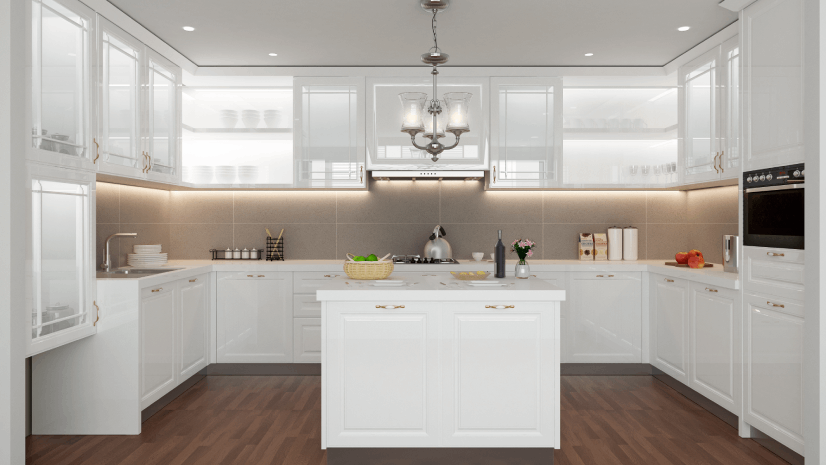
Table of Contents
Introduction
A well-designed kitchen is more than just a cooking space. It is the place where daily routines start, conversations take place, and life moves smoothly. The layout of your kitchen is one of the key factors that affect the comfort of your space. From small apartments to large family homes, the appropriate form is critical to ensure the smooth integration of movement, storage, and cooking activities.
Today, homeowners can choose from several types of kitchen layouts depending on the size of their home, cooking habits, and design preferences. Some designs focus on maximum storage, while others focus on maximum space and ease of movement. An efficient modular kitchen design creates spaces through its artistic planning of all the areas in the kitchen.
The different layouts will help you make a confident decision between compact configurations and spacious open plan concepts. The correct design of a kitchen space enhances work efficiency while making the kitchen area one of the most pleasant spaces in your home.
A well-planned kitchen is more than a cooking space. It is where routines begin, conversations happen, and everyday life flows naturally. The type of kitchen layout used determines the comfort of the space. From compact apartments to spacious family homes, selecting the right structure ensures that movement, storage, and cooking activities work together smoothly.
What Are the Most Popular Kitchen Layout Styles?
The modern kitchen layouts exist in contemporary houses because they need to satisfy different household requirements and building designs. The three parts of each layout work together to create a kitchen space that meets all cooking needs while making it easier to move through the area. Modular kitchen layout design uses established design patterns, which show designers how to position all appliances and countertops, and storage units to achieve optimal space usage.
The most commonly used kitchen layouts consist of the L-shaped kitchen layout, the U-shaped kitchen layout, the parallel kitchen layout, the open kitchen layout, and the peninsula kitchen layout. The three kitchen designs work together to create different cooking atmospheres.
The space requirements of different layouts determine their suitability for small homes, which need to use every available area, while larger spaces provide free-flow movement options. The process of learning about these layouts enables homeowners to select a kitchen design that matches their cooking routine and storage needs while maintaining a clutter-free space.
1. U-Shaped Kitchen Layout
The U-shaped kitchen plan in their homes for years because of its functionality, such as being able to provide ample storage and work surfaces throughout the kitchen. This design typically consists of three walls or counters that connect to form a “U” configuration around the cooking area; this allows for separation of the food preparation, cooking, and cleaning areas.
The U-shaped kitchen design enables traffic flow from one area’s purpose to another’s purpose through its different areas, preparation zone, cooking zone, and cleaning zone. The U-shaped kitchen design is most appropriate when food preparation & cooking take place quite frequently. The three-sided countertops will ensure there is sufficient storage space, cabinets, and countertops.
Best for
This layout suits homes that need generous workspace and storage capacity.
- The kitchen space requirements extend to medium-sized and large-sized kitchens that provide sufficient space for people to move around the kitchen area.
- The area functions as a home kitchen that receives daily cooking activities throughout the entire day.
- The families require multiple storage cabinets together with pantry units to meet their storage requirements.
- The cooking activities in this kitchen space need to accommodate multiple cooks who will work in the area together.
- Kitchens need defined spaces for food preparation, as well as cooking activities and the cleaning process.
Design Tips for a U-Shaped Kitchen
A thoughtful modular kitchen layout ensures that each section of the U shape works efficiently. Place the sink on one side and the hob on another to create a comfortable working triangle. The design should include corner storage cabinets with pull-out storage systems to avoid any storage wastage. The design should also include tall cabinets at the ends of the design for storage purposes. The lighting and ventilation systems should also be given due attention to ensure maximum comfort during cooking.
Appliance Placement in a U-Shaped Layout
In the case of the U-shaped kitchen design, the placement of the appliances is vital to the workflow. The refrigerator should be placed close to one of the open ends of the U. The hob or cooking range should be placed along the wall between the two counters for easy access, and the sink should be placed on the third counter to separate the dry and wet areas.
Pros:
The design ensures optimal efficiency, storage space, and cooking comfort.
- Large countertop areas for food preparation and cooking.
- Efficient work triangle between sink, hob, and refrigerator.
- Ample cabinet and drawer storage across three walls.
- The design creates dedicated spaces that enable cooking activities without requiring chefs to move between different locations.
- The solution works best for residential spaces that experience heavy cooking activities.
Cons:
The practical layout requires both spatial and design requirements to be fulfilled.
- The kitchen needs enough space to provide proper distance between its countertops.
- A kitchen with restricted width will create a feeling of confinement for people who use it.
- Corners often need specialised storage accessories.
- Poor planning can create movement restrictions.
- Not ideal for very small or compact kitchen spaces.
Common Mistakes to Avoid
If the layout is poorly planned, the efficiency and comfort of this useful layout will be impaired.
- Fails to provide sufficient space for walking between the three counters.
- Failure to consider smart corner cabinet solutions for difficult areas.
- Overcrowding the counters with appliances and unnecessary accessories.
- Failure to maintain the appropriate distances in the working triangle.
- Failure to provide sufficient lighting in the main cooking areas.
2. L-Shaped Kitchen Layout
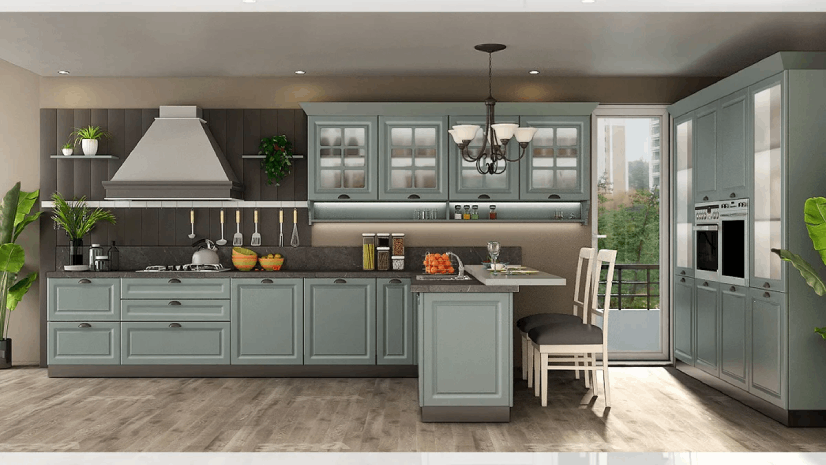
The L-shaped kitchen design uses two walls that form a right angle to create its layout. The design provides an open workspace while delivering sufficient counter space and storage solutions. The L-shaped kitchen design serves as a popular choice for contemporary residences because it adapts to both small and medium-sized areas. The design functions as an open kitchen layout, which creates a direct connection to both dining spaces and living areas.
Best for:
This layout is best for homes that require flexible corner kitchen planning.
- Small and medium-sized homes with moderate kitchen space requirements.
- Areas in the corners of the kitchen that need proper planning.
- Homes that prefer an open flow between the kitchen and living areas.
- Apartments with limited kitchen width require intelligent space usage.
- Families who want an efficient and visually open kitchen layout.
Design Tips:
A modular kitchen in an L shape must ensure efficient use of the corners. Installing carousel units or pull-out corner cabinets can make storage more accessible. It must ensure that one part of the L shape is for working, while the other is for cooking.
Appliance Placement
The refrigerator can be placed at the end of one arm of the L shape. The sink and hob should remain within comfortable reach but not directly adjacent.
Pros
These advantages make the layout popular for modern homes and apartments.
- Space management in the corners, which are usually underutilized in the kitchen area.
- Flexibility, which can easily blend with the idea of an open kitchen.
- Easy maintenance, along with the demarcation of the working areas.
- Scope for the incorporation of the dining counter or island extension area.
- Comforting aspect, which ensures the workflow between the cooking and working areas.
Cons
Though this is a practical layout, it has its limitations based on the available space.
- There is limited counter space in kitchens with shorter wall lengths.
- The use of the corner areas may demand special storage fixtures.
- The storage aspect is an important consideration to avoid cluttered cabinets.
- The placement of the appliances should be well-balanced on both counters.
Common Mistakes to Avoid
Avoid the following planning mistakes to ensure the functionality of the kitchen’s layout:
- Inadequate planning of the corner cabinets, which results in wasted space.
- Appliances that are too close to each other affect the workflow.
- Lack of sufficient space on the countertops for food preparation.
- The incorporation of cumbersome cabinetry in the design of the kitchen.
- The forgetting of the need for proper lighting in the preparation and cooking areas.
3. Parallel Kitchen Layout
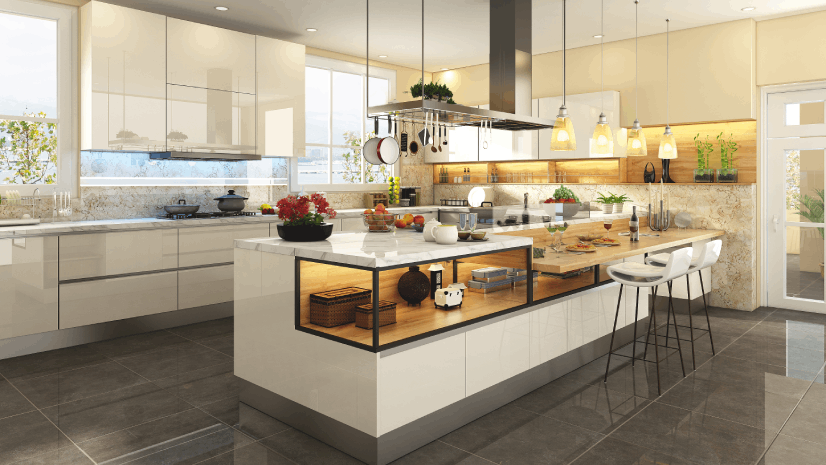
The parallel kitchen arrangement consists of two counters that face each other, resembling a corridor. This type of arrangement is called a galley kitchen, which is a good idea for an Indian kitchen. A parallel kitchen arrangement provides space for work on both sides of the counters. One counter may be used for cooking while the other handles preparation or cleaning tasks.
Best for
Ideal kitchen layout for homes that need efficiency and a structured cooking process.
- Medium-sized kitchens.
- Homes where cooking is a regular process.
- Closed kitchen areas.
Families who need a structured cooking process.
Design Tips
In a modular kitchen layout, aisle width should allow easy movement between counters. The storage can be arranged in a symmetrical manner on both sides of the counters.
Appliance Placement
The hob can be installed on one side, while the sink and dishwasher can sit on the opposite counter. The refrigerator is typically placed at one end.
Pros
The key benefits that make this layout very convenient for use.
- Highly efficient workspace.
- Maximum storage and counter space.
- Organized cooking zones.
- Smooth workflow between the preparation and cooking areas.
- Suitable for heavy daily cooking needs.
Cons
The key benefits that make this layout very convenient for use.
- Highly efficient workspace.
- Maximum storage and counter space.
- Organized cooking zones.
- Smooth workflow between the preparation and cooking areas.
- Suitable for heavy daily cooking needs.
Common Mistakes to Avoid
Planning errors can reduce the functionality and comfort in the kitchen.
- Narrow walkway between the counters.
- Poor lighting in the work area.
- Excessive upper cabinets that reduce openness.
- Improper placement of appliances affects the workflow.
- Ignoring ventilation and chimney positioning.
4. Open Kitchen Layout
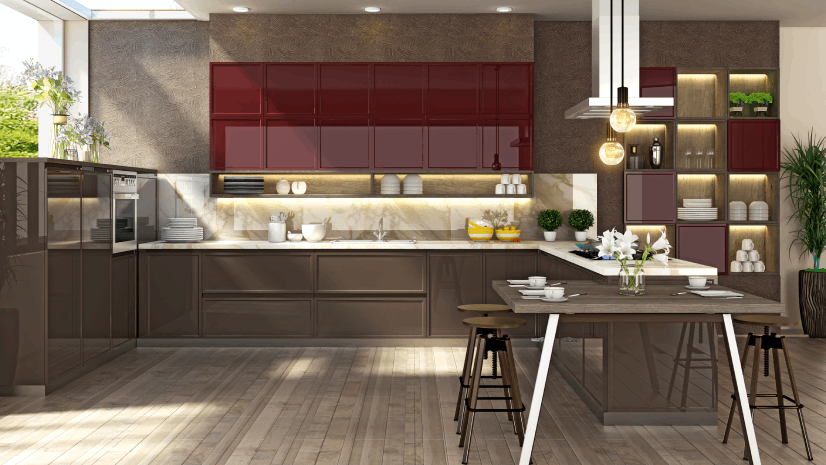
The open kitchen layout is a design in which the kitchen is connected with the living or dining room, creating a large space. The open kitchen layout is common in modern homes. The open kitchen layout is used in combination with other kitchen layouts, like the L-shaped kitchen layout and the island kitchen layout.
Best for
Ideal for homes that prefer open, interactive, and social cooking environments.
- Modern apartments.
- Homes that entertain guests frequently.
- Families who prefer social cooking spaces.
- Open floor plans connecting kitchen, dining, and living areas.
Design Tips
A well-planned modular kitchen layout should include strong ventilation and clutter-free counters. Storage should be designed to keep everyday items organized and hidden.
Pros
Open kitchens create spacious, bright environments that encourage interaction.
- Spacious Visual Appeal.
- Easy communication with guests and family.
- Better natural illumination has been achieved.
- The design establishes a unified space that combines living areas with dining spaces.
Cons
The design of open kitchens needs both complete cleaning procedures and effective extraction system designs.
- Cooking smells may spread into living areas.
- Requires consistent cleanliness.
- Noise from appliances may travel across the room.
- Clutter becomes more visible in open spaces.
Common Mistakes to Avoid
Poor planning in the kitchen.
- Lack of proper planning in storage.
- Poorly designed ventilation system.
- Overcrowded countertops.
- Poor zoning between cooking and social areas.
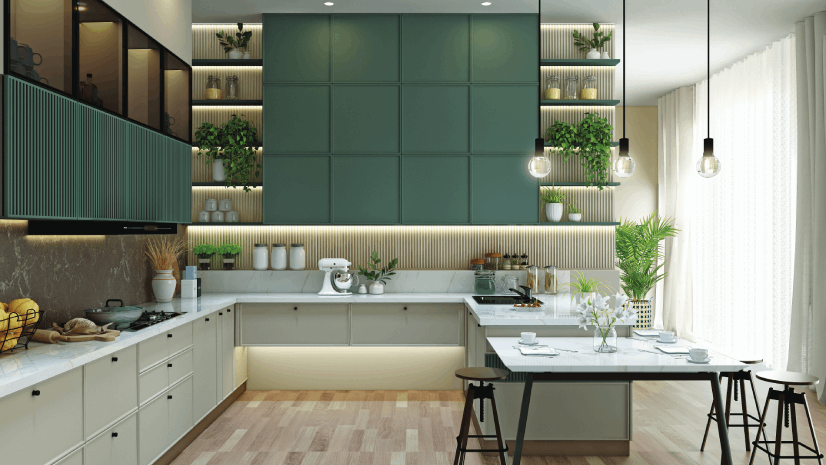
The peninsula kitchen layout is best described as a U shaped kitchen with one open side. Instead of a freestanding island, an attached counter extension, the “peninsula” juts out from a wall or cabinet base, creating extra workspace without requiring additional floor space.
Best for
Medium-sized kitchens that need more counter space but cannot accommodate a full island.
- Modern apartments.
- Homes that entertain guests frequently.
- Families who prefer social cooking spaces.
Design Tips
A well-planned modular kitchen layout should include strong ventilation and clutter-free counters. Storage should be designed to keep everyday items organized and hidden.
Pros
Peninsula kitchens create spacious, bright environments that encourage interaction.
- Provides spacious visual appeal.
- Easy communication with guests and family.
- Provides better natural lighting.
- Creates a connected space for living and dining.
Cons
Peninsula kitchens require maintenance planning and the planning of the ventilation system.
- Cooking smells may spread into living areas.
- Requires consistent cleanliness.
- Noise from appliances may travel across the room.
Common Mistakes to Avoid
Poor planning can also affect the efficiency of an open kitchen.
- Insufficient planning for storage.
- Insufficient planning for the ventilation system.
- Overcrowded countertops.
- Poor zoning between cooking and social areas.
How to Choose the Right Kitchen Layout for Your Home
With so many types of kitchen layouts available, the right choice comes down to four key factors:
- Room size and shape: A parallel kitchen layout works brilliantly in a narrow room where an L shaped or U shaped layout simply won’t fit. Measure your space before committing to any design.
- Number of cooks: If your household has multiple people cooking simultaneously, a U shaped or parallel layout with ample clearance will serve you far better than a single-wall design.
- Lifestyle and socialising: Do you love having friends and family around while you cook? An open kitchen layout or peninsula kitchen layout keeps you connected. Prefer a focused, clutter-free cooking environment? A closed U shaped layout may suit you better.
- Storage needs: Large families with lots of kitchen equipment benefit most from U shaped or modular kitchen layouts, which maximise cabinet and counter space.
Quick Comparison: Types of Kitchen Layouts at a Glance
Layout | Best For | Key Strength |
L Shaped | Small–medium kitchens | Versatile, open-plan friendly |
U Shaped | Medium–large kitchens | Maximum storage & workspace |
Parallel | Narrow/compact kitchens | High efficiency |
Open | Small homes, entertainers | Spacious feel, social |
Peninsula | Medium kitchens | Island benefits, space-saving |
Modular | Any size | Customisable, stylish |
Final Thoughts
Choosing between the different types of kitchen layouts is one of the most rewarding parts of designing your home. Each layout, whether it is the practical L shaped kitchen layout, the storage-rich U-shaped kitchen layout, the sleek parallel kitchen layout, the social open kitchen layout, the flexible peninsula kitchen layout, or the contemporary modular kitchen designs, has a unique set of strengths suited to specific spaces and lifestyles.
Take time to assess your room dimensions, your cooking habits, and how you like to use your kitchen. When the layout is right, every meal becomes easier to prepare, every morning feels smoother, and your kitchen truly becomes the heart of your home.
Frequently Asked Questions
What is the most practical kitchen layout?
The ideal design for your kitchen space needs depends on your particular cooking patterns. People prefer the parallel kitchen layout combined with the U-shaped kitchen design because these configurations deliver them maximum kitchen space.
Which layout is ideal for small kitchens?
The L-shaped kitchen layout serves as an ideal solution for small homes because it efficiently uses corner areas while maintaining an open kitchen design.
What makes a modular kitchen layout efficient?
A modular kitchen design includes a cabinet system that provides structured storage areas together with appliances that have been strategically placed to achieve maximum kitchen efficiency.
Is an open kitchen layout suitable for Indian homes?
The open kitchen design functions well in modern apartments according to current design standards. The design needs to include proper ventilation systems together with sufficient space for storage.
What is the advantage of a peninsula kitchen layout?
The peninsula kitchen layout adds extra countertop space and seating while acting as a natural divider between the kitchen and the living areas.