

Living Hall Interior Design Ideas for Indian Homes
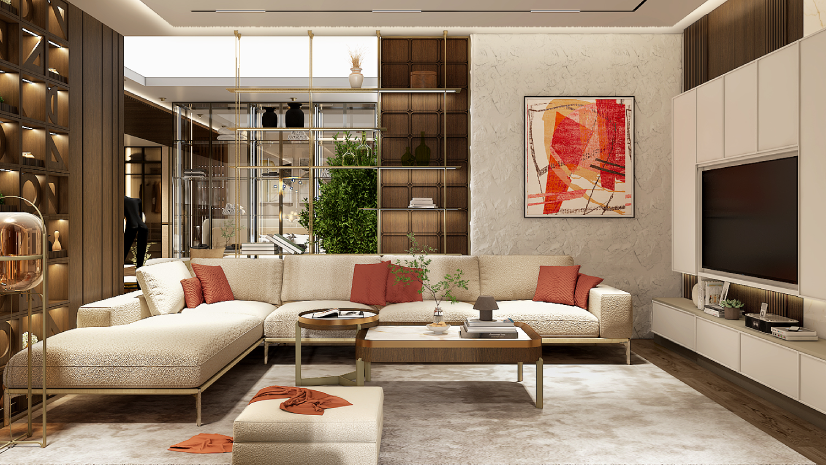
Table of Contents
Introduction
The hall is the busiest room in an Indian home. It welcomes guests, hosts family evenings, doubles as a play area and often a part-time workspace. Designing it well means balancing all of those roles in one space. These living hall interior design ideas pull together the layouts, colours, lighting and storage that we use most across our full home interior solutions, whether your hall is a compact 10×12 or a generous open-plan living room.
Good interior design ideas for hall spaces are not about spending the most money – they are about planning. A hall that flows well, has one strong focal point and hides its clutter will always feel better than one stuffed with expensive furniture. In this guide we move from layout to colour to the small finishing touches, and we cover both large rooms and tight ones, so you can apply these living hall interior design ideas to your exact space.
What Makes a Good Hall Interior?
A good hall interior is comfortable to sit in, easy to move through, and flexible enough to change roles through the day. It has a clear focal point, layered lighting, enough seating without crowding, and storage that hides the clutter. Before picking a single colour or sofa, the layout has to work – everything else builds on top of it.
Start With the Hall Layout
Plan how people enter, sit and walk through the room before choosing furniture. A few rules keep any hall comfortable:
- Keep a clear walking path of at least 90 cm between the entry, seating and other rooms.
- Anchor the seating around a focal point – usually the TV wall or a feature wall.
- Leave 40–45 cm between the sofa and the coffee table so legs have room.
- Push heavy storage to the walls and keep the centre of the room open.
Living Hall Interior Design Ideas to Try
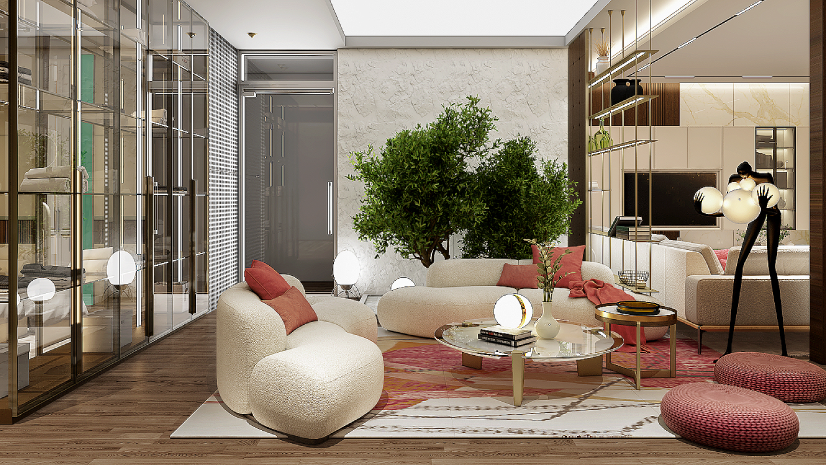
Here are the core living hall interior design ideas that make the biggest difference, from the feature wall to the flooring. Work through them in order – each builds on the last.
1. Build a Feature Wall or TV Unit Wall
A single feature wall gives the hall its focal point. A panelled TV wall in fluted wood, a textured paint finish or a stone-look laminate instantly lifts the room. For colour and finish pairings, our guide to feature wall colour combinations breaks down what works in Indian halls. Build the TV unit with closed storage below to keep wires and devices out of sight.
2. Plan Smart Seating
Match the seating to the room shape. An L-shaped sofa suits square halls and seats more people, while a 3+1+1 layout works in rectangular rooms. In tight halls, a compact two-seater with a pair of accent chairs keeps the floor open and flexible.
3. Layer the Lighting
One ceiling light flattens a room. Use three layers instead: ambient (a central or cove light), task (a reading lamp or downlights), and accent (spots on the feature wall or art). Warm 3000K light keeps an Indian hall cosy in the evening.
4. Add Storage That Disappears
Clutter is the enemy of a calm hall. Floor-to-ceiling units with a mix of open display and closed shutters hide everyday items while showing off a few curios. A bench with hidden storage near the entry handles shoes and bags.
5. Get the Flooring and Rugs Right
Large-format vitrified tiles or wooden-look laminate make a hall feel bigger because of fewer grout lines. Add a rug under the seating to anchor the zone – it should be wide enough that at least the front legs of the sofa rest on it.
6. Choose a Calm Colour Palette
Keep walls light – warm white, beige or soft grey – and bring colour through the feature wall, cushions and art. This keeps the hall bright and timeless while letting you refresh the look cheaply over time.
Living Hall Interior Design Ideas by Hall Size
The same idea behaves differently in a small room and a large one, so scale your choices to the space:
- Small hall (up to 120 sq ft): one focal wall, a two-seater plus accent chairs, wall-mounted storage and light colours to open the room up.
- Medium hall (120–200 sq ft): a 3+1+1 or compact L-sofa, a full TV unit wall, and a rug to anchor the seating zone.
- Large or open-plan hall (200+ sq ft): a generous L-sofa, a partition or console to zone the dining side, and a statement light to fill the volume.
Matching the furniture scale to the room is one of the most overlooked interior design ideas for hall layouts – an oversized sofa shrinks a small hall, while too little furniture leaves a large one feeling empty.
A floating, wall-mounted unit lifts the mandir off the floor and frees the space below for a drawer or a clean look. A backlit panel behind the idols adds a soft glow. This is the single most popular choice for small modern pooja room designs because it works on almost any free wall.
Decor Touches That Finish a Hall
Once the big pieces are in place, a few finishing layers make the hall feel complete:
- A gallery wall or a single large artwork above the sofa adds personality.
- Two or three cushions in a shared palette tie the seating together.
- Indoor plants soften hard corners and bring in freshness.
- Sheer curtains plus a heavier drape give both daylight and privacy.
Hall Design Ideas for Small Hall Spaces
Compact halls need every choice to earn its place. These hall design ideas for small hall layouts make a tight room feel open:
- Use light wall colours and large mirrors to bounce light and add depth.
- Pick leggy, slim-armed furniture so you can see floor underneath – it reads as more space.
- Choose wall-mounted or floating units instead of bulky floor cabinets.
- Stick to one focal wall and keep the rest minimal to avoid a busy look.
- Use multi-purpose pieces – a storage ottoman, a nesting coffee table – to cut clutter.
Simple Hall Design for Home on a Budget
- You do not need a full renovation to transform a hall. A simple hall design for home can come together with a few focused changes:
- Repaint one wall as a feature and freshen the rest in a light neutral.
- Swap heavy curtains for light sheers to let in more daylight.
- Add a single statement light – a pendant or arc lamp – over the seating.
- Introduce indoor plants and two or three coordinated cushions for instant warmth.
- Replace a bulky TV stand with a slim wall-mounted unit.
Furniture and Modular Solutions
The hall often opens into the kitchen and dining in modern flats, so the finishes should flow together. When we plan a hall, we coordinate the TV unit, storage and any partition with the adjoining modular kitchen designs and modular door designs so the whole ground floor reads as one design rather than a set of separate rooms.
Common Mistakes to Avoid
- Pushing all the furniture against the walls, which leaves an awkward empty middle.
- Relying on one harsh ceiling light instead of layered lighting.
- Buying an oversized sofa that blocks the walking path.
- Choosing too many bold colours and patterns at once.
- Ignoring storage until the clutter takes over the room.
Why Spacewood for Your Hall Interiors
As Spacewood, India’s leading modular furniture manufacturer for over three decades, we design the hall as part of a coordinated full-home plan. Our designers measure your space, study how your family uses it through the day, and deliver living hall interior design ideas tailored to your layout, light and budget. Visit your nearest Spacewood experience centre to see finishes in person, or talk to the Spacewood design team to begin a free design consultation.
Final Thoughts
A well-designed hall is less about expensive furniture and more about smart planning. Start with a layout that keeps the room easy to move through, add one strong feature wall, layer the lighting, and hide the clutter with good storage. Whether you are working with a compact room or a large open-plan space, these interior design ideas for hall settings will help you build a living area that looks good and works hard every day.
Frequently Asked Questions
How do I design a small hall to look bigger?
Use light wall colours, large mirrors, slim-legged furniture and wall-mounted units. Keep one focal wall and minimise everything else, and choose large-format flooring with fewer grout lines to make the room feel open.
What is the most important element in a hall interior?
The layout. A clear walking path, a defined seating zone around a focal point, and enough breathing space between pieces matter more than any single item of furniture.
How can I do a simple hall design for home on a budget?
Repaint one feature wall, swap heavy curtains for sheers, add one statement light, introduce plants and cushions, and replace a bulky TV stand with a slim wall-mounted unit.
How should I light a living hall?
Use three layers – ambient ceiling or cove light, task lighting like a reading lamp, and accent spots on the feature wall. Warm 3000K light keeps the room cosy in the evening.
What colours work best for an Indian hall?
Keep walls light – warm white, beige or soft grey – and bring colour through a feature wall, cushions and art. This keeps the hall bright, timeless and easy to refresh later.