

Island Kitchen Designs for Indian Luxury Homes: What You Actually Need to Know
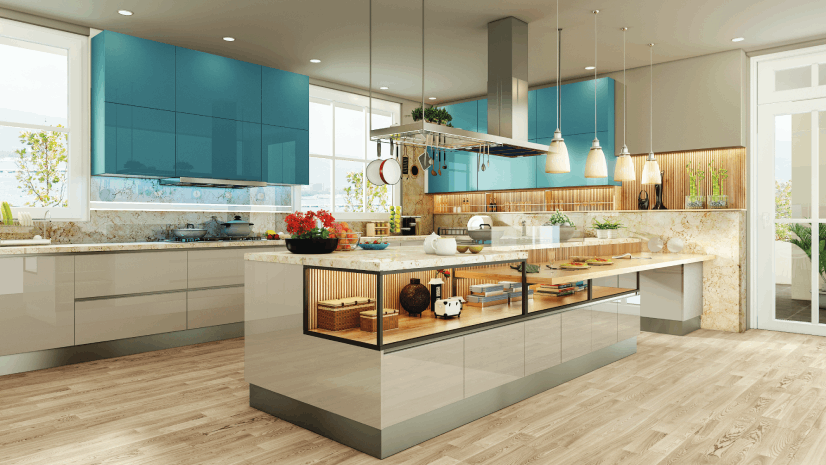
Table of Contents
Introduction
You’ve seen them in design magazines. Those stunning island kitchen designs in India that look like they belong in a five-star hotel suite. And you’ve wondered: can my home actually pull this off?
Here’s what we’ve learned after manufacturing kitchens for 29 years: island kitchens aren’t just about aesthetics. They’re about whether you’ve got the space, the workflow makes sense, and your cooking style actually benefits from having that central unit. Let’s be real about this.
At our facility, we manufacture over 4,000 complete kitchens monthly. We’ve designed islands for penthouses in Mumbai, villas in Pune, and spacious homes across 26 cities. Some worked brilliantly. Others? Not so much. And it usually comes down to a few critical factors that most people don’t consider upfront.
Think of it as a freestanding counter that sits in the middle of your kitchen space. It’s not attached to any wall. You can walk around it. That’s the defining feature.
But here’s where it gets interesting: island kitchen designs India serve multiple purposes. It’s rarely just a counter. Most homeowners want it to be:
- Extra prep space when you’re cooking for guests
- A breakfast bar where kids grab quick meals
- Storage underneath for things that don’t fit in the main cabinets
- Sometimes, even a secondary cooking zone with a stove or sink
The versatility is what makes modular kitchen islands so popular. But that same versatility creates challenges.
How Much Space Do You Really Need?
This is where dreams meet reality. You need a minimum clearance. No negotiating.
The non-negotiable numbers:
- At least 42 inches (roughly 3.5 feet) of clearance on all sides
- That’s the space between your island and the surrounding cabinets or walls
- Less than this? You’ll bang into corners, struggle to open drawers, and curse the island every single day
We’ve measured hundreds of kitchens. Most urban Indian homes have kitchens ranging from 80-150 square feet. An island works comfortably when you’re looking at 120+ square feet. Below that, you’re compromising movement.
Does this mean small kitchen island ideas don’t exist? Not exactly. But they require smarter thinking.
For compact spaces:
- Consider a mobile cart instead of a fixed island
- Go narrow: 24 inches deep instead of the standard 36
- Skip storage underneath to create visual breathing room
- Use the island as a divider between the kitchen and the living areas in open layouts
Different Types of Islands That Actually Work in India
1. The Cooking Island
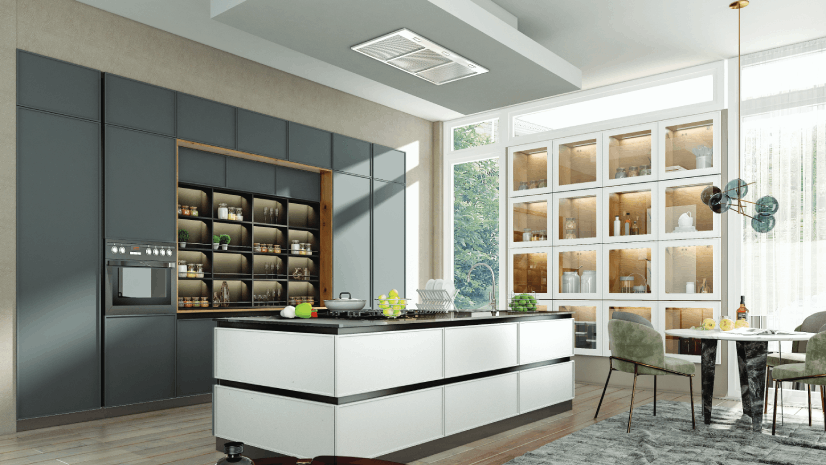
Built-in cooktop right in the island. You’re cooking while facing your family or guests. Sounds perfect, right?
The catch: exhaust management. You need a powerful chimney installed above the island, which means hanging it from the ceiling. This works beautifully if you’ve got ceiling height (9 feet minimum) and structural support. Otherwise, cooking smells will take over your entire home.
2. The Prep-and-Store Island
No cooking, no plumbing. Just counter space with storage below. This is the simplest version and the least complicated to install. Popular for homeowners who want kitchen island ideas without major plumbing or electrical work.
3. The Bar Counter Island
An extended countertop on one side, usually 12-15 inches higher than the prep surface. Creates a natural breakfast bar or casual dining spot. You need barstools that tuck under when not in use. Storage possibilities get limited because of leg room requirements.
4. The Sink Island
Built-in sink for washing vegetables and rinsing dishes. This means relocating plumbing, which adds costs. But the workflow benefits can be massive, especially if you’re designing from scratch.
Which Design Style Matches Your Kitchen?
- Contemporary Minimalist
Clean lines, Handleless cabinets & High-gloss finishes in whites or greys. Our European machinery creates those smooth, seamless surfaces that define this look. Pair it with quartz or engineered stone countertops. - Modern Industrial
Exposed materials, think stainless steel countertops, open shelving, perhaps even cement finishes. The island becomes a statement piece rather than blending into the background. - Traditional Warmth
Wood finishes, raised panel doors, & Decorative details. This style uses the island to anchor the space with natural materials and craftsmanship details.
At Spacewood, our design team works with all these styles. The factory’s membrane press technology handles both contemporary and traditional aesthetics without compromising quality.
How Should You Configure Your Island Layout?
1. L-Shaped Kitchen With Island
The most common setup we install. The L-shape handles main cooking and storage. The island adds prep space and possibly casual seating. Works when your kitchen is 120+ square feet.
2. U-Shaped Kitchen With Island
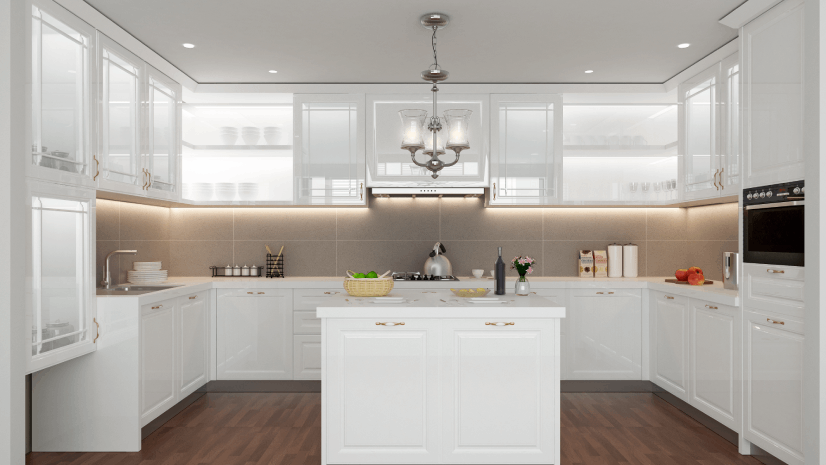
You’ve got cabinetry on three walls, an island in the center. This is luxury territory. Needs 150+ square feet to work properly. But when it does? Maximum storage, ideal workflow, impressive aesthetics.
3. Parallel Kitchen With Island
Two parallel walls of cabinets, an island between them. Common in longer, narrower kitchens. The island acts as a divider and additional work zone.
What Features Make Islands Functional?
Smart Storage Solutions: Our manufacturing process allows us to customize the internal organization:
- Deep drawers for pots and pans
- Pull-out spice racks on the sides
- Open shelving for cookbooks or display items
- Appliance garages to hide small electronics
Seating Integration
If you’re adding seating, factor in:
- 24 inches of width per person
- 12-15 inches of knee space depth
- Bar stool height matching counter overhang
Electrical Planning
Build in outlets. You’ll want them for:
- Charging devices while sitting at the island
- Using small appliances during food prep
- Under-cabinet lighting if you’re going fancy
The Real Challenges Nobody Talks About
1. Cost Factor
- Kitchen layouts with island configurations cost 30-40% more than similar kitchens without islands. You’re paying for:
- Additional cabinetry and countertops
- Potentially complex plumbing or electrical
- More flooring to install around it
- Custom fabrication if dimensions aren’t standard
2. Workflow Disruption
If poorly placed, an island creates obstacles rather than solving them. We’ve seen this happen. The kitchen triangle (stove, sink, refrigerator) gets interrupted. You’re walking extra steps for no reason.
3. Cleaning Complexity
More surfaces mean more maintenance. Islands collect things: mail, bags, random stuff. Keep this in mind if you struggle with kitchen clutter.
Common Mistakes People Make
- Going Too Large
Biggest mistake. Homeowners see massive islands in design magazines shot in 300-square-foot kitchens. They try replicating that in 100 square feet. Result? A cramped, dysfunctional space. - Ignoring Ventilation
Installing a cooktop without proper exhaust planning. Your entire home will smell like last night’s curry by morning. - Skipping Storage Planning
Building a beautiful island with zero internal organization. You’ve spent money on what amounts to a fancy table. - Wrong Counter Height
Standard kitchen counters are 36 inches. Bar counters are 42 inches. Mixing these up creates awkward seating or uncomfortable prep surfaces. - Poor Lighting
Not planning for dedicated island lighting. You need task lighting if people will work there, and ambient lighting if it’s primarily for gathering.
Why Choose Spacewood for Your Island Kitchen Design?
We manufacture kitchen islands the same way we handle all our modular components: precision factory production, quality materials, ISO-certified processes.
What sets us apart:
- Manufacturing Excellence
CNC machines cut every component to exact specifications. No “adjust on site” compromises. When we say 42-inch clearance, that’s what you get. - Material Quality
BWP plywood and HDHMR for carcasses. Handles Mumbai humidity. Withstands Bangalore’s weather changes. Lasts in Pune’s varied climate conditions. Our materials are tested because Indian cooking conditions aren’t forgiving. - Design Flexibility
You’re not choosing from five standard island sizes. Our designers assess your space, understand your cooking style, and create solutions that actually fit your lifestyle. - 10-Year Warranty
We back our manufacturing quality. Islands take a beating: cooking splatters, knife marks, and daily use. Our materials and construction handle it. - Installation Expertise
Our teams have installed islands in hundreds of homes. They understand structural requirements, know how to route plumbing properly, can handle electrical integration safely. - Post-Installation Support
Something needs adjustment six months later? You’ve got dedicated support. Try getting that with carpenter-made kitchens.
Is an Island Kitchen Right for You?
An island works when:
- Your kitchen is genuinely spacious (120+ square feet minimum)
- You frequently cook with family or entertain guests
- Your floor plan supports an open kitchen concept
- The budget allows for the additional investment
- You value the aesthetic and functional benefits enough to maintain it
An island might not work when:
- Space is tight, and movement gets compromised
- You’re on a strict budget
- Your cooking style is quick, solo, and efficiency-focused
- You prefer traditional enclosed kitchens
Think about how your household actually functions. Be honest about cleaning habits, cooking patterns, and space realities.
Visit any of our nearby stores. Bring your floor plan. Will our designers tell you straight: is an island practical for your space, or are there smarter ways to spend your kitchen budget?
Because at the end of the day, island kitchen designs in India need to serve your life, not just look impressive in photos. Get a quote now
What's the minimum kitchen size for an island?
You need at least 120 square feet with proper clearances. Below this, consider mobile carts or peninsula layouts instead.
Can islands be added to existing kitchens?
Yes, if space permits. But factor in flooring, plumbing, and electrical modifications. Costs can add up quickly beyond the island itself.
How much does a modular kitchen island cost?
Basic designs start at ₹80,000, but high-end materials, built-in appliances, and complicated configurations can cost ₹3 lakh or more.
Do islands need special support or flooring?
Stable flooring is needed for fixed islands. If your kitchen has decorative tiles or flooring, plan for a smooth transition or a different look for the island area.
What's better for small spaces: an island or a peninsula?
For small kitchens, peninsulas that are attached on one side are better. They offer similar benefits without needing to be clear on all four sides.
Do islands need special support or flooring?
Fixed islands need stable flooring. If your kitchen has decorative flooring or tiles, plan for seamless integration or accent the island area differently.
What's better for small spaces: an island or a peninsula?
Peninsulas (attached on one side) work better for compact kitchens. They provide similar benefits without requiring clearance on all four sides.