

Kitchen Cabinet Carcass Guide 2026: Which Material Lasts Longest in an Indian Kitchen?
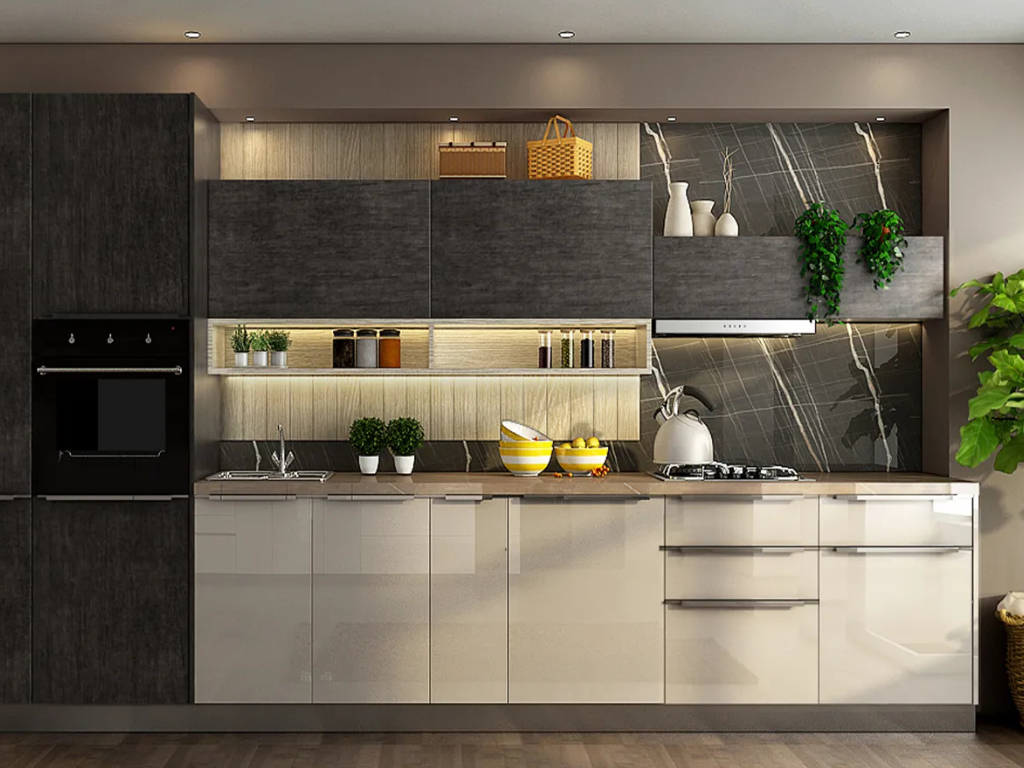
Table of Contents
Introduction
Most people choose a kitchen by its shutters: the colour, the gloss, the handles. Yet when a kitchen fails, it is almost always the box behind those shutters that gives up first. Swollen edges under the sink, hinges pulling loose, a musty smell in the monsoon. That box is the kitchen cabinet carcass, and choosing it well is the single best way to make a kitchen last.
Spacewood has manufactured modular kitchens in its Nagpur factory for nearly three decades, and we hold FIRA UK quality certification. This guide explains every common kitchen carcass material, where each belongs, and how to check quality before you sign.
What is a kitchen cabinet carcass?
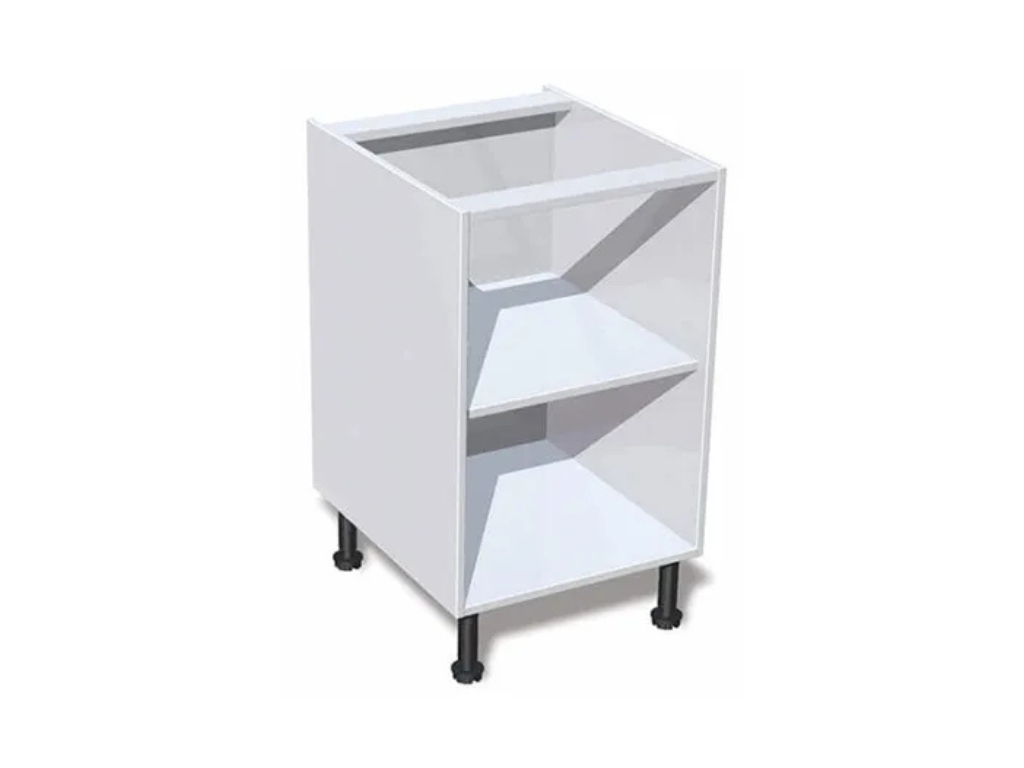
A kitchen cabinet carcass is the main box of a cabinet: the sides, top, bottom, back panel and shelves. The shutter is the door fixed to the front. The carcass carries the weight of your vessels and the countertop, holds the hinge and drawer screws, and takes the moisture from the sink and steam.
That is why the carcass matters more than the finish. A beautiful shutter on a weak cabinet carcass will sag within a few years, while a strong box can simply take new shutters later.
Which kitchen carcass material is best?
There is no single winner. The best kitchen carcass material depends on where the cabinet sits and how humid your city is. Here is how the common options compare.
Material | Water resistance | Termite resistance | Best zone |
BWP / marine plywood | High | High when treated | Sink and hob base units |
MR / BWR plywood | Medium | Medium | Wall and dry units |
HDHMR | High, not fully waterproof | High | Tall and wall units |
Supertuff HDF (Spacewood) | 100% waterproof | Termite-proof | All zones, incl. sink |
MDF | Low to medium | Medium | Dry units only |
Particle board | Low | Low to medium | Dry storage, budget kitchens |
WPC / PVC board | Very high | Very high | Under-sink units |
Stainless steel | Very high | Termite-proof | Wet zones, commercial look |
BWP plywood
Boiling Water Proof plywood, made to IS 710, is bonded with waterproof phenolic resin. It holds screws well and is the long-trusted choice for base units near water. Moisture-resistant MR grade, covered under IS 303, is cheaper but belongs in drier areas. For a plywood kitchen cabinet carcass under the sink, BWP is the minimum we would accept.
HDHMR
High Density High Moisture Resistant board is dense, smooth and stable. It resists moisture and termites well and costs less than BWP plywood. As a kitchen carcass material, it is a good fit for tall units and upper cabinets.
HDF
High density fibreboard is compact and consistent, so cabinets stay square. Spacewood’s Supertuff HDF is made to be 100% waterproof and termite-proof, with strength better than plywood.
MDF and particle board
Both are budget-friendly and fine for dry storage. Near the sink they absorb water and swell, so avoid them in wet zones whatever the saving. Using the wrong kitchen carcass material under the sink is the most common mistake we see in renovations.
WPC and stainless steel
These do not absorb water at all, so they suit under-sink units. They cost more, and steel can feel cold for a home kitchen.
What thickness should a cabinet carcass be?
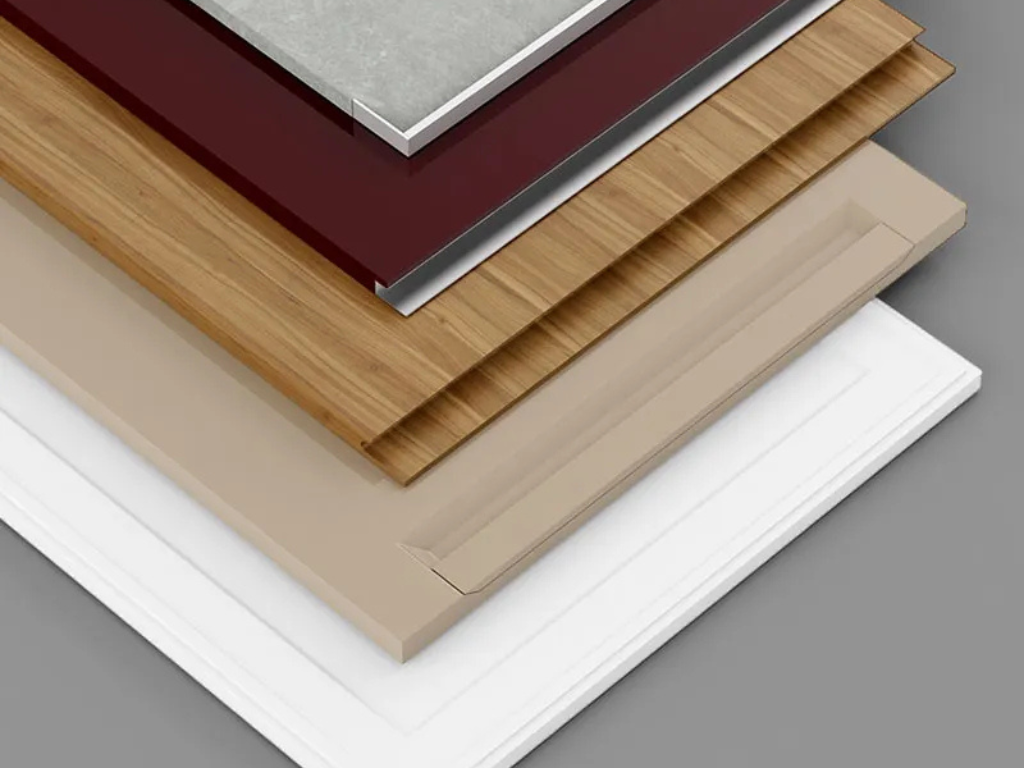
Across the industry, 18 mm board is the accepted standard for carcass sides, top and bottom in a modular kitchen carcass. Thinner sides flex under a granite counter and hold hinge screws poorly, and in tall units every kitchen cabinet carcass needs that stiffness even more. The back panel is usually thinner and should sit in a groove rather than be nailed on. Ask your supplier to state thickness in writing, since a sheet sold as 18 mm can measure less.
Which carcass goes where in the kitchen?
Mixing materials by zone gives you a stronger kitchen cabinet carcass without paying for the costliest board everywhere.
- Sink base unit: BWP plywood, Supertuff HDF, WPC or stainless steel.
- Hob and dishwasher base: BWP plywood or HDF, since steam and spills reach here.
- Wall units: HDHMR or MR plywood; they stay drier and carry less weight.
- Tall and pantry units: HDHMR or plywood for stability over full height.
- Dry storage away from water: particle board is acceptable on a tight budget.
If you live in a coastal or monsoon-heavy city such as Mumbai, Chennai or Kochi, step up one grade in every zone.
How do you check carcass quality in a showroom?
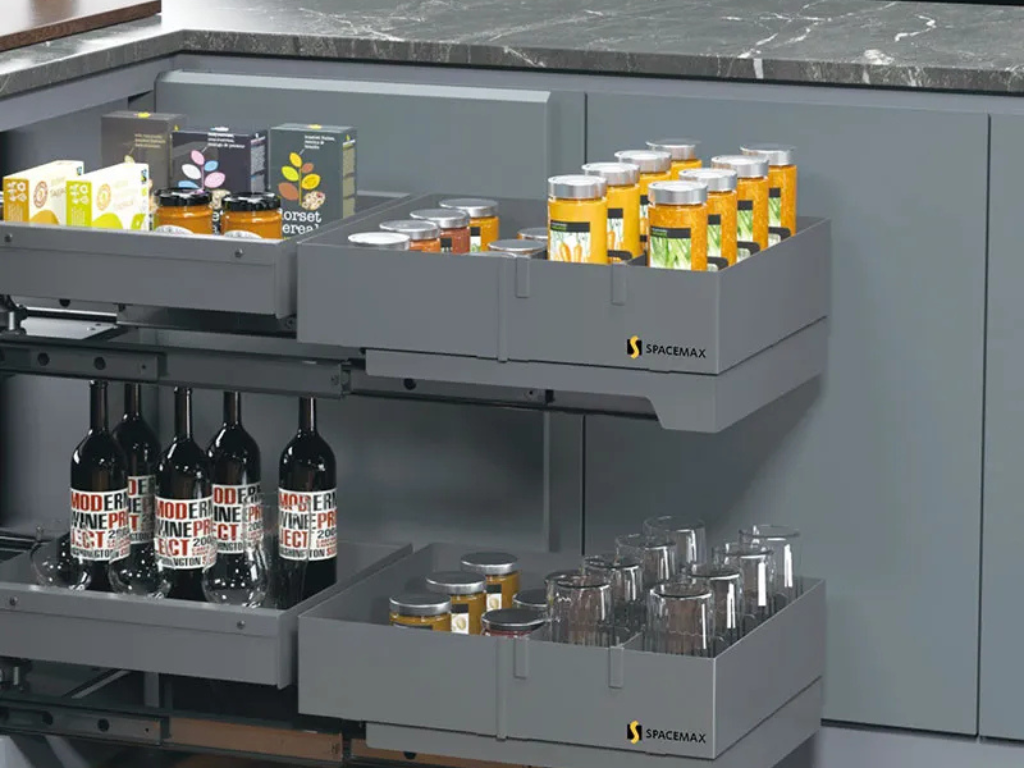
Open a base unit and look closely. The edges should be sealed on all four sides, ideally with PUR glue, because raw edges let water in. Check for an IS mark or grade stamp on plywood, and press on the shelf to see if it bends. Hinges should be fixed firmly, and the cabinet should stand on adjustable PVC legs. Good pull-outs and soft-close fittings only work as well as the box they are screwed into.
How much does a kitchen carcass cost?
As raw 18 mm boards, HDHMR generally costs less per sq ft than BWP plywood, particle board is the cheapest, and stainless steel is the costliest. A complete Spacewood kitchen starts from around Rs 2.99 lakh in laminate, and mid-range kitchens fall between Rs 4 and 7 lakh. Prices may vary based on the kitchen carcass material, finish and customisation.
What does Spacewood use for its modular kitchen carcass?
Every Spacewood modular kitchen carcass is machine pressed with special adhesives for alignment and strength. You can choose from three boards. Waterproof-grade plywood is edge banded with PUR adhesive and comes in White, Silver and Caspani. Supertuff HDF, our own innovation, is waterproof and termite-proof and comes in Abstract White and Caspani. Particle board, also PUR edge banded, is our value option.
Spacewood kitchens carry up to a 10-year warranty, and Supertuff HDF has an estimated life span of 15 years. You can compare all our kitchen cabinet materials and shutter options in one place, or read about Spacewood and our factory.
Conclusion
Choose the cabinet carcass first and the shutter second. Use waterproof material in wet zones, moisture-resistant boards higher up, 18 mm sides throughout, and sealed edges everywhere. For planning the rest of the kitchen, see our complete modular kitchen design guide and our notes on shutter finishes and hardware. Then explore our modular kitchen designs or visit a Spacewood store.
Frequently Asked Questions
What is a carcass in a kitchen cabinet?
The carcass is the box of the cabinet: sides, top, bottom, back and shelves. The shutter is the door on the front. The carcass carries the load and takes most of the moisture.
Which is the best kitchen carcass material in India?
BWP plywood or waterproof HDF for base units near the sink and hob, and HDHMR or MR plywood for wall and tall units. Avoid MDF and particle board in wet zones.
Is HDHMR better than plywood for a kitchen cabinet carcass?
HDHMR is dense, stable and costs less, but it is moisture resistant rather than fully waterproof. BWP plywood is safer under the sink, while HDHMR works well for upper and tall units.
What is the standard thickness of a kitchen cabinet carcass?
Most branded kitchens use 18 mm boards for the carcass sides, top and bottom. Thinner boards can flex and hold screws poorly.
Is particle board good for a modular kitchen carcass?
Only in dry areas on a tight budget. Particle board swells if water reaches it, so it should not be used under the sink.
How long does a kitchen carcass last?
A well-made plywood or waterproof HDF carcass can last 15 years or more. Spacewood kitchens come with up to a 10-year warranty.