

Pooja Room Design Ideas for Indian Homes: Traditional Roots, Modern Layouts
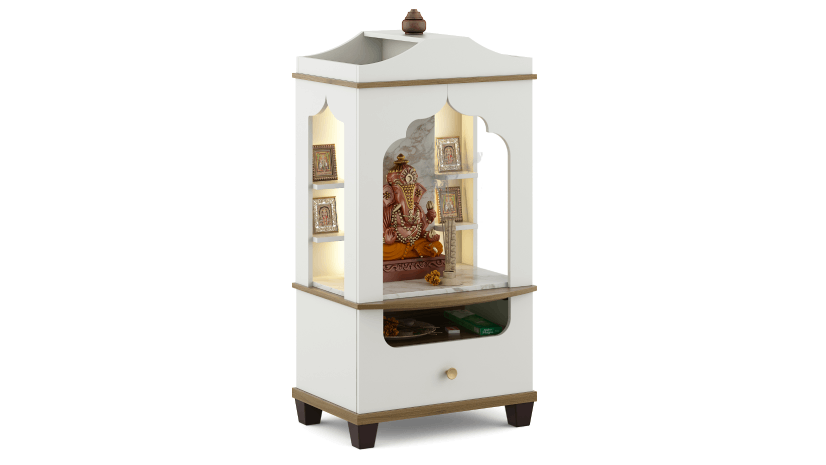
Table of Contents
Introduction
A pooja room is rarely just a piece of furniture in an Indian home. It carries routine, emotion and often a few generations of tradition in a small square of space. That is why puja room interior design is never a copy-paste job. What works in a 3BHK villa in Hyderabad may not suit a 1BHK flat in Mumbai, and what a family in Chennai prefers may look completely different from a setup in Delhi.
The good news? Modern homes have more options than ever. Wall-mounted pooja units, dedicated pooja rooms, foyer pooja corners, kitchen-adjacent mandirs and balcony-integrated pooja zones are all possible if the design is thought through. As part of full home interior design projects, we plan pooja zones across small apartments and large independent homes. The pooja room design ideas below reflect what actually holds up in daily use.
What Is a Pooja Room?
A pooja room is a designated spiritual space inside a home, used for daily prayer, festival rituals and meditation. It can be a full room, a wall-mounted mandir, a niche inside a wardrobe wall, or a small shelf in the kitchen corner.
Basic Rules of Puja Room Interior Design
A few guidelines show up almost every time:
- The idols or photos should face east or west, ideally, so the person praying faces east or north.
- The pooja room should not sit under a staircase, inside or directly opposite a bathroom, or in the bedroom if other options exist.
- Ventilation matters because incense and camphor are part of daily use.
- Keep electrical safety in mind since diyas, oil lamps and candles are common.
- Storage for pooja items (agarbatti stand, bells, thali, utensils, books) should be close so daily rituals do not need extra setup time.
Modern Puja Room Design Ideas for Today's Apartments
1. Wall-Mounted Pooja Unit
Ideal for 1BHK and 2BHK apartments. A compact mandir is fixed to the wall with a small storage cabinet below, an idol niche in the middle, and a decorative back panel. No floor footprint, modern feel, works in foyers and kitchen walls.
2. Pooja Room Inside a Niche
Builders often leave a small niche or alcove. Converting that into a full pooja space with a patterned back wall, internal lighting and a slim door is one of the most elegant modern puja room design moves.
3. Glass Shutter Pooja Unit
A contemporary pooja unit interior design with frosted or etched glass shutters. Keeps dust out, protects idols, and looks clean. Popular in urban apartments with young families.
4. Jali Panel Mandir
Intricate jali (lattice) door or back panel that lets air circulate while still giving a traditional feel. Perfect when you want a modern puja room design with a classical Indian soul.
5. Open Pooja Shelf With Marble Back
No door, just an open shelf with a marble or stone back panel, brass lamps and warm LED lighting. Works beautifully as a feature piece on the living room wall.
6. Foyer Pooja Corner
The entry foyer doubles as the pooja zone. Great for homes where internal rooms are limited. Adds a welcoming spiritual note every time someone enters.
Pooja Unit Interior Design Layouts That Actually Work
- Base cabinet for pooja thali and utensils, middle platform for idols, top shelf for photos and deeplights
- Half-open, half-closed units where the idol shelf is visible and the rest is hidden behind a small door
- Two-tier pooja platforms for families with multiple deities and photos
- Single-niche wall-mounted units for compact setups
- Vertical tall narrow mandir designs that use full wall height instead of going wide
Puja Room Interior Ideas for Compact Homes and 1BHKs
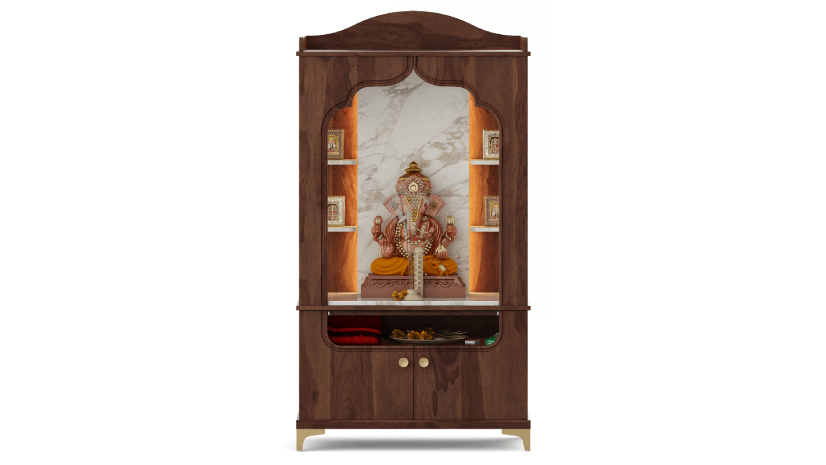
If space is tight, these puja room interior ideas usually fit somewhere:
- A corner pooja unit that wraps around the angle of two walls
- A compact wall-mounted mandir on the kitchen-facing wall of the dining area
- One shelf of a large open display unit dedicated to pooja
- A small utility niche near the kitchen was converted into a curtained mandir
- A portable wooden pooja stand that tucks behind a door when not in use
Traditional vs Contemporary Pooja Room Style Choices
- Traditional: Carved wood, temple-style columns, brass and copper lamps. Inspired by South Indian temples, Rajasthani jaalis or Maharashtrian wooden mandirs. Warm, ornate, spiritually rich.
- Contemporary: Clean lines, minimal carving, back-lit panels, glass or acrylic shutters, muted palettes with one gold or brass accent. Ideal for modern apartments.
Many families end up blending the two. A minimal wooden frame with a traditional brass bell, or a contemporary glass shutter with a classic marble idol platform, works beautifully.
Materials and Finishes for a Long-Lasting Pooja Unit
- Plywood with veneer: Classic warm wooden look that pairs with traditional decor.
- Engineered wood with laminate: Practical for modern apartments, available in teak, walnut and oak finishes.
- MDF with PU finish: Smooth, modern, good for glossy contemporary pooja units.
- Acrylic and glass: Used for shutters or back panels, adds a clean contemporary feel.
- Marble or stone backing: Adds spiritual weight and reflects lamp light beautifully.
Lighting, Ventilation and Safety
- Use warm 2700K LED strips behind the idol shelf for a glow that feels calm and traditional
- Ensure cross-ventilation or at least an openable window nearby
- Keep curtains, paper and cloth away from the lamp and diya area
- Use a heat-resistant stone or steel platform for lamps, not wood
- Plan an accessible socket for electric lamps and fairy lights
Common Mistakes to Avoid
- Placing the pooja unit directly opposite the bathroom door
- Using overly dark finishes inside the pooja unit that hide the idols
- Overcrowding the unit with too many idols and photos
- Ignoring ventilation in a closed pooja room
- Forgetting internal storage, leading to pooja items sitting loose on the kitchen counter
Why Spacewood for Your Pooja Room
Pooja rooms sit at the emotional centre of an Indian home. Spacewood designs custom pooja units for any wall size, niche or corner as part of modular full home solutions. Range of finishes from traditional teak to modern matte laminates, integration with the full bedroom, living room or foyer layout, up to 10-year warranty, and factory-finished quality. Available across all our modular furniture stores in major Indian cities.
Final Thoughts
Whether you want a full pooja room or a single wall-mounted mandir, the right pooja room design idea starts with your family’s rituals, your home’s layout, and the daily comfort of the person who prays there. Traditional, contemporary, open or closed, none of these is wrong. The only wrong answer is a pooja unit that is ignored because it was never planned for real life. Talk to the Spacewood design team, and we will help you plan a setup that matches your home, your space and your traditions.
Frequently Asked Questions
Which direction should a pooja room face?
In most Vastu recommendations, the pooja room is ideally located in the north-east corner of the home, and idols should face west or east so the person praying faces east or north.
Can a pooja unit be placed in the bedroom?
Ideally, not in the master bedroom. If there is no alternative, keep the pooja unit covered with a small shutter or curtain, and avoid placing it near the foot of the bed.
What is the best modern puja room design for a small apartment?
A wall-mounted compact mandir with glass or acrylic shutters, a small internal shelf for pooja items, and warm LED backlighting is the most practical choice for 1BHK and 2BHK flats.
What material is best for a pooja unit interior design?
Engineered wood with laminate is the most durable and cost-effective for Indian conditions. For a more premium feel, veneer finish or solid wood works beautifully, especially with marble or stone back panels.
Should the pooja room have a door?
Not mandatory. Many modern homes use open pooja units or half-door units. A door helps if you want to keep dust out or if the pooja room sits in a high-traffic area.