

Small Mandir Design Ideas for Small Flats and Apartments
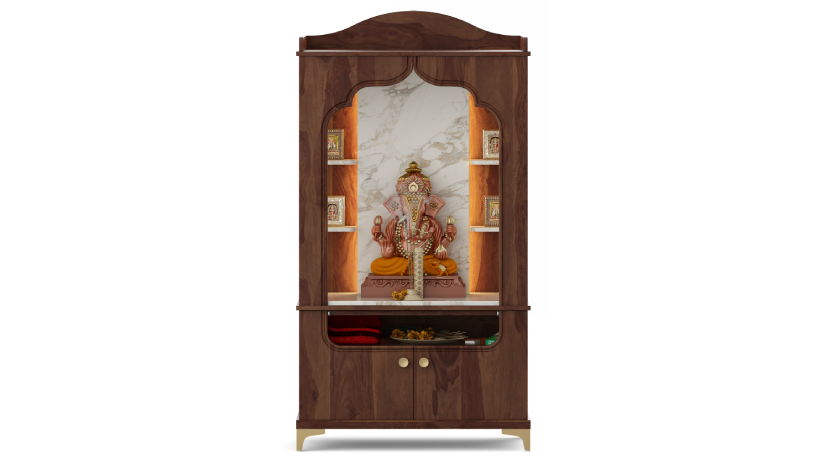
Table of Contents
Introduction
A mandir is rarely just furniture in an Indian home – it is the spot where the day begins and ends. The challenge in a compact flat is fitting that sacred corner into a space that is already doing five other jobs. The good news is that small pooja room designs for home have come a long way: a thoughtful, well-lit unit can sit in a niche, on a wall or in a corner without taking a single square foot you cannot spare. Drawing on our full home interior solutions, this guide covers the most practical small pooja room designs in apartments, from placement to materials.
If you live in a 1BHK or 2BHK and feel there is simply no room for a temple, this guide is for you. The best small pooja room designs for home do not fight the flat for floor space – they borrow a wall, a corner or a recess that was going unused. We will look at where to place the unit, six small pooja room designs in apartments that we build most often, the right materials, and the Vastu and lighting rules that make a compact mandir feel calm rather than cramped.
How Much Space Does a Small Mandir Need?
Less than you think. A wall-mounted or corner mandir needs roughly 45–60 cm of width and a depth of 25–35 cm – about the footprint of a small shelf. A niche mandir uses no floor space at all because it sits inside the wall. The trick behind good small modern pooja room designs is going vertical: stack a deity platform, a backlit panel and a slim storage drawer so the unit reads as tall and serene rather than wide and bulky.
What Counts as a Small Mandir?
A small mandir is a compact prayer unit – usually under 60 cm wide – designed to hold idols, a few essentials and a diya without needing a separate room. It can be wall-mounted, set into a niche, or built into a corner. The focus is on making the space feel devotional and uncluttered rather than large. In a flat, vertical design and good lighting matter far more than floor area.
Where to Place a Small Pooja Unit in a Compact Flat
Placement is the first decision, and it sets up everything else. These are the spots that work best in apartments:
- The north-east corner of the home, which Vastu traditionally recommends for prayer.
- A living-room wall, where a small pooja unit in living room settings stays part of daily life.
- A foyer or entryway niche that greets you as you walk in.
- An unused wall in the kitchen-dining zone, kept away from the sink and stove.
- A bedroom corner, only if it is screened with a shutter for privacy.
Whatever the spot, the idols should ideally face west so that the person praying faces east, and the unit should never sit directly under a bathroom or against a toilet wall.
Small Pooja Room Designs in Apartments: 6 Ideas
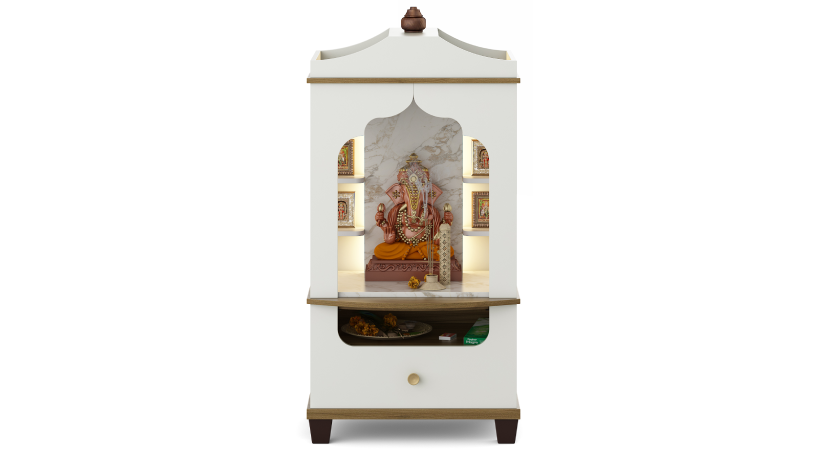
Here are six small pooja room designs for home that we install most often in flats. Each one suits a different wall and budget.
1. Wall-Mounted Mandir
A floating, wall-mounted unit lifts the mandir off the floor and frees the space below for a drawer or a clean look. A backlit panel behind the idols adds a soft glow. This is the single most popular choice for small modern pooja room designs because it works on almost any free wall.
2. Corner Pooja Unit
A triangular corner unit turns dead space into a dedicated prayer spot. A two-tier corner design gives you a deity platform on top and storage for samagri below. It is ideal when no full wall is free but a corner is.
3. Niche or Wall-Cutout Mandir
If a wall has a recess – or one can be created – a niche mandir sits flush without projecting into the room at all. Line the niche with a contrasting finish, add a thin LED strip at the top, and you have a temple that takes zero floor space. This is one of the cleanest small pooja room designs in apartments.
4. Foyer or Entryway Mandir
A slim unit in the entrance foyer keeps the mandir away from bedrooms and bathrooms while making it the first thing you see at home. Pair it with a shoe cabinet of the same finish so the foyer stays coordinated.
5. Pooja Unit Inside a Cabinet
When space is very tight, a mandir built into a tall cabinet – with shutters that close – keeps the prayer area private and dust-free. This pairs naturally with modular wardrobe designs or storage units of the same design, so the mandir disappears into the wall when not in use.
6. Glass-Shutter Compact Mandir
A small unit with a clear or frosted glass shutter protects idols from dust while keeping them visible. Glass shutters suit small modern pooja room designs because they feel light and let the backlight shine through.
Small Modern Pooja Room Designs: Materials and Finishes
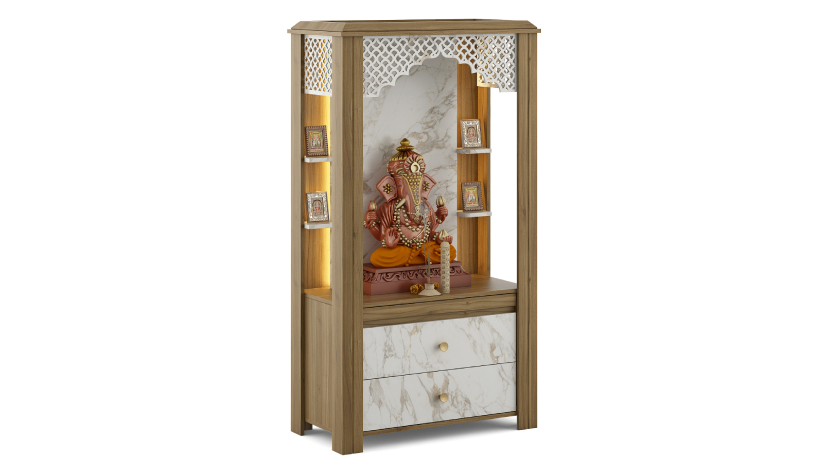
The right material keeps a compact mandir looking serene and lasting for years. Our most-recommended finishes are:
- MDF or HDHMR with laminate – stable, affordable and easy to clean.
- Solid wood or veneer in teak and walnut tones for a traditional warmth.
- Marble or a marble-look laminate back panel for a temple feel without the weight.
- Brass or antique-gold accents for bells, trims and jali detailing.
- Acrylic or PU in white and ivory for a minimal, modern look.
Traditional vs Modern: Choosing a Style
Two broad directions suit small flats, and your choice sets the whole mood of the corner:
- Traditional: teak or walnut tones, brass bells, carved or jali detailing and a marble-look back panel. Best when the mandir is the emotional centre of the home.
- Contemporary: clean white or ivory units, hidden storage, frosted glass and concealed LED light. These small modern pooja room designs blend into a minimal flat without standing out.
Many families pick a middle path – a modern, clutter-free unit with one or two traditional touches like a brass diya stand or a carved top arch. This keeps the small pooja room designs for home rooted in ritual while still matching a contemporary apartment.
Lighting, Storage and Safety
- Use warm 2700–3000K LED strips or a small spotlight to highlight the idols without glare.
- Add a drawer or closed cabinet below for camphor, agarbatti and prayer books.
- Keep an open, heat-safe ledge for the diya, and use a brass or stone plate under it.
- Choose a wipe-clean back panel so oil and soot do not stain the wall.
- In small pooja unit in living room setups, point any spotlight away from the TV to avoid screen glare.
Vastu Tips for Small Mandirs in Flats
- Place the mandir in the north-east where possible; the prayer person should face east or north.
- Keep the unit slightly raised off the floor, never directly on the ground.
- Avoid placing the mandir in the bedroom, under a staircase, or sharing a toilet wall.
- Store nothing above the deity level, and keep the area decluttered.
For a deeper look at directions, layouts and styles, our detailed guide to pooja room design ideas walks through traditional and contemporary options room by room.
Common Mistakes to Avoid
- Squeezing in a unit so small that the diya sits too close to a wooden shutter – always leave a heat gap.
- Skipping lighting, which leaves the mandir feeling flat and dull.
- Placing the mandir in a high-traffic doorway where it gets bumped daily.
- Choosing a porous back panel that stains with oil and smoke.
Why Spacewood for Your Compact Mandir
As Spacewood, we design pooja units as part of a complete home rather than a stand-alone box, so the mandir matches your flooring, storage and wall finishes. Our team measures your flat, finds the calmest corner, and builds a small pooja unit that respects both Vastu and daily use. Visit your nearest Spacewood experience centre to see materials and backlighting in person, or talk to the Spacewood design team for a free design plan.
Final Thoughts
A compact flat does not mean compromising on a sacred space. The best small pooja room designs for home use vertical walls, smart niches and warm light to create a corner that feels devotional without crowding the room. Decide the placement first, pick a wipe-clean material, add gentle lighting, and your small mandir will hold its calm presence for years.
Frequently Asked Questions
Where should a pooja unit be placed in a small flat?
The north-east corner is ideal as per Vastu, with idols facing west so you face east while praying. A living-room wall or a foyer niche also works well in apartments. Avoid bedrooms, bathroom-adjacent walls and spaces under a staircase.
What is the best small pooja room design for an apartment?
Wall-mounted units, corner mandirs and niche temples are the most space-efficient. They use vertical wall area instead of floor space, so they suit compact 1BHK and 2BHK flats.
Can I have a mandir in the living room?
Yes. A small pooja unit in living room settings is very common in apartments. Mount it on a quiet wall away from the TV, add a glass shutter to keep out dust, and use warm lighting to set it apart.
Which material is best for a compact mandir?
MDF or HDHMR with laminate is durable and affordable, while solid wood or veneer adds warmth. A marble-look back panel and brass accents give a temple feel without the weight of real marble.
How do I light a small mandir?
Use warm 2700–3000K LED strips or a small spotlight to highlight the idols. Backlighting behind the deity panel gives a soft, devotional glow without harsh glare.