

12 Traditional Kitchen Ideas That Still Look Right 20 Years Later
Table of Contents
Introduction
Trends come and go every few years, but some kitchens never seem to date. Think of a grandmother’s kitchen with polished brass on the shelf, warm wood and a heavy stone counter. That is traditional kitchen design at its best: built for real cooking, rich in texture and calm to live with. The good news is you can get that feel today without a carpenter building everything on site.
At Spacewood we have made modular kitchens in our Nagpur factory for nearly three decades, including a full classic range. Below are 12 ideas we keep coming back to, along with the colours, materials and costs that make a traditional kitchen work in an Indian home.
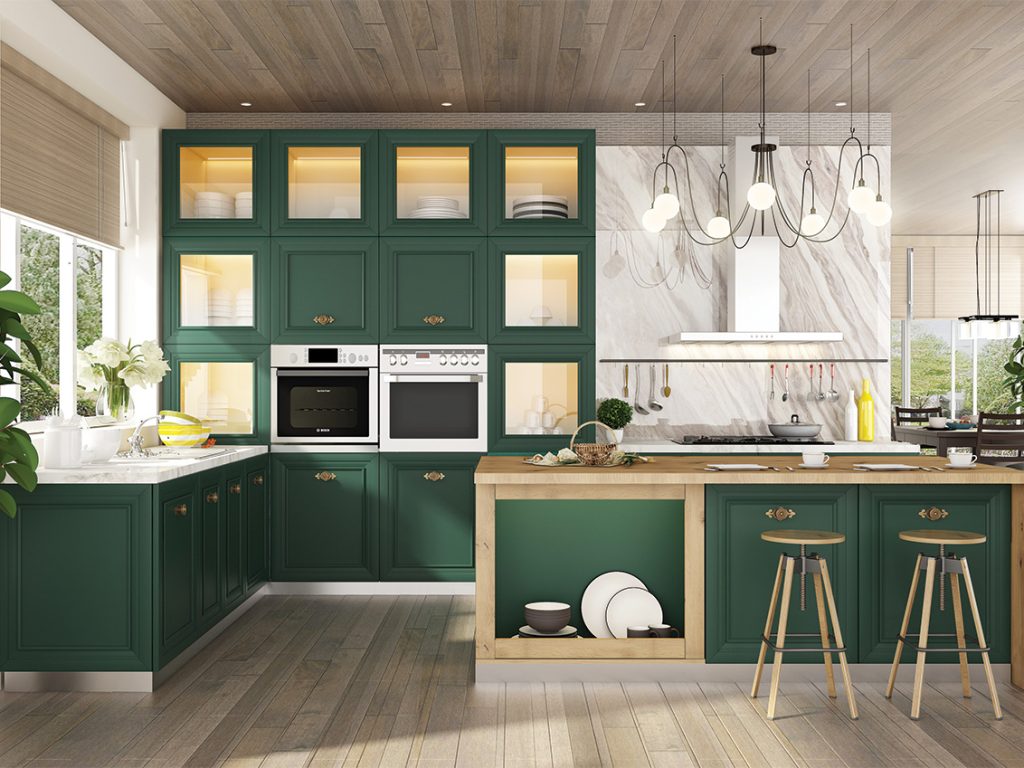
What is a traditional kitchen design?
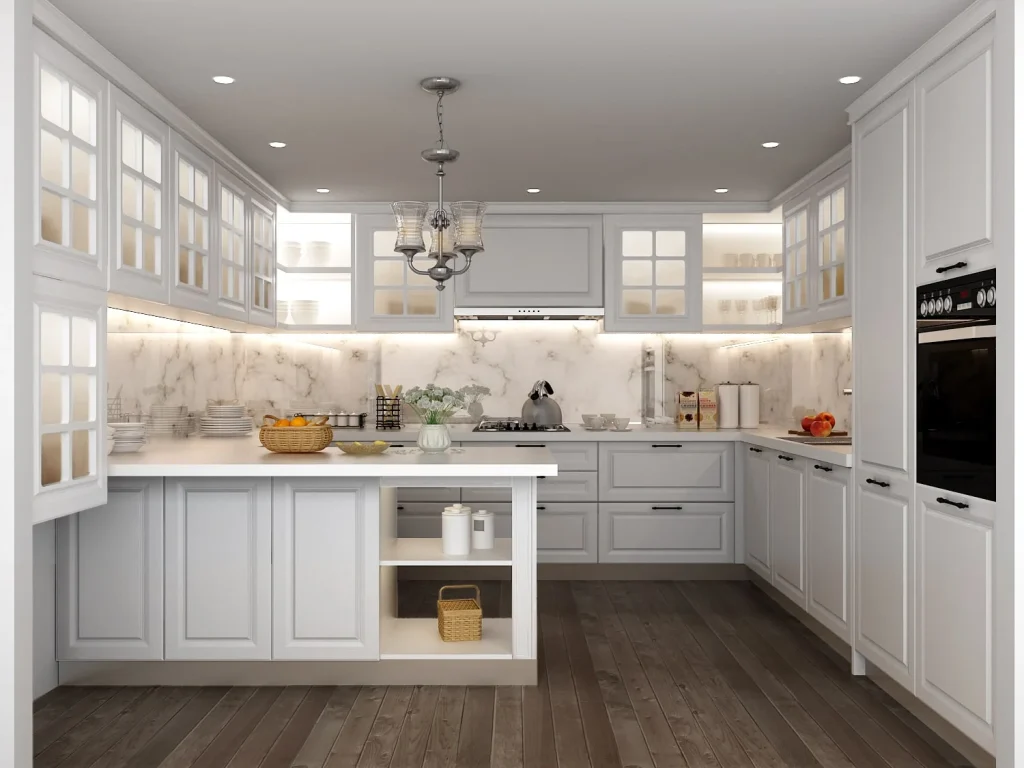
A traditional kitchen design leans on framed or panelled cabinet doors, natural or wood-look finishes, visible handles and warm colours. Details such as mouldings, glass-front display cabinets and stone counters give it depth. In India it often adds brass, a spot for the pooja and storage built around daily cooking.
It does not have to mean carved wood or a large budget. A modular kitchen with the right shutter profile and palette can look traditional while keeping factory precision and soft-close fittings.
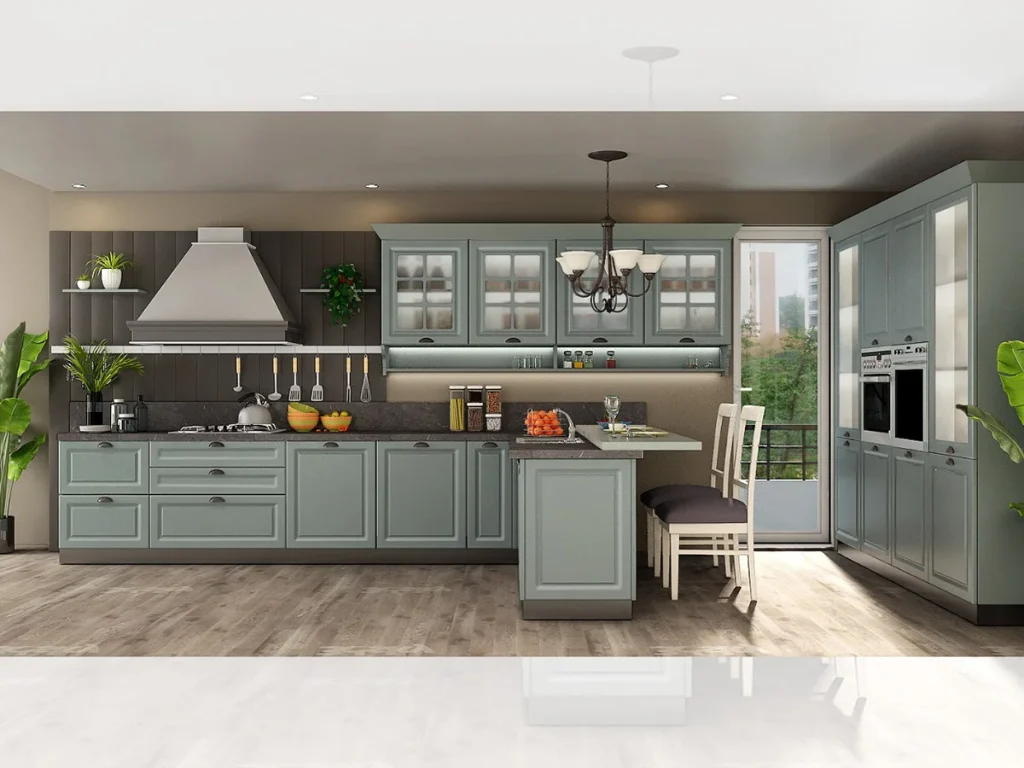
Traditional vs modern vs transitional: what is the difference?
Feature | Traditional | Modern | Transitional |
Shutters | Shaker or raised panel | Flat, often handleless | Slim shaker |
Colours | Ivory, cream, sage, wood | White, grey, bold gloss | Soft neutrals |
Handles | Brass, knobs, cup pulls | Profile or none | Slim metal bars |
Counter | Granite or kadappa | Quartz | Quartz or granite |
Feel | Warm and detailed | Sleek and minimal | A balance of both |
If you love the warmth but want less detail, a transitional kitchen sits comfortably in between. Many Indian families end up here: slim shaker shutters, a cream palette and brass handles, paired with the soft-close drawers and pull-outs of a modern kitchen.
12 traditional kitchen design ideas that won't go out of style
1. Start with shaker or raised-panel shutters
In traditional kitchen design, the door profile does most of the work. A simple shaker frame reads as traditional from across the room, and it suits both a small flat and a bungalow.
2. Use warm wood tones
Walnut, oak and teak-look finishes bring the warmth people remember from older homes. Wood-grain laminate or membrane gives the same feel and handles moisture far better than raw timber. Ask for a matching edge band so the wood look runs unbroken around every shutter.
3. Pick a soft, earthy palette
Ivory, cream, beige, sage and muted greens hold up under Indian daylight and warm LED bulbs. They also forgive the small marks of daily cooking, which matters in a kitchen you plan to keep for 15 years or more.
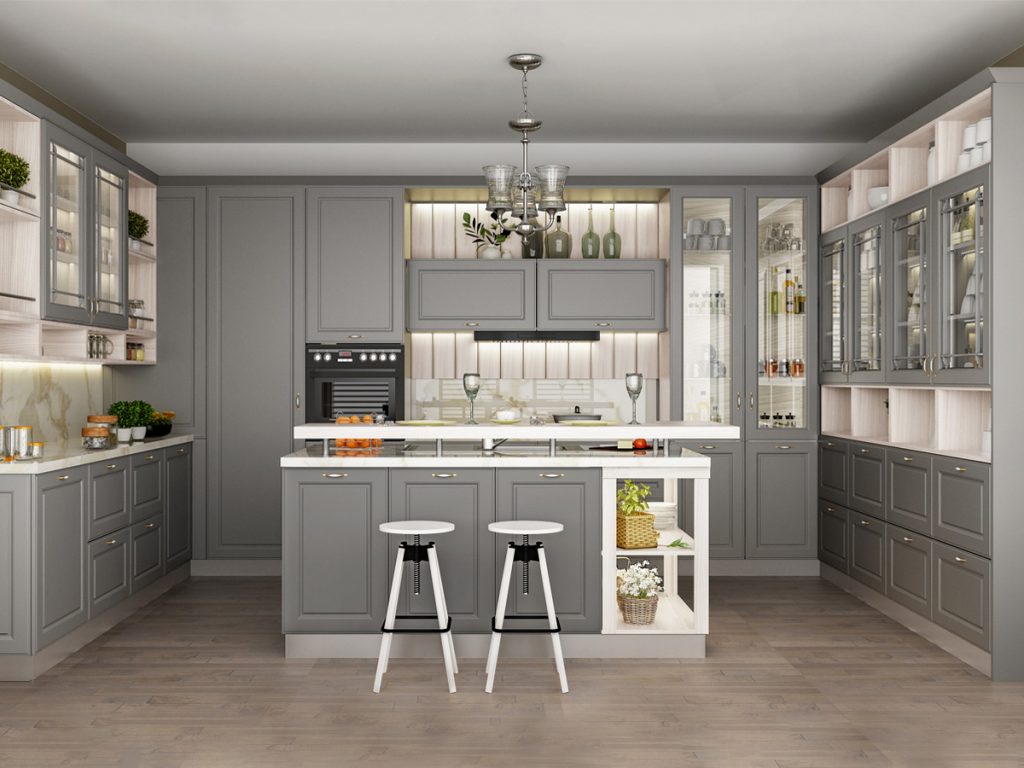
4. Swap in brass or antique handles
Brass cup pulls or knobs on an ivory cabinet instantly feel heritage. Matte black works if you want a little contrast. Either way, a classic kitchen design rarely looks finished without visible hardware.
5. Add glass-front display cabinets
Two or three frosted or fluted glass shutters show off good crockery without exposing everyday clutter. A separate unit works too, and our crockery unit designs have plenty of ideas.
6. Choose a stone countertop
Black granite or kadappa stone is the classic choice for Indian cooking. It takes hot vessels and turmeric stains, and it looks better with age. A leathered finish hides fingerprints and water spots better than a polished slab.
7. Lay a patterned tile backsplash
Hand-painted or Moroccan-style tiles behind the hob add colour and character. Keep the pattern to one wall so the room stays calm. See our kitchen wall tile ideas for pairings.
8. Make space for a pooja niche
Many families like a small mandir in or near the kitchen. A recessed niche or wall unit in the north-east corner keeps it clean and away from the hob. Our pooja room ideas cover sizes and styles.
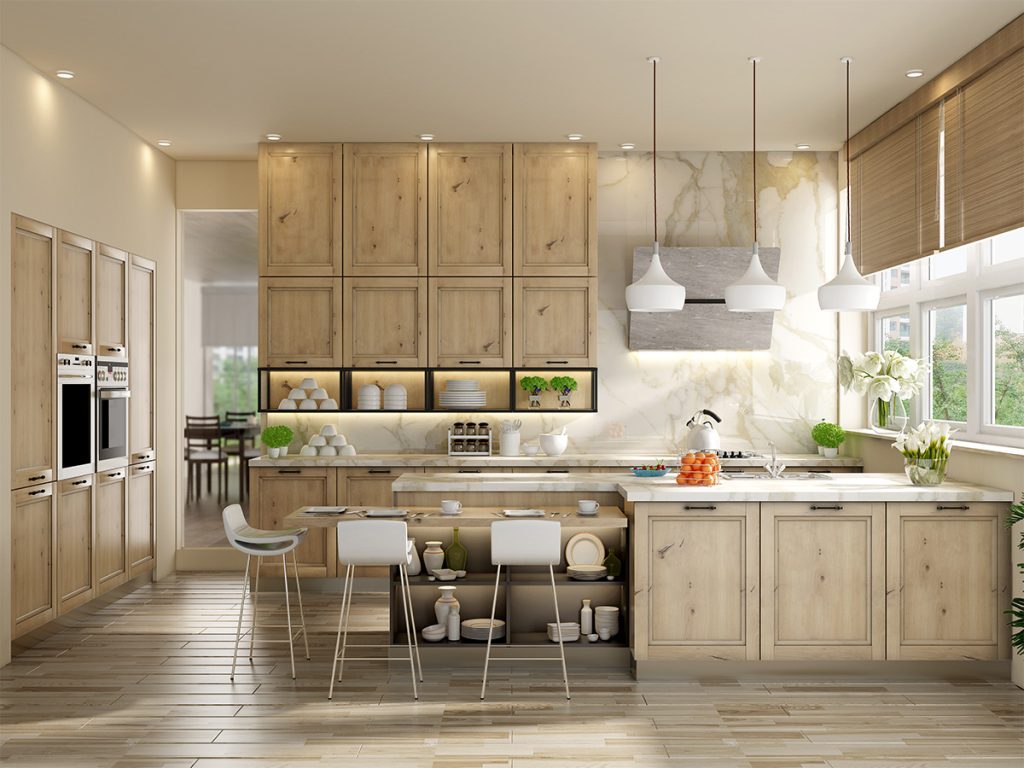
9. Display brass and copper on open shelves
One open shelf for brass lotas, copper pots or a row of steel dabbas tells a story. Keep it to one shelf so dusting stays easy.
10. Take storage to the ceiling
Full-height cabinets finished with a cornice look built-in and solid. They also hold the bulk rice, atta and pickle jars most Indian kitchens need.
11. Build in Indian storage
Plan a masala dabba drawer near the hob, a thali rack and deep drawers for kadhais and the pressure cooker. Tradition is about how you cook, not only how it looks.
12. Light it softly
Warm 2700 to 3000K lights, a lantern-style pendant and lit glass cabinets complete a traditional kitchen design after sunset.
How much does a traditional modular kitchen cost?
A traditional kitchen design does not have to cost more than a modern one. Spacewood’s classic kitchens start from around Rs 2.99 lakh in a laminate finish with controlled moulding. Membrane or PU on featured cabinets, glass fronts and a granite top usually bring it to Rs 4 to 6 lakh, and a full classic treatment with cornice work and quartz goes above Rs 6 lakh. Prices may vary based on size and customisation.
To save, use laminate on base and inner cabinets and keep PU or membrane for the wall units people see first. Our shutter materials and finishes page explains each option.
How do you care for a traditional kitchen?
Traditional kitchen design has more grooves and mouldings than a flat modern kitchen, so wipe them daily before oil settles in. Use a soft damp cloth rather than harsh cleaners, polish brass handles once a month, and tighten hinges once a year. Choose moisture-resistant boards near the sink, especially in humid coastal cities.
How can you save on a modular kitchen?
A smart plan can trim the cost for modular kitchen work without hurting quality. Spend on what you touch every day and save on what you only look at. Use laminate on base units and inner cabinets, and keep acrylic or PU for the wall units people see first. Limit glass shutters to two or three. Choose a straight or L-shape over a U if the room allows, and pick two or three good kitchen accessories rather than every option in the catalogue.
Never save on the board under the sink or on hinges and channels, because those are the parts that fail first. For more budget ideas, see our low-cost kitchen designs and 1 BHK kitchen ideas.
Conclusion
A traditional kitchen earns its place by being useful, warm and easy to live with for decades. Start with the shutter profile and a soft palette, add brass and stone, and plan storage around how your family cooks. To see these finishes in person, explore Spacewood’s classic kitchen design range or visit a Spacewood store near you.
Frequently Asked Questions
What is a traditional kitchen design?
A traditional kitchen design uses shaker or raised-panel doors, warm wood or cream finishes, visible handles and details such as glass display cabinets and stone counters. It feels warm and timeless rather than sleek.
What colours suit a traditional kitchen?
Ivory, cream, beige, sage green and wood tones work best. They suit Indian light, hide daily marks and pair well with brass and granite.
Can a modular kitchen look traditional?
Yes. Choosing shaker shutters, wood-grain or PU finishes, brass handles and a stone counter gives a modular kitchen a traditional look with factory precision.
Is a classic kitchen design more expensive?
Not always. A classic kitchen design in laminate can cost close to a standard modular kitchen. Cost rises with PU finishes, glass fronts and mouldings.
Which countertop is best for a traditional Indian kitchen?
Granite or kadappa stone handles heat, oil and spice stains well and suits the traditional look. Quartz gives more colour consistency at a higher cost.
Can I keep a mandir in a traditional kitchen?
Yes. Many families add a small niche or wall unit, ideally in the north-east corner and away from the hob. Our home Vastu tips explain placement.