

Wall Mounted Mandir Designs: Wall Hanging Pooja Mandir Ideas for Indian Homes
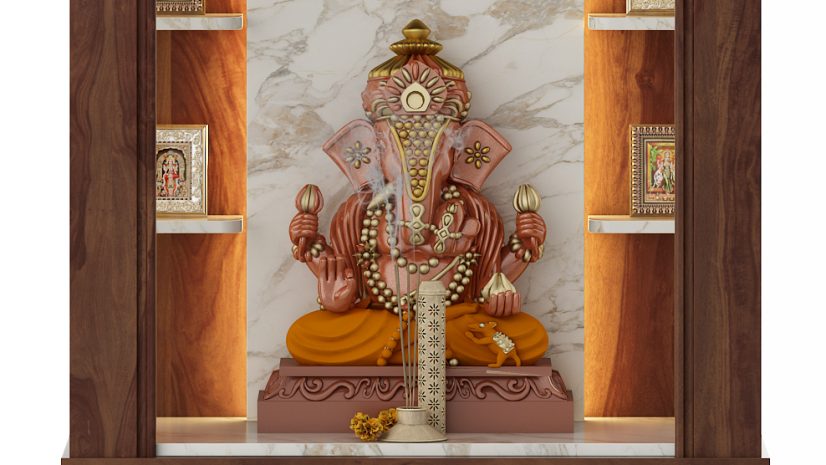
Table of Contents
Introduction
In most Indian flats today, the question is not whether to have a mandir but where to fit one. A wall hanging pooja mandir for home answers it beautifully: a wall hanging mandir design floats off the floor, claims zero carpet area and turns any quiet wall into a sacred corner. Spacewood has built customised furniture for Indian homes for over 29 years, and in this guide we bring you 12 wall mounted mandir ideas, the Vastu rules for placement and height, and a clear look at which wall mounted temple design and material suits your home best.
What Is the Best Color Combination for House Interiors?
A wall hanging pooja mandir for home makes sense for three practical reasons. First, space – a wall hanging mandir design needs only 45-60 cm of width, so even a 1BHK gains a prayer corner without losing floor area. Second, hygiene – a raised mandir stays clear of mopping water, dust and toddlers’ reach. Third, flexibility – it can go in the living room, foyer or dining wall, wherever your layout has a calm north-east spot.
What Are the Best Wall Mounted Mandir Ideas for Modern Homes?
These twelve wall mounted mandir ideas cover every style from traditional to minimalist:
- Jali-door box mandir: a closed unit with laser-cut jali shutters that filter light softly.
- Arched backlit unit: a temple-arch back panel with warm LED backlighting.
- Floating shelf mandir: a single thick ledge with a low back panel – the simplest wall hanging mandir design.
- Corner wall mounted temple design: a triangular unit that turns a dead corner into the prayer spot.
- Cabinet-concealed mandir: shutters that close after prayers, keeping idols dust-free.
- Niche-and-frame design: a wall recess finished with a carved wooden frame.
- Mandir with drawer base: a floating drawer below for agarbatti, diyas and pooja books.
- Minimalist white unit: clean lines and warm light for contemporary interiors.
- Two-tier temple: stacked ledges for families with many idols.
- Brass-accent mandir: engineered wood with brass bells and trims for a classic feel.
- Foyer mandir: a slim entry-wall unit that greets you at the door.
- Glass-shutter mandir: one of the most practical wall mounted mandir ideas – frosted doors protect idols yet keep them visible.
Notice what all twelve wall mounted mandir ideas share: closed storage for pooja samagri, a heat-safe diya ledge and warm lighting. Whichever wall hanging mandir design you shortlist, keep those three non-negotiable. For room-by-room inspiration beyond these, our guide to pooja room design ideas pairs each style with a home layout.
Which Wall Mounted Temple Design Works in a Small Flat?
In compact flats, pick a wall mounted temple design that grows vertically: a 45-60 cm wide unit with a loft-style shelf above and a slim drawer below stores everything a daily pooja needs. Foldable shutters or a roll-down jali let the mandir disappear when guests stay over. If even a wall is scarce, a corner wall mounted temple design uses the junction of two walls and needs just 35 cm on each side. A compact wall hanging pooja mandir for home like this costs far less than a full pooja room and serves the same daily ritual. We covered more compact options in our small mandir design ideas for flats.
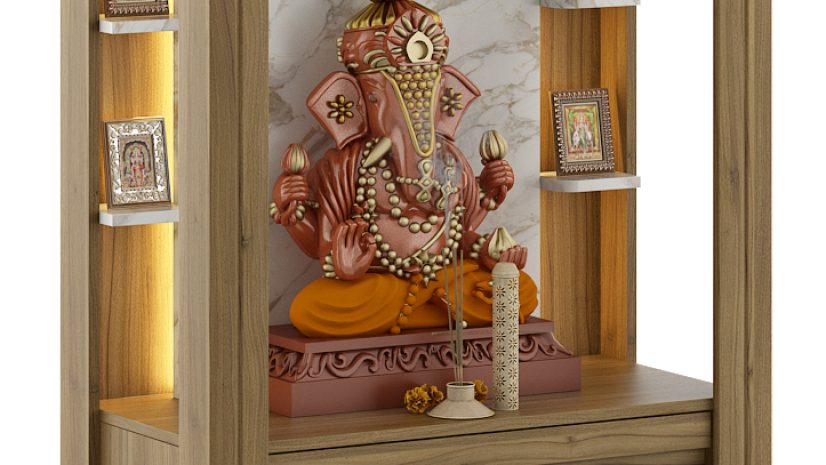
Where Should You Place a Wall Hanging Mandir as per Vastu?
Vastu gives clear, simple rules for a wall hanging pooja mandir for home:
- Direction: the north-east wall is ideal; east and north walls are the next best.
- Height: fix the base 90-120 cm from the floor, so idols sit at chest-to-eye level.
- Facing: idols should face west or east, so you face east or west while praying.
- Avoid: walls shared with a toilet, the space under a staircase, and south-of-bed placement in bedrooms.
Keep a heat-safe stone or metal ledge for the diya and let the unit breathe – a few centimetres of gap behind idols is considered auspicious and keeps the back panel safe. For the full room-by-room picture, see our home Vastu tips.
Which Material Is Best for a Wall Mounted Mandir?
Engineered wood with a laminate or PU finish is the most practical choice for a wall mounted temple design – it is termite-resistant, holds weight well, wipes clean of diya soot and comes in teak, walnut and ivory tones. Solid wood offers traditional warmth but needs polishing and costs more, while marble suits floor units better because of its weight. A smart middle path for a wall hanging pooja mandir for home is an engineered-wood body with marble-look back panel and brass accents – the temple feel, without the load on your wall.
How Do You Install and Maintain a Wall Hanging Mandir?
Mount a wall hanging mandir design on a solid masonry wall with heavy-duty anchor fasteners rated above the loaded weight – idols, bells and thalis add up quickly. Plan electrical points for backlighting before installation, and wipe the unit weekly, using a mild cleaner for soot near the diya ledge. A factory-built unit like Spacewood’s arrives pre-drilled with concealed brackets, so the wall mounted temple design sits flush and level – something site carpentry rarely achieves.
Which Mandir Design Mistakes Should You Avoid?
- Four mistakes come up again and again when families finalise a wall hanging mandir design:
- Mounting on a drywall or partition – every wall mounted temple design needs a solid masonry wall and rated anchors.
- Fixing it too high – a wall hanging pooja mandir for home should keep idols at chest-to-eye level, not near the ceiling.
- Skipping storage – without a drawer or ledge, pooja samagri ends up on the nearest table within a week.
- Choosing open-shelf wall mounted mandir ideas for dusty, road-facing rooms – jali or glass shutters keep the daily cleaning light.
Sidestep these four and even the simplest of wall mounted mandir ideas will serve your family for decades.
Conclusion
A wall hanging pooja mandir for home proves that devotion does not need a spare room – just the right wall, the right height and a design that matches your interior. Pick from the wall mounted mandir ideas above, follow the north-east rule, keep the wall hanging mandir design at 90-120 cm height, and choose engineered wood for easy everyday care. Spacewood crafts customised pooja units as part of our full-home modular designs – share your wall size with our experts and we will design the rest.
Frequently Asked Questions
Is it good to hang a mandir on the wall as per Vastu?
Yes. A wall mounted mandir is considered auspicious when placed on the north-east, east or north wall, fixed at 90-120 cm height, away from toilet walls and staircases.
Which direction is best for a wall hanging mandir?
North-east is ideal for any wall hanging mandir design. Position idols to face west or east so the person praying faces east or west – both are considered favourable.
What are the most popular wall mounted mandir ideas right now?
Jali-door box units, backlit arch designs and cabinet-concealed mandirs lead the wall mounted mandir ideas Indian families choose, since all three keep idols dust-free in city homes.
What is the ideal height for a wall mounted mandir?
Fix the base 90-120 cm from the floor so idols rest between chest and eye level when standing – comfortable for aarti and respectful in placement.
Which material is best for a wall mounted temple design?
Engineered wood with laminate or PU finish offers the best balance of strength, termite resistance and easy cleaning. Add a marble-look back panel for a traditional touch without the weight.
How do I fit a wall hanging pooja mandir for home in a small 1BHK?
Choose a 45-60 cm wide vertical unit or a corner-mounted design with a drawer base. Foldable or jali shutters keep the wall hanging mandir design compact and dust-free.